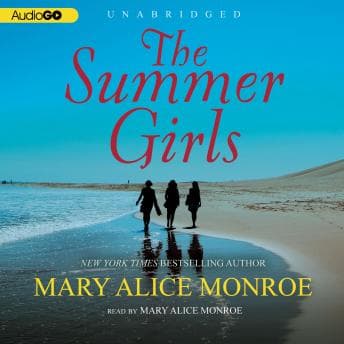

Author-narrated audiobooks are a gamble. Sometimes you get the definitive version—the voice the words were born in. Sometimes you get a writer who should've stuck to the page.
Mary Alice Monroe lands somewhere in the middle, and honestly? That's the story of this whole audiobook.
Mamaw's Porch, My Lakefront Walk
I started this one on a Saturday morning walk along Lake Michigan with Denise. The setup is pure Southern family saga comfort food: three estranged sisters, a wise grandmother on Sullivan's Island, a summer that might heal old wounds. The Conroy comparison on the cover isn't wrong—Monroe loves her lowcountry the way Conroy loved his, with that reverent attention to marsh grass and tidal rhythms. Lost Rider has that same deep sense of place, though it trades coastal marshes for dusty rodeo grounds.
But here's where I need to be honest. By hour three, Denise had finished her walk and gone home. I was still circling the same stretch of path, waiting for something to happen.
This reminds me of what Hemingway said about writing—the dignity of movement of an iceberg is due to only one-eighth of it being above water. Monroe has clearly done the environmental research (she's known for it), and you feel the weight of that iceberg beneath the surface. The problem? The one-eighth above water moves at the pace of actual tidal erosion.
Monroe's Deliberate Delivery
Monroe reading her own work adds authenticity—you can hear when she lingers on a description of dolphins or sea turtles because she genuinely cares about these creatures. There's love in her voice for this setting. But her pacing is... deliberate. Very deliberate. The kind of deliberate that had me checking my phone to make sure it hadn't accidentally switched to 0.75x speed.
I listen at 1.0x because the author chose those words—that's my whole thing. But I'll admit this one tested my commitment to the cause. Some listeners apparently found her voice actively unhelpful, and while I wouldn't go that far, I understand the complaint. Monroe's delivery is warm but lacks the dynamic range you need when you're juggling three sisters with distinct personalities plus an eighty-year-old matriarch.
Carson, Dora, and Harper blur together vocally in ways they shouldn't. These are women with different lives, different problems, different speech patterns—and yet they often sound like the same person having a very long conversation with herself. (My students would say this is me being picky. My students also think SparkNotes counts as reading.)
Beneath the Slow Surface
Strip away the pacing issues and there's genuine substance here. Monroe is writing about what happens when family becomes an abstraction—when you share blood but not memories, when the grandmother who held you together is watching her time run out. Mamaw's desperate summer gambit to reunite her granddaughters before it's too late carries real emotional weight.
The environmental themes are woven in without being preachy. The sea turtle rehabilitation, the changing coastline, the way the natural world mirrors the sisters' own fragile ecosystems—it's the kind of literary work that rewards attention. If you loved Pat Conroy's coastal elegies, this is its spiritual successor, even if it lacks his pyrotechnic prose.
But I kept wanting more conflict, more urgency. The sisters have real problems—Carson's aimlessness, Dora's crumbling marriage, Harper's emotional walls—but the narrative treats them with such gentle patience that tension dissolves before it can build. This is a book that trusts the reader to find peace in the journey rather than the destination. Some will. Some won't.
Who This Summer's For (And Who Should Skip It)
If you're heading to the beach, if you want something that won't demand your full attention, if you appreciate environmental fiction with a family saga wrapper—this works. If you need plot momentum or distinctive character voices, you might find yourself, like me, circling the same stretch of lakefront wondering when something's going to happen.
At nearly twelve hours, it's a commitment. The payoff is cumulative rather than dramatic—you end the summer with these women feeling like you've spent real time in their company. Whether that's enough depends entirely on what you're looking for.
Class Dismissed
Here's my honest assessment: I finished this during a particularly tedious professional development session on "synergizing cross-curricular outcomes" (Principal Martinez, I was definitely paying attention), and it was exactly the right speed for that context. Slow, soothing, undemanding. A literary hammock.
The prose deserves to be savored, even when the pacing tests your patience. Monroe clearly loves these characters and this place. That love comes through in her narration, even when her performance doesn't quite rise to the level of the material.
I'll probably listen to the next one in the trilogy. Apparently the narration improves. And I've already invested a summer with these women—might as well see where they end up.