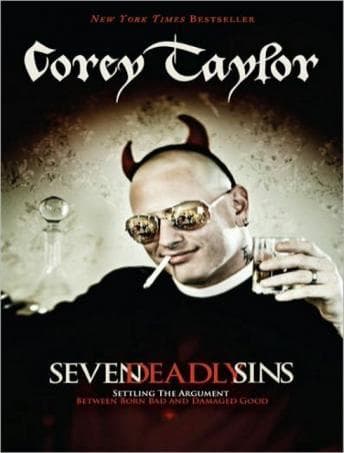

Corey Taylor is not here to make you comfortable. And honestly? After fifteen years of night shifts, I respect that.
I've read a lot of rock star memoirs. Runnin' with the Devil actually follows that arc, but at least Noel Monk had the backstage chaos to keep it interesting. Most of them hit the same tired beats—wild youth, addiction spiral, redemption through sobriety, gratitude for the fans. Taylor throws that playbook in the trash and lights it on fire. This isn't a confessional. It's a philosophical argument delivered by a guy in a mask who's spent his career screaming about pain.
The Frontman as Philosopher
Here's what caught me off guard: Taylor actually thinks about this stuff. Like, really thinks. He takes the traditional seven deadly sins and dismantles them one by one, arguing that most of what we call "sin" is just being human. Pride? Sometimes necessary. Lust? Natural. Greed? Depends on context. He's not excusing bad behavior—he's questioning why we've been taught to hate ourselves for having impulses.
The man reads. He references history, religion, philosophy. Coming from the guy who wrote "People = Shit," this was... unexpected. Every argument has structure. He backs up his points. My husband Carlos—who listens to Slipknot when he's working on the truck—would probably love this, but he'd also argue with it for hours.
Taylor also proposes his own list of actual sins. Rape. Murder. Pedophilia. Bigotry. Things that cause real harm to others. I've seen the aftermath of actual evil in my trauma bay at 3 AM. I've held the hands of people who've experienced the worst humans can do to each other. His argument that we should redirect our moral outrage toward genuine harm rather than arbitrary religious guilt? I get it. I really do.
When the Mask Comes Off
Taylor narrating his own work is the right call here. You need his voice for this—the growl, the intensity, the moments where he gets genuinely angry about hypocrisy. When he talks about his childhood, about the abuse, about the drinking that nearly killed him, you hear the rawness. This isn't some actor interpreting his words. This is him, unfiltered.
At seven hours, it's a solid length. Not bloated with unnecessary stories, not padded with filler. He says what he needs to say and moves on. I listened over three post-shift drives home, and the energy matched my own exhaustion-fueled philosophical moods perfectly. That weird 6 AM headspace where everything feels both profound and slightly unreal.
Where It Gets Messy
Here's my issue, and it's not small: some of his arguments feel like they need more pushback. He's preaching to his own choir. If you already agree that organized religion has weaponized guilt, you'll nod along. If you don't, he's not going to change your mind because he's not really trying to. He's stating his position, not debating it.
Some listeners—I've seen the reviews—were genuinely upset by his proposed "real" sins list. Not because they disagree those things are evil, but because they felt he was being deliberately provocative. Maybe he is. Provocation is kind of his brand. But if you're looking for a nuanced theological discussion, this ain't it. This is a rock star telling you what he believes and daring you to disagree.
Who's Going to Love This (And Who Should Skip)
Slipknot fans, obviously. Stone Sour devotees. But also: anyone who's ever felt suffocated by religious guilt and wanted someone to articulate why it felt so wrong. Night shift workers who've seen too much and started questioning everything. People who appreciate someone willing to say the uncomfortable thing out loud.
Skip if you want a traditional memoir with a redemption arc, you're easily offended by strong language and frank discussions of drugs and sex, or you're looking for balanced theological debate. This is one man's manifesto, not a symposium.
Clocking Out
Carlos asked why I was so quiet driving home after finishing this one. I blamed being tired. Really, I was just thinking. About sin. About guilt. About the patients I've judged and the ones I've pitied and whether those categories were ever fair.
Taylor didn't change my worldview. But he made me examine it. And at 6 AM, driving past the sunrise I'm too tired to appreciate, that felt like enough.
Not perfect. Not trying to be. But honest. Night shift approved.







![Steve Jobs [unabridged audiobook] audiobook cover](/_next/image?url=https%3A%2F%2Fcovers.audiobooks.com%2Fimages%2Fcovers%2Ffull%2F9788499923406.jpg&w=1920&q=75)