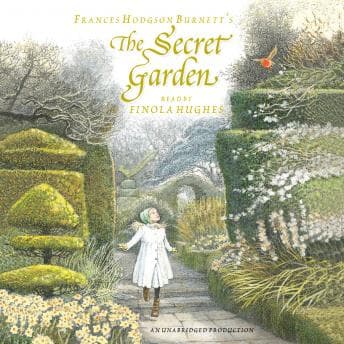

"Quite contrary, quite contrary," Mary Lennox mutters somewhere around hour two, and I found myself thinking: this child is a case study in attachment disorder before we had the vocabulary for it.
I was making dal—my mother's recipe, the one that takes forever because you have to fry the onions until they're practically caramelized—when Finola Hughes delivered Mary's first glimpse of the moor. And something clicked. Here's a nine-year-old who's been so profoundly neglected that she doesn't know how to want things. She doesn't know how to love because nobody taught her. The research actually shows that children raised without consistent caregiving develop exactly this kind of emotional flatness. Burnett wrote this in 1911, decades before Bowlby formalized attachment theory, and she nailed it.
Mary's Emotional Flatness Isn't Brattiness—It's Survival
What makes Mary compelling isn't her transformation—it's how psychologically accurate her starting point is. She's not a bratty rich kid archetype. She's a child who learned that wanting things leads to disappointment, so she stopped wanting. Her parents literally forgot she existed during a cholera outbreak. That's not metaphor. That's her origin story.
And then there's Colin. My therapist would have thoughts about this character. Hypochondriac, tyrannical, convinced he's dying—but here's the thing. He's been told he's dying his entire life. His father can't look at him because he resembles his dead mother. Every adult around him treats him like he's already a corpse. Of course he believes it. The human mind has patterns. Tell a child they're sick enough times, they become sick.
Dickon, the Yorkshire peasant boy who communes with animals, serves as the secure attachment figure neither Mary nor Colin ever had. Jungle Book has a similar dynamic—Mowgli finding stability through his animal companions when human attachment fails him. Dickon's not magical, exactly. He's just... present. Consistent. Unconditionally accepting. Which, for these two damaged children, might as well be magic.
Hughes Takes Her Time (Maybe Too Much Time)
Here's where I have to be honest. Finola Hughes delivers this story with genuine emotional investment. Her Yorkshire accent for Martha and Dickon creates immediate class distinction from Mary's clipped, colonial speech. When she voices Colin's tantrums, there's real hysteria there—the kind that made me stop stirring my dal and just listen.
But.
Eight hours and twenty-three minutes is a long time to spend on a children's novel. The pacing is deliberate. Very deliberate. Around hour five, when they're describing the garden coming back to life for what felt like the fortieth time, I found myself reaching for the speed controls. I didn't use them, ultimately, because something about Hughes's rhythm felt intentional—like she was asking you to slow down the way the children learn to slow down. But I understand why some listeners bounce off this. If you're looking for plot momentum, you will not find it here. This is a book about watching things grow, and growing takes time.
Horticultural Therapy Before We Had a Name for It
What struck me most—and what I kept thinking about during my morning jog the next day—is that this is essentially a story about horticultural therapy before we called it that. Mary and Colin don't heal because someone gives them a diagnosis and a treatment plan. They heal because they're given something to nurture. Dream Thieves explores this same concept—Ronan learning he can create rather than just destroy, finding purpose through what he brings into the world. Something that needs them.
The garden is the intervention. Dickon is the therapist (unlicensed, obviously). And the transformation isn't magical—it's what happens when neglected children are finally given agency, purpose, and unconditional positive regard.
Burnett understood human nature in a way that still holds up. She doesn't moralize. She shows. Mary becomes less contrary not because someone lectures her about being nicer, but because she finally has something worth caring about. Colin walks not because of positive thinking, but because he stops being treated like an invalid. Environment shapes behavior. Expectations become reality.
Psychologically, this tracks.
Who This Garden Opens For (And Who Should Walk Past)
This is not background listening. Not even close. The slow pacing requires your attention—treat it like focused reading time, not a podcast substitute. Perfect for: long cooking projects, dedicated reading blocks, or anyone who wants to revisit a childhood favorite with adult eyes.
Skip if: you need plot propulsion, you're easily frustrated by repetitive nature descriptions, or you want your children's classics to move faster than actual plant growth.
Parents considering this for kids: the themes of parental neglect and childhood illness are handled gently, but they're present. Might prompt conversations.
The Diagnosis, If You Will
I came to this expecting nostalgia. I got a surprisingly sophisticated exploration of childhood trauma and recovery, wrapped in Yorkshire dialect and robin sightings. Hughes's narration requires patience—she's not performing the story so much as honoring it. Some listeners will find this boring. I found it meditative.
The Secret Garden isn't really about a garden. It's about what happens when broken children are finally given permission to grow. And that's a story worth eight hours of your time. Even if you have to adjust your expectations for pacing.
My mother still asks why I need more books. I think she'd understand this one, actually. It's about nurturing. It's about patience. It's about how love is sometimes just showing up, consistently, and letting things bloom in their own time.