
The "Legacy Code" of Self-Help
It's Tuesday. I'm on the 6:14 AM bullet to Mountain View, running on four hours of sleep because of a database migration that went sideways last night. I needed something short. Something that didn't require me to parse complex sci-fi world-building or debug a founder's ego. I saw The Science of Being Well—under 3 hours—and thought, "Great. Optimize my health while I chug this lukewarm coffee."
Quick Verdict: This is the source code for basically every modern wellness influencer, but the audio quality is... buggy.
The Protocol: "Thinking in a Certain Way"
Wallace D. Wattles is the guy who wrote The Science of Getting Rich. This is the sequel. (I actually reviewed The Science of Getting Rich a few months back—same narrator issues, but the content held up better.) If the first book is about optimizing your bank account, this one is about refactoring your body.
And honestly? The logic holds up surprisingly well for something written in 1910. Wattles treats health like a system output. Input: Thoughts + Actions. Output: Health. He talks about "Thinking in a Certain Way" (yes, capitalized like a proper noun class). It's basically the placebo effect weaponized.
He tells you to eat only when hungry, chew your food (fletcherizing, anyone?), and sleep when tired. Revolutionary, right? But in an era where my Twitter feed is full of people selling me $80 nootropics and ice baths, Wattles's advice to just chill out and trust the process feels like a stable release. Simple. Plain. The MVP of health philosophy.
Audio Quality: A Sev-2 Incident
Okay, we need to talk about the production.
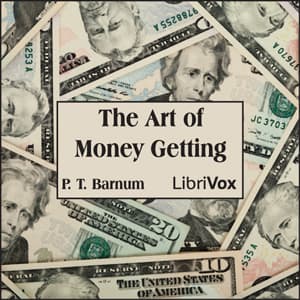
I'm pretty sure this is a LibriVox recording (open source audiobooks—love the concept, usually hit-or-miss execution). The narrator, Jill Preston, has a very specific style. She did the same thing with Art of Money Getting—technically competent but zero emotional range. Clear, sure. But monotone. Like, "reading the terms of service" monotone.
I usually listen at 1.75x speed. Had to throttle down to 1.25x here. Not because the concepts were hard, but because the cadence is tricky. It doesn't flow like a conversation; it flows like a dictation.
And then there's the background noise. I swear I heard a dog bark at one point. And paper rustling. Look, I get it, home recording setups are hard—my Zoom calls sound terrible too—but when I'm trying to absorb the "Principle of Life," hearing someone turn a page pulls me right out of the zone. It's like trying to code with a flickering monitor.
The Verdict
The content? Solid vintage advice. It's the grandfather of The Secret but with less magic and more chewing.
The delivery? It struggles. The monotone narration combined with the lo-fi production makes it hard to stay engaged, especially if you're commuting and fighting ambient train noise. I found myself zoning out and having to rewind (which I never do).
Who should listen: Completionists for New Thought philosophy, or anyone who wants the historical roots of modern wellness thinking in under three hours. Who should skip: If audio quality matters to you, grab the PDF or Kindle version instead—you can read it in an hour and skip the page-turning noises.