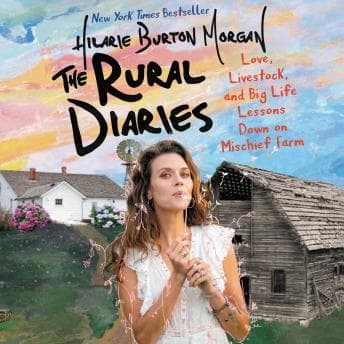

What happens when someone who's spent years performing other people's stories decides to tell their own?
I finished this one during a red-eye back from a client site in Austin, which felt appropriate. There's something about being suspended between destinations that makes you think about the choices that define where you actually land. Burton's trading Hollywood for a farm in upstate New York. I'm trading sleep for billable hours. Different scales, same existential math.
The Business Case for Authenticity
Look, I went in skeptical. Celebrity memoirs are usually ghostwritten vanity projects with the nutritional value of cotton candy. This isn't that. Burton narrates her own story, and that Southern twang from her Virginia roots does something interesting—it grounds what could've been a "look at my charming farm life" exercise in actual texture. When she talks about Bill Paxton's death, you hear grief, not performance. When she describes infertility struggles, there's no polish hiding the pain.
The key takeaway is worth the listen. The other 7 hours? Actually, most of it earns its runtime here.
Here's what my consulting brain appreciated: Burton's treating this life change like a real pivot, not a fantasy. She's chopping wood, building chicken coops, making dandelion wine from scratch. This is what my parents did instinctively—they didn't romanticize the dry cleaning business, they just worked it. Burton has that same energy. The farm isn't an aesthetic choice; it's a commitment that requires showing up when it's not Instagram-ready.
The Paul Rudd Factor (Yes, Really)
The candy store chapters caught me off guard. Burton and her husband buy the town's beloved Samuel's Sweet Shoppe with Paul Rudd and his wife. And somehow this doesn't read as celebrity name-dropping—it reads as neighbors pooling resources to save something their community valued. That's small business economics I understand. That's the Koreatown dry cleaner network where my dad's friends would cover shifts during emergencies.
Jenny would say I'm being harsh when I point out the book occasionally drifts into lifestyle territory. Jenny is right. But the drifts are brief, and Burton always pulls back to something real—a miscarriage, a marriage strain, the unsexy reality of livestock care.
Who This Is (and Isn't) For
If you're looking for a business book disguised as memoir, this isn't it. But if you're in that particular headspace where you're questioning whether the grind you're on is the right grind—this hits different. Burton's not preaching. She's documenting a choice and its consequences, good and bad.
Skip this if: you want tactical advice on career pivots or farm operations. She includes recipes (there's a PDF supplement), but this isn't a how-to.
Listen if: you're tired of memoirs that pretend life changes are clean. Burton's honest about the mess—the money stress, the relationship friction, the grief that doesn't schedule itself around your new chapter. That kind of unflinching honesty reminded me of Great Influenza—different subject matter entirely, but the same refusal to sanitize the hard parts.
At 7 hours 17 minutes, it respects your time. I did 1.5x, which felt right for the conversational pacing. Her narration has enough emotional variation that you don't want to speed through the heavy parts, but the lighter farm anecdotes can take the acceleration.
Park's Final Assessment
Burton built something real, then wrote about it honestly. No ghostwriter polish, no celebrity distance. The ROI here isn't productivity tips or life hacks—it's perspective. Sometimes you need to hear someone else's pivot story to clarify your own.
I've seen executives spend six figures on "finding their purpose" retreats that deliver less insight than this seven-hour audiobook. The difference is Burton actually did the work. The alpacas are real. The failures are real. The community she built in Rhinebeck is real.
My parents never got to read about "passive income" or "lifestyle design." They just showed up to the shop every day and made it work. Burton's doing the same thing with different raw materials. That's the part that stays with you.