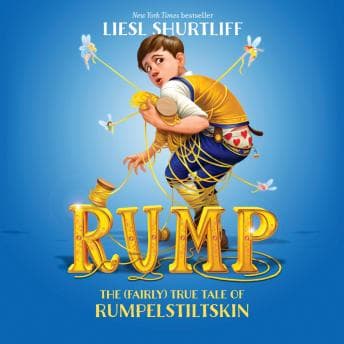

What happens when the villain of a fairy tale gets to tell his own side of the story - and he's twelve, awkward, and didn't even know his full name?
I was up way too late reorganizing my board game shelf (a process that somehow takes four hours every time because I keep stopping to reread rulebooks), and I needed something to listen to that wasn't going to keep me up with existential dread or complex magic system wikis. Rump popped up in my queue - I'd grabbed it months ago on a whim because fractured fairy tales are basically the literary equivalent of a homebrew D&D campaign, and I'm weak for both. Eight hours later my board games were sorted by designer instead of genre (arguable improvement) and I'd blown through the whole thing.
The Name-Is-Your-Destiny Mechanic Is Lowkey Brilliant
Okay so here's the thing - Shurtliff built this world where your name literally determines your fate. Millers mill. Spinsters spin. And our boy Rump? He doesn't even have his full name. His mother died before she could finish telling it to him, so he's stuck with the first syllable of what we all know is Rumpelstiltskin. That's not just a cute setup. That's a rules system. The whole kingdom operates on this naming magic, and when Rump starts spinning straw into gold without understanding why, it's because the magic is tied to a name he doesn't fully possess. The magic system is chef's kiss. It's simple enough for a middle-grade audience but it actually has internal logic and consequences - every time Rump spins gold, the curse tightens around him. There are real stakes and real costs. Sanderson would nod approvingly.
And the way she weaves in other fairy tale characters? Red Riding Hood is Rump's best friend. There are poison apples floating around. Trolls under bridges. But none of it feels like a checklist - it's all organic to this world where fairy tale logic is just... how things work. My D&D group would love this as inspiration for a fey-themed campaign, honestly. The interconnected fairy tale universe thing predates the whole "cinematic universe" trend and it works way better here than it does in most adult fantasy attempts at the same idea.
Maxwell Glick Knows What He's Doing With Comic Timing
I'll be upfront - I don't have a ton of specific detail on Glick's performance beyond what listeners have said, and he's not someone I'd listened to before this. But his comedic timing is genuinely good. There's a particular energy he brings to Rump's narration that feels like a smart kid who's frustrated with the world but also kind of bemused by it. The humor lands because Glick doesn't oversell the jokes - he lets the absurdity of the situations breathe. When Rump is dealing with the wickedly foolish queen (and she really is foolish in a specific, petty, almost bureaucratic way), there's this dry exasperation in the delivery that works.
He's not Steven Pacey. Steven Pacey walked so other narrators could run, and I'm not going to pretend this is that caliber of voice acting range. The narration in Inside Out & Back Again gave me that same feeling of a performer who's genuinely invested rather than just competent — worth a listen if you care about this stuff. But for a middle-grade fairy tale retelling? Glick is solidly good. He keeps the energy up across nearly eight hours without it ever feeling like he's phoning it in or, worse, condescending to the material. That second one is a real problem with kids' audiobook narrators sometimes - they do that syrupy "reading to children" voice that makes everyone over the age of nine cringe.
Who This Is Actually For (And It's Not Just Kids)
Look, this is a middle-grade book. I'm a grown man in grad school (allegedly). And I had a great time with it. If you like fairy tale retellings, if you've ever run a fey campaign in D&D, if you enjoyed Ella Enchanted or the A Tale Dark and Grimm series, this hits. The progression is satisfying - Rump goes from a bullied kid with half a name to someone actively fighting against a curse he accidentally brought on himself, and the quest structure keeps things moving.
It's also a genuinely good pick for listening with kids on a road trip. Nothing here is going to give anyone nightmares - there's some mild fantasy danger, pixies being jerky, trolls being trollish - but it's all handled with enough humor that the tension never gets too heavy. At just under eight hours, it's a solid road trip length without being a commitment.
If you need grimdark, if you want complex political intrigue, if stat blocks are your thing - this ain't it. But sometimes you just want a clever story told well, and that's exactly what this is.
Roll Credits, Get Back to My Thesis (I Won't)
I read this instead of writing my thesis. Dr. Patel, if you're somehow reading audiobook review sites at midnight: I was also thinking about procedural generation while I listened. (I was not.) Rump is a warm, smart, funny retelling that respects its source material while making it genuinely its own thing. The naming-as-destiny magic system gives it a spine that elevates it above most fractured fairy tales, and Glick's narration carries it well. It's not going to change your life, but it might make your next eight hours a lot more fun than whatever you were going to do with them.