
Some books you teach. Some books teach you. Ruby did both, and I'm still not sure I've recovered.
I started this at 11 PM after grading a stack of essays on The Bluest Eye. Thought I'd listen for an hour, maybe two. Denise found me at 2 AM on the couch, staring at the ceiling, the audiobook paused mid-sentence because I needed to breathe. This is not background listening. This is not commute material. This is sit-down-and-be-present literature.
The Weight of an Author Reading Her Own Ghosts
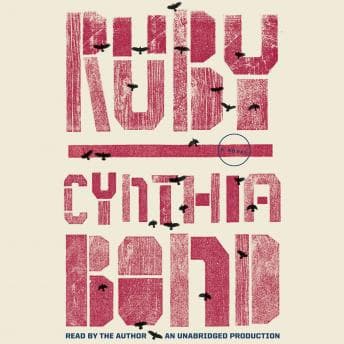
Here's the thing about author-narrated audiobooks—they're a gamble. You're betting that the person who wrote these words can also perform them. Cynthia Bond's reading is... complicated. It's understated where you might expect thunder. The prose on the page apparently roars, but her delivery whispers. Some listeners find this maddening. I found it devastating in a different way.
There's an immediacy to hearing Bond read about Ruby's childhood in Liberty, Texas that a professional narrator might have polished into something bearable. Bond doesn't make it bearable. She reads the violence, the sexual abuse, the racism with a kind of relentless steadiness that feels almost documentary. Like testimony. Like she's refusing to perform trauma for your comfort.
Is this a flaw? Maybe. I kept thinking about how my students react when I read Beloved aloud versus when they hear Toni Morrison's own recordings. Morrison's voice was quiet too. Measured. The horror doesn't need vocal pyrotechnics when the words themselves are doing the work.
East Texas Gothic at Its Most Unsparing
Bond writes Liberty, Texas like Faulkner wrote Yoknapatawpha—as a place where the past isn't past, where violence seeps into the red dirt and stays there. But where Faulkner gave us distance through his baroque sentences, Bond puts you directly inside Ruby's fractured consciousness. The 1950s New York sections—Ruby in Village piano bars, searching for her mother's red hair—offer brief respite before that telegram drags her (and you) back to Liberty.
Ephram Jennings is the kind of character I'd teach alongside Jay Gatsby and Heathcliff in a unit on obsessive love—except Ephram's love isn't possession. It's patience. His sister Celia, baking that cake yolk by yolk as a peace offering, represents everything good and suffocating about small-town loyalty. The domestic details ground you before Bond yanks you back into nightmare.
At 11 hours and 30 minutes, this is a commitment. The pacing mirrors Ruby's own psychological state—sometimes you're moving through molasses, sometimes through fire. I wouldn't call it slow. I'd call it deliberate. The prose deserves to be savored, even when—especially when—what you're savoring is bitter.
Who This Is For (And Who Should Know What They're Walking Into)
If you loved Beloved, The Color Purple, or Sing, Unburied, Sing, this is their spiritual successor. Uncle Tom's Cabin belongs to an earlier chapter of that same literary lineage, though Bond's prose cuts deeper into psychological trauma than Stowe's abolitionist urgency allowed. Bond is working in that tradition of Black Southern Gothic where the supernatural and the historical blur into something that feels truer than realism.
But I need to be direct: the content warnings here are not decorative. Child sexual abuse. Violence. Racism rendered in specific, unflinching detail. This book does not look away. Before We Were Yours tackles institutional trauma with similar unflinching honesty, though its historical distance makes it slightly easier to metabolize. If you're not in a place to sit with that—and there's no shame in that—wait until you are. Or skip entirely. Literature should challenge us, but it shouldn't break us.
My students would hate this. They'd call it "too much" and "depressing" and "why do we have to read sad things." (They say this about everything except Romeo and Juliet, which is somehow acceptable tragedy.) But the ones who stuck with it? They'd understand why Oprah picked it. Why it was a PEN finalist. Why some books matter even when they hurt.
Class Dismissed—Go Listen
Bond's narration won't win any Audie awards. A more skilled voice actor might have differentiated the characters more sharply, might have given the climactic moments more theatrical weight. But there's something about hearing the author herself—knowing she taught writing to homeless youth, knowing she built this story from research and imagination and probably some personal reckoning—that makes the understated delivery feel intentional. Like she's trusting the words to do their job.
This reminds me of what Baldwin said about the artist's duty: to bear witness. Bond bears witness. The audiobook makes you a witness too. That's not comfortable. It's not supposed to be.
Listen at 1.0x. The author chose those words. She chose that pace. Honor it.