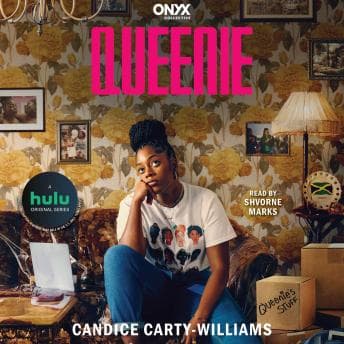

I was grading papers at 11 PM - the usual stack of half-hearted essays on The Great Gatsby - when I started this audiobook. By the time I looked up, it was 1:30 AM and I'd only marked three papers. My students would probably thank Queenie for their temporary reprieve from my red pen.
Here's the thing about Candice Carty-Williams' debut: it's not comfortable. Queenie Jenkins is a mess. A beautiful, frustrating, heartbreaking mess who makes choices that had me muttering "no, no, no" at my phone while pretending to listen to Principal Martinez's weekly email updates. (Sorry, Martinez. Queenie was more pressing than budget allocations.)
The Voice That Wouldn't Let Me Go
Shvorne Marks. I need to talk about Shvorne Marks.
I've listened to hundreds of audiobooks, and there's a particular skill in narrating a character you might not always like. Marks doesn't soften Queenie's edges. She doesn't make her more palatable for the listener. She leans into every cringe-worthy decision, every moment of self-sabotage, every desperate text message sent at 2 AM. The British accents - and there are many, from Jamaican patois to South London to the clipped tones of Queenie's newspaper colleagues - feel lived-in rather than performed.
My wife Denise and I were walking the lakefront when a particular scene hit. Queenie's in therapy, finally, and there's this moment where Marks shifts her delivery just slightly - still Queenie, but Queenie trying to be okay. Denise asked why I'd stopped walking. I didn't have a good answer except that the narration had caught me off guard. That's what great performance does. It ambushes you.
Some listeners found Marks' intensity made Queenie harder to root for. I get it. But honestly? That's the point. This isn't a story about a likable protagonist making reasonable choices. This is a story about a woman drowning and reaching for anything that floats - even when it's pulling her under faster.
Where Bridget Jones Meets Something Much Darker
I kept thinking about this while listening. The marketing wants you to see Queenie as a spiritual successor to Bridget Jones - the single woman navigating London, the messy love life, the humor. And yes, there's humor here. Carty-Williams is genuinely funny, and Marks delivers the comedic beats with perfect timing.
But this isn't Bridget Jones. This is what happens when you add race, trauma, mental health, and the particular exhaustion of existing between two cultures that both claim you and reject you simultaneously. My students - the ones who actually do the reading - would recognize this immediately. The code-switching. The constant performance of being "acceptable" in spaces that weren't designed for you. That same exhausting performance shows up in Total Control, though in a completely different context.
Queenie works at a newspaper where she's the only Black woman in her department. The microaggressions pile up in ways that felt almost documentary. Carty-Williams doesn't explain them for a white audience. She just lets them happen, trusts that you'll either recognize them or learn something.
The Repetition That Turned Out to Be the Point
I'll be honest - there are pacing lulls. Around the middle, Queenie cycles through some questionable men in ways that started to feel repetitive. I found myself checking how much time was left, which is never a great sign.
But then the therapy sessions start. And the friend group - Kyazike, Darcy, Cassandra - comes into sharper focus. And suddenly I understood why Carty-Williams needed that repetitive middle. She was showing us the pattern. The way Queenie keeps reaching for the same wrong thing, expecting different results. It's not poor pacing - it's diagnosis.
The last few hours hit hard. I finished at 6 AM on a Saturday, which Denise was not thrilled about. But I couldn't stop. The way Queenie's mental health crisis builds, the way her friends finally intervene, the way the novel refuses to offer easy resolution - this is what contemporary fiction should be doing.
Who Gets an A, Who Gets Excused
Probably wouldn't assign this to my students. The content is too graphic for a high school classroom, and I'd spend more time fielding parent complaints than discussing the actual literary merit. (Yes, I know. The irony of teaching Beloved but not being able to assign this isn't lost on me.)
But would I recommend it to my adult book club? Absolutely. Would I push it on my colleagues who claim they "don't have time to read anymore"? The audiobook solves that problem - 9 hours and 47 minutes, perfect for a long weekend of grading. Skip this one if you need a protagonist who makes sensible choices, or if you're looking for light escapism. This book earns its British Book Award by being true, not pleasant.
Mr. Williams' Final Grade
Queenie herself would probably drive you crazy at a dinner party. But Carty-Williams wrote something true, and Marks performed it with the kind of emotional precision that makes audiobooks an art form rather than just a convenience.
My students think I'm ancient for listening at 1.0x speed. But this one? You need to hear every pause, every breath, every shift in Marks' delivery. The author chose those words. Marks chose how to say them. Trust the process.