
What happens when a software engineer who spends her days debugging distributed systems tries to debug her own brain?
I'll tell you what happens: you end up listening to a self-help book from 1963 at 1.75x speed during a 2AM insomnia spiral after your on-call pager finally stops going off, and you start wondering if Joseph Murphy was basically trying to describe neural networks before neural networks were a thing.
Your Brain Is a Two-Process System (Murphy Figured This Out in the '60s)
TL;DR: Worth your commute, but with caveats.
Here's the pitch: your conscious mind is the API layer, your subconscious is the backend service, and whatever you repeatedly feed into that API eventually gets cached and starts running as default behavior. Murphy doesn't use those words, obviously - he talks about "mental imagery" and "prayer" and "infinite intelligence" - but strip away the mid-century spiritual language and you've got something that sounds weirdly like cognitive behavioral therapy's grandfather.
The core thesis is dead simple. Your subconscious mind accepts whatever your conscious mind habitually tells it, then acts on it. Feed it fear, get anxiety loops. Feed it positive visualization, get... well, Murphy claims you get everything from career success to spontaneous tumor regression. And that's where things get complicated.
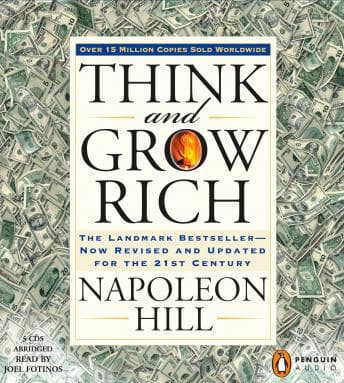
Because Murphy doesn't just suggest positive thinking helps your mood. He tells stories - dozens of them, chapter after chapter - about people who allegedly cured cancer, restored their eyesight, and manifested specific dollar amounts through subconscious reprogramming. It's the same conviction-over-evidence playbook I flagged in my review of Think and Grow Rich - another genre cornerstone that runs on anecdotes. No citations. No controlled studies. Just anecdotes delivered with absolute conviction. It's the 1963 equivalent of a Medium post with zero links to peer-reviewed research.
The Anecdote-to-Evidence Ratio Is... Concerning
This is basically "The Secret" but for people who read Norman Vincent Peale. And look, some of the underlying ideas have legitimate psychological backing - visualization techniques, the power of belief to affect performance, the way repetitive negative self-talk becomes self-fulfilling prophecy. Sports psychologists use this stuff. CBT therapists use this stuff. That part checks out.
But Murphy takes it SO much further. There's a section where he describes a woman who supposedly healed a serious medical condition by repeating affirmations before bed every night. Another where someone visualizes a specific business outcome and it materializes almost exactly as imagined. The book is structured as: state principle → tell three to five anecdote stories proving principle → repeat for next chapter. By hour 6, the pattern becomes almost hypnotic (ironic, given the subject matter).
The ROI on this audiobook is honestly hard to calculate. The useful kernel - that your habitual thought patterns shape your reality and you can consciously redirect them - is genuinely powerful and probably worth hearing. But you could get that from a solid 20-minute podcast episode. The other 11 hours and 38 minutes are variations on that theme with increasingly wild claims.
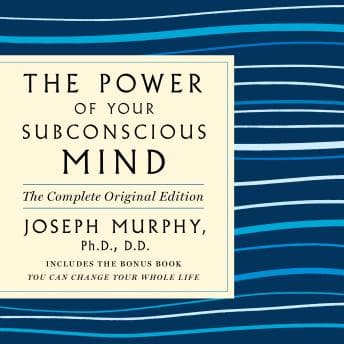
Could've been a blog post. Or at least a much shorter book. The bonus book "You Can Change Your Whole Life" is basically the same material reshuffled, which... yeah. Murphy's core ideas get recycled so aggressively across editions that the updated version of this book is nearly indistinguishable from the original - which is itself a kind of proof that the content compresses well.
Two Narrators, One Vibe
Sean Pratt handles the main text and Joel Fotinos does the introduction and bonus material. Pratt has that warm, authoritative tone that works well for this genre - he commits to Murphy's conviction without tipping into televangelist territory, which is a real risk with material this earnest. Fotinos contextualizes the book's historical significance, which I actually appreciated because it helped me calibrate my expectations. Knowing this was written in 1963 made me more forgiving of the "just believe harder" approach.
Neither narrator is Ray Porter (nobody is Ray Porter), but they're solid. The production is clean, no weird audio artifacts or volume issues. At 1.75x, Pratt's pacing held up fine - he enunciates clearly enough that speed listening doesn't lose you.
Who Gets Value Here (And Who Should Grep Elsewhere)
Perfect for: train, gym. Skip for: deep work.
If you've never encountered positive visualization or the idea that your self-talk matters, this could genuinely shift your perspective. For a more rigorous, memoir-driven look at how the mind actually works under stress, Blackout is the better use of your listening hours. If you've already read any modern psychology, CBT primer, or even a decent self-help book from the last decade, you're going to spend a lot of time nodding and waiting for the next insight that... doesn't really come.
Kevin (my boyfriend, resident sci-fi enabler) asked what I was listening to and I described it as "a legacy codebase that had some revolutionary ideas when it shipped but desperately needs a refactor." He said that was the most me thing I've ever said. He's not wrong.
Ship It or Shelve It?
The science doesn't really hold up - not by modern standards. But as a historical artifact in the self-help genre, it's interesting to hear where a lot of today's productivity and mindset culture originated. I finished this in about 4 commutes at 1.75x, and I don't regret the time, but I also wouldn't spend a full credit on it when you can probably find older editions on Libby. Borrow it, listen during your commute, take the two or three genuinely useful mental exercises, and move on. Your subconscious will thank you for not overthinking this one.