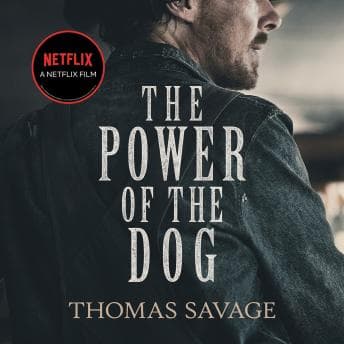
Three AM on a Thursday, the unit finally quiet after a brutal code that didn't go our way. I'm sitting in the break room with cold coffee and my earbuds, and Chad Michael Collins is describing Phil Burbank castrating cattle with the same casual cruelty he uses on everyone around him. Perfect timing, universe. Thanks for that.
But here's the thing—I couldn't stop listening.
When Quiet Violence Hits Harder Than Screaming
This isn't a Western with shootouts and showdowns. Thomas Savage wrote something more unsettling: a story about the slow, deliberate destruction one person can inflict on everyone in their orbit. Phil Burbank doesn't need a gun. He's got words, silences, and a ranch full of men who've learned to laugh at his cruelty because the alternative is becoming his next target.
As someone who's actually worked a code and seen families in crisis, I know what real domestic tyranny looks like. It's not always dramatic. Sometimes it's a brother who controls every meal, every conversation, every relationship his sibling tries to build. Savage gets this right. The tension between Phil and George—one magnetic and vicious, the other gentle and retreating—felt like watching a patient's vitals slowly destabilize. You know something's coming. You just don't know when.
When Rose and her son Peter arrive at the ranch, the already fragile peace doesn't just crack. It shatters in slow motion. Rose's drinking, Peter's quiet observation of Phil's weaknesses—I yelled at my dashboard during this one, but not because they got something wrong. Because I saw exactly where it was heading and couldn't look away.
Collins' Cowboy Drawl Earns Every Syllable
Chad Michael Collins has this gravelly quality that makes Phil sound like he's always half a second from either laughing at you or destroying you. The voice differentiation between the brothers is subtle but effective—George sounds softer, almost apologetic for existing, while Phil's every word carries the weight of a man who's never been told no.
The medical details are accurate. Finally. (Okay, there aren't really medical details—but the psychological ones? The way abuse warps people? Spot on.)
What surprised me was the tenderness Collins brings to certain moments. There's unexpected beauty in this book—flashes of hope that make the darkness darker by contrast. His emotional delivery during these scenes doesn't feel manipulative. It feels earned.
And Annie Proulx reading her own afterword? That's the bonus you didn't know you needed. Her voice carries decades of understanding why this forgotten novel matters, and honestly, it's like having a conversation with someone who truly loved this book before any of us discovered it.
The Film Showed You Phil. The Book Shows You Why.
Carlos asked why I was crying in the car after finishing this one. I blamed allergies. (It wasn't allergies.)
If you saw the Campion film with Cumberbatch—and it's gorgeous, I'm not knocking it—the audiobook gives you something the movie can't: the internal architecture of Rose's desperation, Peter's calculation, and yes, even Phil's damage. You understand the why behind everyone's choices in a way that two hours of cinema simply can't deliver.
At 8 hours and change, it's a commitment, but not an exhausting one. The pacing is deliberate—slow-burn in the truest sense. This isn't background listening material. You need to pay attention to catch the small cruelties, the loaded glances that Collins conveys through tone alone.
Who Needs This (And Who Should Steer Clear)
Perfect for that post-shift decompression if you want something that'll make you feel something other than tired. Night shift approved, but only if you're ready for quiet devastation rather than action.
Fans of literary Westerns—think Cormac McCarthy's character work without the apocalyptic bleakness—will find a home here. If you loved Brokeback Mountain (also Proulx, and she clearly sees a kinship), this explores similar territory: masculinity as performance, desire as danger, the American West as a place where people hide in plain sight. That same slow-burn tension lives in Bel Canto, though Patchett trades the Montana dust for a South American hostage crisis—both books understand that the most devastating violence happens in the quiet moments between people.
Skip if you need plot momentum to stay engaged. This book builds pressure like a slow leak, not an explosion. Content warning: there's abuse, violence, language, and sexual content woven throughout. It's not gratuitous, but it's not gentle either.
Charting Complete, Signing Off
Thomas Savage wrote this in 1967 and it took an Oscar-winning film for most of us to find it. That's a crime. The audiobook version with Collins' performance is the way to experience it now—his voice carries the Montana dust and the quiet menace that makes this story unforgettable.
My mom would love this. (She still thinks I should've been a doctor, but she'd appreciate the literary pedigree.)









