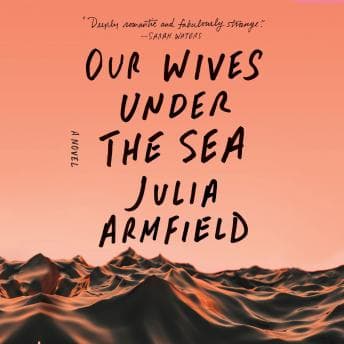

"Barely eating and lost in her thoughts, Leah rotates between rooms in their apartment, running the taps morning and night."
That line from the description? That's not even the half of it. I was sitting in my car in the hospital parking garage at 7:15 AM, shift over, engine running, and I couldn't make myself drive home. Because Leah was dissolving. Not metaphorically - well, yes metaphorically, but also something else entirely. And I just sat there with my hands on the steering wheel thinking about every patient I've ever watched slip away from the people who loved them while their families stood at the bedside asking me questions I couldn't answer.
Carlos asked why I was crying in the car. I blamed allergies. He didn't buy it.
When the Person You Love Comes Back Wrong
Julia Armfield does something gutsy here. She takes grief - the kind where someone is physically present but fundamentally gone - and wraps it in this slow, cold, deep-sea horror that never once feels like a gimmick. Miri's chapters are desperate and raw, full of flashbacks to how she and Leah fell in love, mixed with the present-tense nightmare of watching her wife become something unrecognizable. Leah's chapters are diary entries from the submarine, clinical and increasingly wrong, the way someone's charting gets weird when they're decompensating. (Sorry. Nurse brain. But that's genuinely what it reminded me of - those subtle shifts in documentation when a patient is declining and doesn't know it yet.)
The dual narrator setup works beautifully for this. Annabel Baldwin voices Miri with this barely-contained urgency underneath the British composure, and Robyn Holdaway gives Leah this detached, almost waterlogged quality that gets more pronounced as the story goes on. Here's the thing people are complaining about - both narrators keep their cool British accents even during the strangest, most disturbing moments. And I get why that bothers some listeners. But honestly? That restraint felt intentional to me. The horror here isn't loud. It's the dripping tap at 3 AM. It's the person next to you in bed who smells like salt water and won't eat and keeps filling the bathtub. The calm delivery made it creepier, not less.
That said - and I'm being real here - there were moments, particularly in Miri's more emotional flashbacks, where I wanted Baldwin to just crack. Just once. Let the grief rip through. The composure held the atmosphere but sometimes held the heart at arm's length too.
This Is a Grief Book Wearing a Wetsuit
People calling this confusing or slow are not wrong, exactly. But they might be expecting the wrong book. This is not a mystery with answers. The submarine expedition, what happened down there, why Leah is changing - Armfield gives you pieces but never a full picture. If you need plot mechanics and logical clarity, you will be frustrated. I know because part of my brain - the part that troubleshoots ventilator alarms and demands clear data - kept wanting a diagnosis. Tell me what's wrong with her so I can fix it.
But that's the point. Miri can't fix it either. She calls the research center. She leaves messages. She Googles. She does everything a desperate spouse does when the medical system gives you nothing. And God, do I recognize those families. I've been the one they're calling. Sometimes there are no answers and the person you love just keeps slipping.
At six hours, it's a short listen. Perfect for that post-shift decompression, though "decompression" feels darkly appropriate given the submarine content. I got through it in two drives home and one very long bath where I may have side-eyed the water a little.
The Body Horror Is Quiet but It Gets Under Your Skin
The mild body horror tag is accurate. Nothing graphic in a slasher sense. But the way Leah's body changes - becoming more aquatic, more other - is described with this clinical precision that, as someone who's actually worked a code and seen bodies do unexpected things, felt disturbingly plausible. The wrongness is in the details. Armfield doesn't shout. She just describes something slightly off and lets your brain fill in the rest.
My mom would love this, actually. She's big on love stories, and underneath everything, that's what this is. A love story about holding on when there's nothing left to hold.
Who Needs This in Their Ears
This is for the literary fiction crowd who doesn't mind horror creeping in through the walls. If you loved Piranesi or The Luminous Dead, you're in the right neighborhood. If you want fast pacing, clear explanations, or a satisfying resolution with all threads tied - skip it. House by the Lock sits in that same unsettling neighborhood - atmosphere-first, answers-optional, the kind of read that burrows in quietly and stays there. You'll just be annoyed.
Requires focus. Don't try this while running errands or doing charting. You'll miss the quiet moments that carry all the weight.
Night Shift Prescription
I'm giving this a strong recommendation with a caveat: let it be what it is. Don't fight the pace. Don't demand answers the book never promised you. Just sit in the grief and the strangeness and the love, and let it wash over you. Pun only slightly intended.