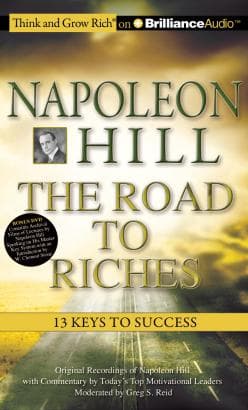

I was sitting in my home office at 11 PM, avoiding a pitch deck for a Series B client, when I decided to finally knock this one off the backlog. Four hours. Napoleon Hill. Archived footage from 1960. A parade of modern motivational speakers commenting on it. My consulting brain said "efficient use of time." My parents' dry cleaning brain said "just tell me what to do."
Neither brain was fully satisfied.
Hearing the Godfather Speak Is the Whole Point
Let me give you the bottom line: the archival recordings of Napoleon Hill and W. Clement Stone are genuinely fascinating. Hearing Hill himself - scratchy audio, 1960s cadence, that old-school lecturing style where every sentence sounds like it should end with a finger pointed at the audience - is worth something. One listener nailed it: "It was nice to hear the words from the horse's mouth." And they're right. There's a texture to hearing someone deliver their own ideas versus reading a summary on a blog. Hill's voice carries a conviction that hundreds of derivative self-help authors have tried to bottle and failed.
The 13 keys themselves? Definiteness of purpose, going the extra mile, applied faith - if you've read Think and Grow Rich, you've met these concepts before. They're repackaged here in countdown format, like a radio show. And honestly, for a 4-hour listen, the structure works. It's tight enough that even at 1.5x (I actually slowed down from my usual 2.0x to catch the archival audio quality) you don't feel like you're wading through filler.
But here's where it gets complicated.
18 Guest Commentators Walk Into a Recording Studio
The format is Hill and Stone share a principle, then a modern speaker - Bob Proctor, Sharon Lechter, Les Brown, Brian Tracy, and roughly 14 others - drops in with their take. It's like a motivational potluck where everyone brought potato salad.
Some of these contributions land. Some feel like they're padding their LinkedIn bios. The problem isn't any individual speaker - Greg Reid hosts capably, the production is clean, the transitions feel radio-show smooth. The problem is volume. Eighteen commentators across 13 principles means you're getting rapid-fire perspectives that rarely go deep enough to be actionable. It's breadth without depth. I've seen this exact pattern kill strategy decks at McKinsey - too many voices, not enough synthesis.
Compare this to Think and Grow Rich itself, which gives you one voice, one framework, and enough space to actually internalize the ideas. The Steve Jobs biography does something similar - one subject, one obsessive lens, and the depth that comes from not trying to please eighteen different audiences. That book respects the principle that repetition and depth create behavior change. Road to Riches gives you a tasting menu when you need a meal.
My Parents Already Knew All 13 Keys
This is what my parents did instinctively. Now it has a TED talk. Every single principle Hill outlines - definiteness of purpose, going the extra mile, a positive mental attitude, self-discipline - my mom and dad lived those principles pressing shirts 14 hours a day in Koreatown. They didn't need a countdown. They didn't need Bob Proctor telling them about visualization. They just showed up.
And that's my fundamental tension with this category of book. The ideas are sound. Hill was genuinely ahead of his time in codifying success principles. But the modern motivational-industrial complex has a way of making simple truths feel like premium content. You don't need 18 speakers to tell you that having a clear goal matters. You need one stubborn Korean couple who refused to close the shop early.
That said - and Jenny would say I'm being harsh, Jenny is right - there IS value here for someone early in their personal development journey. If you've never encountered Hill's framework, this is actually a pretty engaging introduction. The archival recordings add historical weight. The variety of speakers means you'll probably connect with at least two or three of them. Les Brown in particular brings energy that cuts through the format's limitations.
Who Gets ROI On This
If you're a Napoleon Hill completist or personal development junkie who wants to hear the man himself speak, this is worth a listen. The archival footage-to-audio conversion is genuinely cool, and at 4 hours it doesn't overstay its welcome.
If you've already read Think and Grow Rich and apply its principles? Skip this. You'll spend 4 hours nodding along without learning anything new. The modern commentary adds enthusiasm but not substance.
If you're a founder burning through runway at 3 AM wondering why your product isn't selling? This isn't your book. Go read something with a spreadsheet in it.
The Consulting Invoice
The key takeaway is worth the listen. The other 3 hours? Mostly reinforcement. Hill's voice from 1960 is the product. Everything else is packaging. At 4 hours it's efficient enough that I won't complain about time wasted, but I also won't be recommending it to my startup clients. It's comfort food for the self-help crowd - familiar flavors, nice presentation, nothing that'll change your operating model.