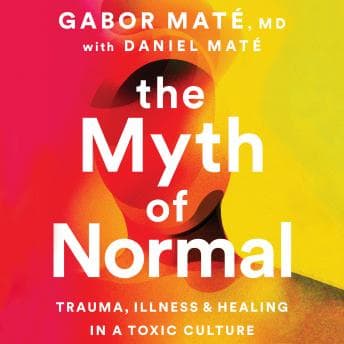

I was standing in my kitchen at 8 PM on a Tuesday, chopping onions for a vindaloo that was definitely going to be too spicy, listening to Gabor Maté dismantle the entire concept of Western medicine.
I was crying.
Was it the onions? Maybe. Was it the realization that my chronic need to please people—a trait my mother calls "being a good Indian daughter" and my therapist calls "fawning"—is actually a trauma response that inflames my immune system? Definitely.
Look, I analyze stories for a living. I tell my students that narrative is identity. But The Myth of Normal isn't just a story. It's a mirror. A very long, 18-hour mirror that forces you to look at the cracks in your own foundation. And honestly? It hurts. But in the way a deep tissue massage hurts—you know you need it to fix the knot.
The "Theater Kid" Energy in a Trauma Book
Let's talk about the elephant in the audio booth: Daniel Maté.
He's Gabor's son. He co-wrote the book. He narrates it. Psychologically, there's something fascinating about a son voicing his father's magnum opus on trauma (Freud would have a field day, let's be real).
But here's the thing that divided the internet—and my own brain—while I was listening. Daniel doesn't just read the quotes. He performs them. When he quotes a famous person or a patient, he does a voice. An accent. A tone change.
(I can hear you cringing.)
At first, I was like, "Daniel, please. We are discussing systemic oppression, do we need the character acting?" It felt a bit... much. But—and stick with me here—about four hours in, I realized I actually needed it. This book is dense. It is heavy. It is science-packed. A monotone drone would have lost me during the chapters on autoimmune diseases.
The voices, as jarring as they sometimes were, kept my brain engaged. Turned a lecture into a conversation. He has this rich, soothing cadence that anchors you when the subject matter gets dark. And it gets dark.
Why Being "Nice" Is Killing Us
The section on the "Cancer Personality"? I had to pause the track and stare at my half-chopped vegetables.
Maté argues that the suppression of anger—something society loves to reward, especially in women—is physically toxic. As someone who studies character motivations, this tracks. We see it in fiction all the time: the saintly mother who silently suffers until she breaks. The Midnight Library explores that same breaking point—what happens when suppressed regrets finally demand to be heard.
Maté connects the dots between our biography and our biology. He doesn't blame the victim; he blames the culture that demands we chop off parts of ourselves to fit in.
(My dissertation committee is going to get an email about this. Sorry, not sorry.)
He talks about how "normal" in our society is actually profound madness. We're adapting to a sick world and getting sick in the process. The ultimate gaslighting. Hearing this articulated so clearly—with actual scientific backing—felt like someone finally turned on the lights in a dark room I've been stumbling around in for years.
Who This Is (and Isn't) For
If you're a people-pleaser, a chronic over-functioner, or someone who's ever wondered why your body keeps score even when your mind insists you're "fine"—this is your book. Skip it if you want light listening or can't handle 18 hours that require your full attention. The middle section on politics gets granular, and the character voices will either charm you or drive you up a wall.
Cold Leftovers, Warm Revelations
Is this an easy listen? No.
It's 18 hours. It demands your attention. You can't listen to this while scrolling TikTok or answering emails. You have to be present.
But the payoff is massive. I finished feeling validated, slightly terrified, and weirdly empowered. It's a toolkit for understanding why we do the terrible things we do to ourselves.
My mother still thinks I read too much. But after this, I think I'm going to buy her a copy. She won't read it, but the symbolism counts.