
Every character in Miracle Creek is lying. The genius of Angie Kim's debut is that most of them don't know it yet.
I picked this up for a Saturday lakefront walk with Denise. Three hours later, she was home making dinner and I was still on a park bench, earbuds in, completely gone. She texted me "you alive?" and I genuinely considered not answering because Jennifer Lim was in the middle of a cross-examination that had my heart rate up like I was the one on the stand.
What Kim Is Really Putting on Trial
The setup sounds like a legal thriller, and it is one — a hyperbaric oxygen chamber called the Miracle Submarine explodes in rural Virginia, killing two people, and the ensuing murder trial uncovers layer after layer of secrets. But let's talk about what the author is really saying. Kim isn't just asking who lit the match. She's putting parenthood on trial. Desperation. The immigrant hustle. The question of how far you'd bend your own morality for a child you're told you can fix.
Kim rotates through perspectives — the Korean immigrant wife who knows more than she's telling, the mother accused of killing her own autistic son, the husband drowning in debt, the teenage daughter caught between two cultures — and each one is an unreliable narrator for reasons that have nothing to do with deception and everything to do with self-preservation. This reminds me of what Hemingway said about the iceberg theory, how the dignity of movement comes from what's beneath the surface. Except Kim inverts it. The surface is all testimony and confession. What's hidden underneath is the stuff these people can't even admit to themselves.
I teach my juniors about dramatic irony every fall. Kim deploys it ruthlessly. By the midpoint you know things about these characters that they don't know about each other, and you're holding three or four competing sympathies at once. It's genuinely uncomfortable. My students would hate this. I love it.
Lim's Southern Drawl Is a Loaded Gun
Jennifer Lim does strong, specific work here. Her prosecutor Abe has this friendly Southern drawl — warm, almost folksy — and it masks how precisely he's dismantling a witness. You can hear the trap closing two questions before the character feels it. Her defense attorney Shannon is a completely different animal: confident, relentless, the kind of voice that makes you sit up straighter even though she's not talking to you. The contrast between those two courtroom voices alone creates real tension.
But where Lim truly earns the performance is in the quieter chapters. Young Yoo's internal monologue — the weight of a Korean mother processing the chasm between what she sacrificed to come to America and what America actually gave her — Lim handles that with restraint. No melodrama. Just the pauses. The narrator understands that pause is punctuation. She lets Kim's sentences land, and some of them land hard.
The production includes original music by Steve Draughn, which threads through scene transitions without overwhelming them. I didn't consciously notice it until about hour five, which is exactly how a score should work.
Literary Fiction Wearing a Thriller's Clothes
Here's my English teacher bias showing: Kim writes sentences that do real work. The courtroom structure gives you the pacing of a page-turner, but the character chapters give you the kind of interior life you'd expect from — and I'm going to say it — a book that belongs on a shelf next to Celeste Ng or Jhumpa Lahiri. The immigrant experience here isn't decoration. It's the engine. The Yoos running this dubious medical device isn't just plot mechanics; it's about the particular vulnerability of building a life in a country that will always view you through a lens of suspicion.
Deadline pulls off a similar trick—a courtroom thriller where everyone's truth is a negotiation, and the narrator keeps the pressure so tight I graded not a single essay the weekend I picked it up.At 14 hours, it's a commitment, and it demands your attention. This is not a background listen. I tried grading papers during the trial scenes and had to stop because I kept missing critical testimony. When a book makes me choose between it and a stack of sophomore Gatsby essays — and the book wins? The prose deserves to be savored.
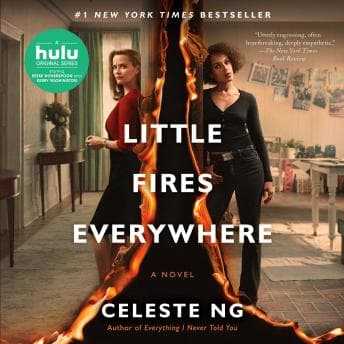
Jennifer Lim also narrates the audiobook of Little Fires Everywhere, and hearing her shape-shift between Celeste Ng's suburban tensions and Angie Kim's courtroom fire makes me want to go back just to catch everything I missed.If you loved Celeste Ng's Little Fires Everywhere or Jodi Picoult's courtroom dramas but wished they hit harder and trusted you more as a reader, this is its spiritual successor. If you're a parent of a special-needs child, fair warning: some of these chapters will sit heavy in your chest for days.
Skip it if you need a clear villain. Kim doesn't give you one. Every character is sympathetic and culpable in roughly equal measure, and if that moral ambiguity frustrates you, this isn't your book.
Worth Canceling the Faculty Meeting For
Angie Kim didn't just write a courtroom thriller. She wrote a novel about the lies we tell when love and desperation share a room — and Jennifer Lim makes sure you hear every single one of them. An Edgar Award winner that earned it. This is why we still read the classics, and why, once in a while, a debut shows up that earns the right to sit beside them.
(Principal Martinez, I was definitely paying attention during last Tuesday's budget meeting. I was not finishing this book during your attendance policy review. I promise.)