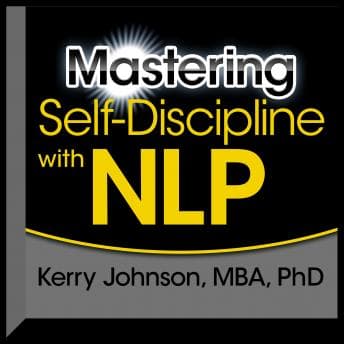

I started this audiobook because my own self-discipline is currently holding on by a thread and a double espresso. Kerry Johnson promises to "end procrastination forever." Bold claim. (My therapist would call that "setting unrealistic expectations," but fine, I'll bite.)
I listened to this while avoiding my own research papers—ironic, I know—hoping for a psychological hack that would force me to sit down and write. And honestly? For the first four hours, Johnson actually makes a compelling case.
The Brain Hacks (Mostly) Work
Here's the thing about NLP (Neuro-Linguistic Programming): in the academic world, we side-eye it sometimes. It can feel a bit like pop-psychology magic tricks. But Johnson strips away the mysticism and presents it as straight-up cognitive reframing. He talks about identifying unconscious factors blocking your goals—basically Psych 101, but packaged in a way that's actually usable.
The section on rooting out self-limiting fears? Spot on. I found myself nodding along while chopping vegetables for a curry I definitely didn't need to spend two hours making. He understands that the human mind loves patterns, even the destructive ones. If you're completely new to behavioral psychology, this is a solid, accessible entry point. Essentialism: The Disciplined Pursuit of Less takes a similar approach—practical psychology dressed up for people who need to actually get things done. It's not going to get published in a peer-reviewed journal, but it might help you clean your garage.
Johnson Behind the Mic
Johnson narrates it himself, which is usually a gamble. (Authors often think they can act. They usually can't.) But he's a speaker by trade, so he pulls it off. His delivery is crisp, professional, and has that specific "business seminar" cadence. You know the type—confident, slightly rapid, very "I have the answers." It kept me engaged during a long commute on the T, which is saying something because usually, I just zone out and people-watch.
Then We Went to Church?
Okay, we need to talk about the ending. Because psychologically, this track doesn't follow.
I was vibing with the practical tips, feeling ready to conquer my dissertation, and then—wham. The last 45 minutes veer hard into a religious sermon. I literally checked my phone to see if the app had skipped to a different book. It's jarring. One minute we're talking about cognitive restructuring, and the next, we're deep into a theological tangent that feels completely out of place in a book about NLP.
It feels like a bait-and-switch. If you're going to write a religious book, write a religious book. But sneaking it into a business psychology guide? That triggers my "unrealistic character motivation" alarm. It undermines the scientific grounding of the first few hours.
Who Gets the Prescription
If you're a chronic procrastinator looking for practical cognitive tools and don't mind a secular-to-spiritual pivot, give it a go. Skip this if unexpected religious content is a dealbreaker, or if you want rigorous academic psychology—this isn't that.
My Rx, With Caveats
Is it worth a credit? Maybe. The first 80% is a genuinely helpful toolkit for procrastination. Just do yourself a favor: when you sense the tone shifting near the end, hit stop. Take the psychology, leave the preaching. That's my prescription.