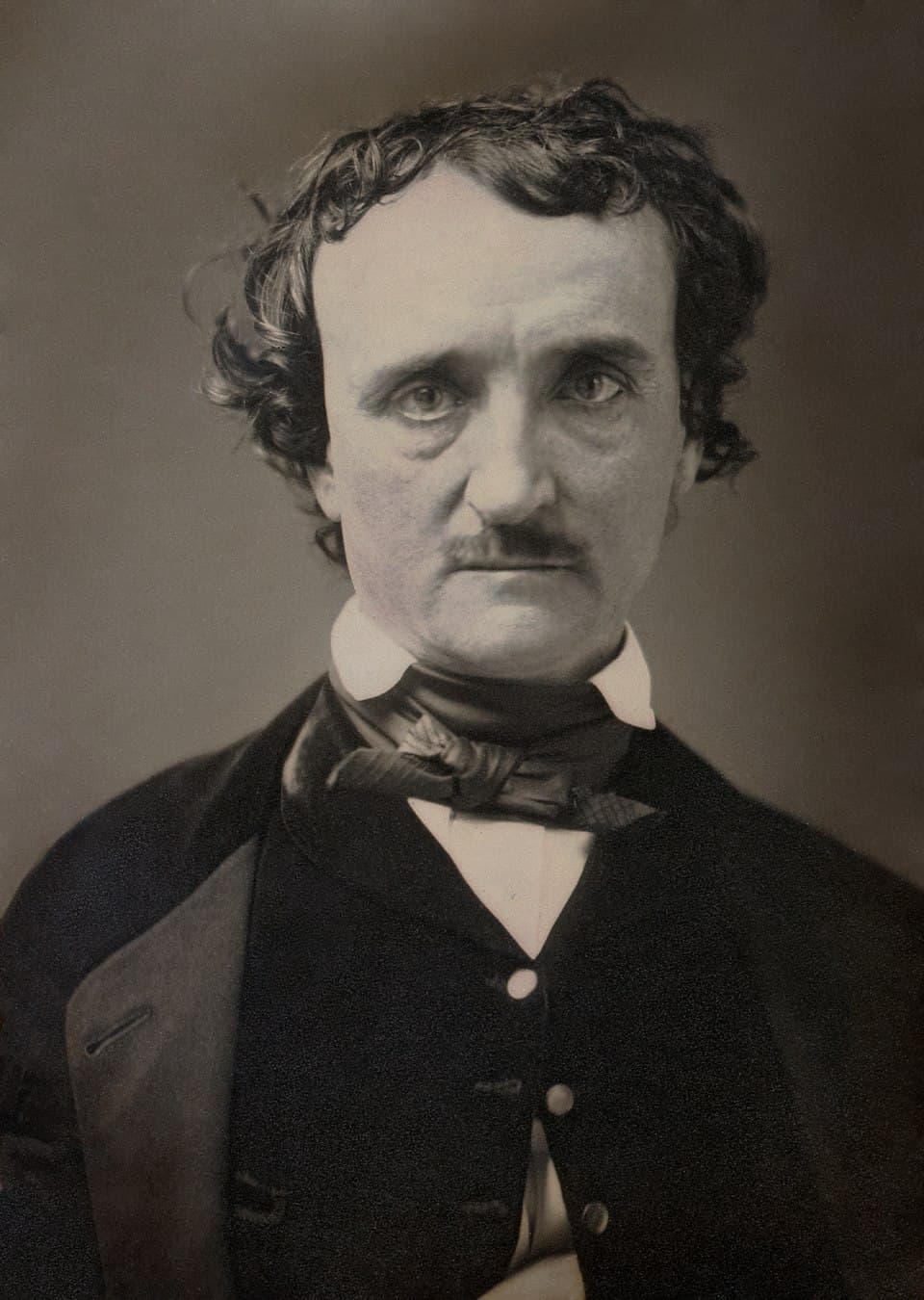

Seventeen minutes. That's all Poe needed to remind you that wealth, walls, and willful ignorance won't save you from what's coming.
I listened to this between grading a stack of junior essays on symbolism — the irony being that half of them were writing about this exact story — and I'll tell you, hearing it performed aloud after reading it on the page for twenty years hit different. There's something about the spoken word that makes Poe's rhythmic, almost hypnotic sentence structures land the way he intended. The man wrote for the ear even when he was writing for the page.
I find that same ear for rhythm in his poetry, especially Raven, which practically demands to be read aloud.The Ebony Clock Still Chills
Let's talk about what Poe is really doing here, because I think people reduce this to "rich guy throws party, everyone dies." Sure. But the architecture of this story — those seven colored rooms progressing from blue in the east to black-and-scarlet in the west, literally mapping the trajectory of a human life from dawn to death — that's not just atmosphere. That's structural genius packed into fewer words than most of my students' college application essays.
And the clock. Every hour that ebony clock strikes and the musicians stop, the dancers freeze, the laughter dies. Then the chiming ends and everyone nervously laughs it off and goes back to pretending. If that doesn't describe every faculty meeting I've sat through where someone raises the budget crisis and we all just... move on to the next agenda item, I don't know what does.
Poe understood denial as a social contract. Prince Prospero doesn't just hide from the Red Death — he throws a party to celebrate his hiding. He turns cowardice into spectacle. And when the masked figure finally appears, bleeding from every pore, walking slowly through each of those seven rooms? Prospero's anger isn't fear. It's indignation. How dare death crash his party. My students would hate this. I love it.
On Bagnell and the Problem of Seventeen Minutes
Here's where I have to be straight with you: at seventeen minutes, there's only so much a narrator can show you. Juan Carlos Bagnell reads this cleanly — no distracting affectations, no over-dramatizing the horror, which is the right instinct with Poe. The temptation with this material is to go full Vincent Price, and restraint is the harder choice. The prose deserves to be savored, and Bagnell seems to understand that.
But I'll admit I wanted more. The moment when the revelers realize the masked figure has no tangible form beneath the cerements — that "the grave-cerements and corpse-like mask" conceal nothing — that reveal should stop your blood. It needed a longer pause, a shift in register, something to mark the turn from gothic drama to existential horror. The narrator understands that pause is punctuation, mostly, but the biggest punctuation mark in the story felt slightly rushed.
At seventeen minutes, there's also just not enough runtime to fully evaluate range. This is a single-voice piece with essentially one speaking character (Prospero's brief outburst) and a lot of descriptive narration. Bagnell handles the descriptive passages well — Poe's rolling, clause-heavy sentences don't trip him up, which is more than I can say for some audiobook narrators I've suffered through.
Who This Is Really For
If you've never read this story — and statistically, even if you think you have, you probably read an excerpt in ninth grade and forgot it — this is a perfect entry point. Seventeen minutes on your commute. Seventeen minutes before bed. Seventeen minutes instead of doomscrolling. (Denise would say the Poe is less depressing than my news feed. She's right.)
If you're a Poe devotee looking for a definitive audio performance, this is solid but won't replace whatever's already living in your head. And if you're teaching this story — hi, fellow English teachers — playing this for your class is a better use of time than reading it aloud yourself while thirty teenagers stare at their laps pretending their phones aren't there.
This is why we still read the classics. Because a story written in 1842 about a plague and the arrogance of the wealthy still lands with the subtlety of a brick through a window. Poe didn't need three hundred pages. He barely needed three thousand words.
I'd point you toward Works of Edgar Allan Poe, Raven Edition, Volume 2 for a broader taste—just know the narration quality is a bit of a mixed bag.Worth Pausing the Faculty Meeting For — But Maybe Not a Credit
The story is perfect. The performance is competent and respectful. But at seventeen minutes, spending a full credit feels like paying steakhouse prices for an amuse-bouche. Stream it, borrow it, find it through your library app. Just hear it. And listen at 1.0x, because the author chose those words, and the rhythm of Poe's prose is half the horror.