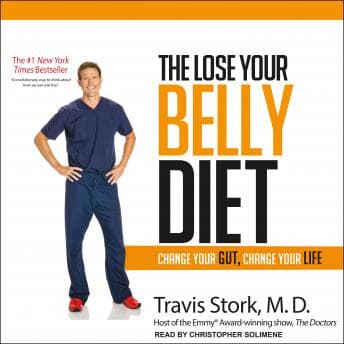

Six hours and ten minutes on gut bacteria. That's what I committed to on a Sunday morning while Jenny dragged me to the farmers market - which, honestly, felt appropriate given the subject matter.
Here's the bottom line: Travis Stork wrote a perfectly competent, reasonably well-organized health book that packages legitimate microbiome research into an accessible format. It is not, however, going to change your life. It's going to give you a solid foundation for understanding why your gut matters and then hand you some meal plans. If that's what you need, great. If you've already read one or two books on gut health, you can skip this.
Your Gut Has a PR Problem
Stork's central thesis - that the microbiome drives everything from weight to immune function to skin health - was cutting-edge when this book came out. Now it's practically mainstream. The first couple hours lay the scientific groundwork: how gut bacteria influence inflammation, how processed foods wreck microbial diversity, how fiber is basically the superhero nutrient nobody wants to talk about because it's not sexy. Standard stuff, but Stork delivers it with an ER doctor's clarity. He's good at translating clinical concepts into "here's why you should care" language.
The problem? If you've listened to Giulia Enders' Gut or read anything by the Sonnenburgs, you've heard most of this before. Stork's version is more prescriptive and less scientifically deep, which is either a feature or a bug depending on what you're after. He spends less time on the fascinating weirdness of microbial ecosystems and more time on "eat this, not that" frameworks.
The Meal Plans Hit Different in Audio
Let me be real about the format issue. This book has recipes and meal plans. In audio. I was standing next to a bin of organic kale listening to Christopher Solimene read ingredient lists, and I thought - who greenlit this? Solimene does a perfectly serviceable job with the narrative portions. Clear diction, steady pacing, professional tone. He sounds like a news anchor reading a health segment, which is... fine? Not distracting, not memorable. But when he gets to the recipe sections and you're trying to mentally catalogue whether it was two tablespoons of olive oil or two teaspoons, the audiobook format actively works against you.
This is a book that probably needs to live on your kitchen counter in print form. The concepts and science translate well to audio. The practical application sections? Not so much. I found myself wishing the audio version had been edited down to just the "why" chapters - which would've been maybe 3.5 hours and honestly a tighter, better product.
What My Parents Already Knew
Here's what got me. Stork's big dietary recommendations boil down to: eat more fermented foods, eat more vegetables, eat more fiber, cut processed junk, cook at home. This is what my parents did instinctively. Now it has a TED talk. My mom's kimchi jjigae was a probiotic delivery system decades before anyone in mainstream American health media was talking about microbiome diversity. The Korean diet - heavy on fermented vegetables, whole grains, minimal processed food - is essentially what Stork is prescribing, just without the banchan.
I don't say this to dismiss the book. There's genuine value in having an MD explain why these dietary patterns work at a microbiological level. And for listeners who grew up on the Standard American Diet, this could be genuinely eye-opening. But I kept thinking about my mom just... doing all of this without needing a 300-page book to tell her.
Stork does deserve credit for being relatively hype-free by diet book standards. He's not promising you'll lose 30 pounds in 30 days. He's not selling supplements. He repeatedly emphasizes that this is about long-term gut health, not crash dieting. The contrast with genuinely overhyped technical promises is real — my Machine Learning: The New AI review gets into exactly how that kind of breathless overclaiming erodes trust in otherwise legitimate science. For a book with "Lose Your Belly" in the title, it's surprisingly measured. The ER doctor in him keeps the snake oil at bay.
Who Gets ROI Here
If you're new to the gut health conversation and want a single, clear, doctor-approved entry point - this works. If you're someone who needs the "what to eat" spelled out rather than just the theory - this works, though I'd strongly recommend getting the print version alongside the audio. If you've already gone down the microbiome rabbit hole, my 2.0x speed couldn't save this one from feeling like a refresher course.
The key takeaway is worth the listen. The other 7 hours? Not so much. (Okay, six hours. But at 2.0x it was three, and even that felt padded.)
Wait for a sale, grab the paperback for the recipes, and maybe just call your Korean mom. She's been ahead of this curve for forty years.