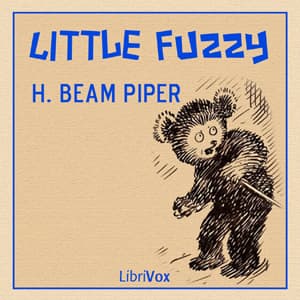

**Quick Verdict:** Worth your commute. Classic 1960s sci-fi that asks "what makes a species sapient?" - and the answer involves tiny fuzzy aliens who steal your heart before you hit hour two.
I finished this in exactly three morning commutes, which is the perfect length for what it is. And look, I need to be upfront: this is a LibriVox recording, which means volunteer narration, which means your expectations should be calibrated accordingly. Tabithat does solid, clear work here - no weird audio artifacts, no stumbling over Piper's prose - but this isn't a professional Audible production with Ray Porter doing seventeen distinct character voices.
The Scalzi Elephant in the Room
So here's the thing most people won't tell you: John Scalzi wrote "Fuzzy Nation" as a reboot of this exact story, and Wil Wheaton's narration of that version is objectively more polished. I've listened to both. Scalzi's version is slicker, funnier, more modern in its pacing.
But.
Piper's original has this earnest 1962 charm that Scalzi's doesn't quite capture. Jack Holloway in this version isn't a snarky modern protagonist - he's a grizzled prospector who discovers these cat-sized fuzzy creatures and immediately goes full protective dad mode. There's something genuinely sweet about it that doesn't feel manufactured.
When Corporate Interests Meet Cute Aliens
The actual plot is basically "are these creatures legally sapient, and what happens when billions of dollars in mining rights depend on the answer?" Which - okay, as someone who works in tech and has sat through more than a few ethics discussions about AI sentience - this hits different in 2024 than it probably did in 1962.
Piper structures it almost like a courtroom drama in the back half. The Fuzzies themselves are adorable (even just through audio description - they carry tiny tools, they mourn their dead, they adopt humans right back), but the real tension is watching corporate lawyers try to argue that obvious intelligence doesn't count as sapience because of some technicality.
(My boyfriend Kevin, who has strong opinions about tech company ethics, would have a field day with this one.)
The Audio Experience, Honestly
Tabithat's narration is... fine? Clear, well-paced, no weird pronunciation issues. But there's not a ton of vocal differentiation between characters, so you occasionally need to pay attention to dialogue tags. At 6AM on a packed Caltrain, half-asleep, I lost track of who was speaking maybe twice.
The production is clean LibriVox quality - no background noise, no audio glitches. For a free audiobook, you really can't complain. I bumped it to 1.25x because the original pacing felt slightly leisurely for my taste, and that worked perfectly.
The Science Actually Holds Up (Mostly)
Piper was writing before we had modern cognitive science, but his criteria for sapience - tool use, language, abstract thinking, cultural transmission - are surprisingly close to what researchers still debate today. The courtroom scenes where experts argue about what constitutes "true" intelligence versus sophisticated mimicry? That's basically every AI ethics panel I've ever attended, except with fuzzy aliens instead of large language models. Iron Gold wrestles with similar questions about personhood and power structures, though Pierce Brown swaps the courtroom for a solar system on the brink of collapse.
The one dated element: some of the gender dynamics are very 1962. Not egregiously bad, just... of its time. The female characters exist mostly to be supportive or to need protecting. If that's a dealbreaker for you, Scalzi's reboot fixes it.
Who Gets the Best ROI Here
**Listen if:** You want a short, free classic that's perfect for commutes or gym sessions - straightforward enough to follow when you zone out, engaging enough to keep you hooked. **Skip if:** You need deep character work, modern gender dynamics, or professional-grade narration. In that case, grab the Scalzi/Wheaton version instead.
At 5 hours 38 minutes, this is a weekend listen or a week of commutes. Would I recommend the Scalzi/Wheaton version over this one if you're spending a credit? Probably yes. But if you want the original, or you're broke, or you just want to understand what all the Fuzzy fuss is about - Tabithat's version does the job.
Just don't expect Ray Porter. Nobody's Ray Porter except Ray Porter.