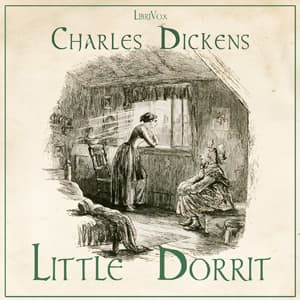

Look, I need to start with a complaint. Thirty-six hours. Thirty-six. That's longer than some of my students spend on homework in an entire semester. When I first saw that runtime, I almost walked away. But here's the thing about Dickens - the man was paid by the word, and honestly? He earned every penny.
I listened to this during my lakefront walks with Denise, during late-night grading sessions, and yes, during at least three faculty meetings about standardized testing protocols. (Principal Martinez, I promise I caught the important parts. Probably.) And somewhere around hour twelve, I stopped checking how much time was left and started hoping it wouldn't end.
The Marshalsea Made Me Care
Dickens does something here that I try to explain to my AP Lit students every year - he makes institutions feel personal. The debtors' prison isn't just a setting. It's a character. It breathes. It shapes everyone who passes through it. Little Dorrit herself, Amy, is born there, and Dickens uses her as this quiet moral center while the chaos of Victorian society swirls around her.
What struck me - and I've taught Dickens for two decades, so this isn't nothing - is how contemporary the social critique feels. The Circumlocution Office, with its endless bureaucratic nonsense and "How Not To Do It" philosophy? I've attended those meetings. We all have. Dickens was writing satire in 1857 that lands harder than half the op-eds I read last week.
The Dorrit family's arc is devastating in the best way. That same kind of devastating family loyalty shows up in Count of Monte Cristo, though Dumas gives us revenge where Dickens gives us endurance. William Dorrit's self-delusion, his desperate clinging to respectability while literally imprisoned for debt - it's painful to witness. And when fortune finally changes for them, Dickens doesn't give us the easy redemption story. The rise becomes its own kind of fall. My students would hate this. I love it.
Ellis Christoff Gets Victorian Rhythm
Here's what I couldn't find much about online - who exactly is Ellis Christoff? But based on this performance, I don't need a bio. The narrator understands something crucial: Dickens wrote for the ear. These novels were serialized, meant to be read aloud in parlors. The sentences have rhythm. They have breath marks built in.
Christoff doesn't rush. Thank God. The character differentiation is solid - you can tell when we've shifted from the pompous Mr. Merdle to the scheming Rigaud without Christoff resorting to cartoon voices. There's a dramatic quality to the delivery that matches Dickens' own theatrical instincts, but it never tips into melodrama. The emotional moments land because Christoff trusts the text.
I listened at 1.0x because - and my students roll their eyes every time I say this - the author chose those words. The pauses Christoff takes? Those are punctuation. The slight shift in energy between narrative passages and dialogue? That's interpretation, and it's good interpretation.
What Thirty-Six Hours Left Behind
The thing about long audiobooks is they become companions. This one walked the lakefront with me for almost two months. I know the Dorrit family now. I've sat with Arthur Clennam's quiet decency and his complicated feelings about his cold, religious mother. I've watched Little Dorrit love her father despite everything, and I've watched that love cost her.
Dickens isn't subtle. He never was. The villains are villainous, the virtuous are virtuous, and the social commentary hits you over the head like a Victorian sledgehammer. But there's a reason we still read him - still listen to him - 170 years later. The prose deserves to be savored. The characters feel real even when they're exaggerated. And the narrative scope is genuinely impressive.
Who's Got the Patience (And Who Doesn't)
If you need tight plotting and fast pacing, you'll be checking the time by hour three. If you're not interested in Victorian social structures or the particular rhythms of 19th-century prose, this will feel like homework. (And not the good kind.) But if you loved Bleak House, if you've ever found yourself lost in the world of Great Expectations, if you believe - like I do - that there's something irreplaceable about spending time with a storyteller who takes his time? This is worth every one of those thirty-six hours.
Class Dismissed
Denise asked me last week what I was listening to. I tried to explain the plot. Gave up after five minutes. "It's Dickens," I finally said. "It's everything."
She nodded. She's heard this before.