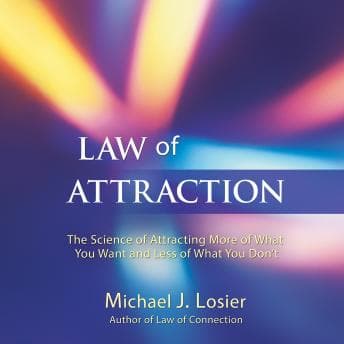

Look, I'm going to be honest with you: I went into this one skeptical. Like, really skeptical. I'm a software engineer. I debug distributed systems for a living. The idea that I can "attract" a bug-free deployment by thinking positive thoughts is... not how reality works.
But here's the thing - this audiobook clocks in at just over two hours. That's basically one Caltrain round trip. And sometimes, when you're burned out from staring at error logs, you just want something that feels like a pep talk. So I gave it a shot.
The ROI Calculation
Quick Verdict: This is basically a self-help framework dressed up in "science" clothing. And I use "science" very loosely here - we're not talking peer-reviewed studies. We're talking about Losier's 3-step formula: Identify Your Desire, Give Your Desire Attention, and Allowing. It's structured, which I appreciate. It's practical in the sense that there are actual exercises you can do. But if you're expecting anything resembling actual scientific methodology, you're going to be disappointed.
What Losier does well is break things down into actionable chunks. There's this concept of "contrast" where you identify what you don't want, then flip it to what you do want. Okay, fine. That's basically reframing negative requirements into positive user stories. I can work with that mental model. The exercises around clarifying your goals? Actually not terrible. I found myself thinking about some career stuff I'd been avoiding.
The problem is when he starts talking about "vibrations" and the universe responding to your energy. My inner skeptic was screaming. This is where the book loses me - it conflates goal-setting and positive mindset (which have actual psychological backing) with some vague metaphysical force. Could've been a blog post if you stripped out the woo-woo parts.
Losier Behind the Mic
Losier narrates this himself, and honestly? It's a mixed bag. He's enthusiastic - maybe too enthusiastic for a 6AM commute when I'm barely functional. There's this motivational speaker energy that can feel a bit much. Like, I get it, you believe in this stuff. But the pacing is actually pretty good, and he's clear enough that I could follow along while half-asleep surrounded by other tech zombies.
The bonus content is kind of nice - there's a Q&A session and a guided meditation at the end. I didn't hate the meditation, though I also didn't do it on the train because I'm not trying to be that person.
One thing that bugged me: some of the phrasing felt repetitive. He really hammers home certain concepts, which I guess is intentional for retention, but it started to drag in the middle. I bumped it up to 1.5x and that helped.
Match Your Use Case
Queue it up if: You want a structured goal-setting framework and don't mind the metaphysical packaging. Also great if you're new to self-help and want something short and digestible.
Hard pass if: You're going to get annoyed by the lack of actual scientific evidence. If you've already read Atomic Habits or anything by behavioral psychologists, this is going to feel pretty surface-level. And if you're looking for actual psychological depth without the woo-woo, Adult Children of Emotionally Immature Parents delivers real frameworks grounded in clinical practice.
Deploying My Final Thoughts
Here's my honest take: I didn't hate it. I rolled my eyes at parts, sure. But the core message - get clear on what you want, focus on it, stop dwelling on what you don't want - that's not wrong. It's just dressed up in language that makes my engineer brain twitch. The exercises around clarifying desires are genuinely useful if you engage with them.
Would I listen again? Probably not. But for a single commute, it wasn't a waste. Kevin asked me if I was going to start manifesting a promotion and I told him I'm manifesting fewer production incidents. We'll see how that goes.