
Four hours. This book is four hours long and it still felt padded.
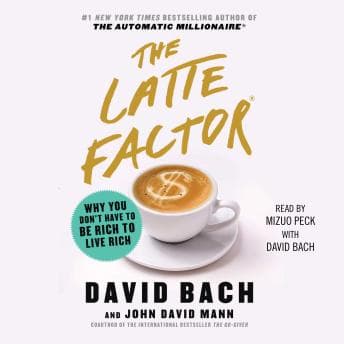
I was reorganizing my home office at 10 PM on a Tuesday - Jenny was already asleep, I had a stack of client decks to shred, and I figured a short audiobook about personal finance would be the perfect background companion. The Latte Factor promised me "three secrets to financial freedom" wrapped in a parable. What I got was a Brooklyn coffee shop fairy tale that my parents would've side-eyed so hard it'd qualify as an Olympic sport.
The Advice Your Parents Already Gave You, Now With a Fictional Barista
Here's the premise: Zoey, a twentysomething in New York, is broke despite having a decent job. She meets Henry, a wise old barista who teaches her that if she stops buying $5 lattes and invests that money instead, compound interest will make her rich. That's... basically it. Pay yourself first. Don't spend on things you don't need. Make your money work for you.
I got the same lesson with less fictional dressing in The Automatic Millionaire.This is what my parents did instinctively. Now it has a TED talk.
Look, I don't want to be completely unfair here. David Bach has built a career on making personal finance accessible, and for someone who has genuinely never encountered the concept of compound interest or automatic savings, this book might land like a revelation. The parable format keeps things moving - Zoey's week-long financial awakening unfolds quickly, and at four hours, the audiobook at least has the decency not to waste too much of your life. But the "secrets" are so foundational that anyone who's read literally one personal finance article in the last decade will be sitting there going, "...and?"
The fictional wrapper doesn't help. Henry the barista is less a character and more a fortune cookie with an apron. He dispenses wisdom in perfectly timed nuggets, Zoey has her predictable resistance-then-epiphany arc, and the whole thing wraps up neater than a McKinsey deliverable. Which, trust me, is not a compliment to the storytelling.
Where Mizuo Peck Saves (and Doesn't Save) the Day
Mizuo Peck handles narration duties and she's... fine. Clean, clear delivery. She keeps the pace up, which matters when the content is this thin. There's a functional quality to her read that works for the instructional nature of the book - you're never confused about what's happening or who's speaking.
But here's the thing - the moments where David Bach himself reads sections? You can actually hear the guy's conviction. The passion difference is noticeable. It's like watching a competent understudy and then the lead walks on stage. Peck is professional, Bach is personal. Some listeners apparently found her accent distracting at points, and I can see that - there were a few moments where I had to rewind (at 2.0x, that's saying something), though nothing catastrophic.
The production is straightforward. No music, no sound effects, no full cast. Just narration. For a four-hour parable about saving money, that's probably the right call. You don't need a cinematic soundscape to tell someone to stop buying overpriced coffee.
The Math Is Real, the Story Is Not
I want to be precise about what bothered me. The underlying financial advice isn't wrong. Small daily savings, invested consistently over decades, do compound into significant wealth. That math is real and it's powerful. Bach's original "Latte Factor" concept from his earlier books genuinely shifted how a lot of people think about discretionary spending. I respect that.
What I can't respect is packaging advice that fits on an index card into a parable format and acting like you've written a book. The fictional elements add nothing that a good 20-minute podcast episode couldn't deliver better. And the book completely sidesteps the real conversation - that for a lot of people, especially younger workers drowning in student debt in expensive cities, the problem isn't the $5 latte. It's stagnant wages, healthcare costs, and housing prices that have outpaced income growth for decades.
My parents didn't build their dry cleaning business by skipping coffee. They built it through 14-hour days, zero vacations, and strategic reinvestment. The Latte Factor's cheerful "just redirect your spending!" message feels incomplete at best, patronizing at worst.
Jenny would say I'm being harsh. Jenny is right. But also - I'm not wrong.
Who Gets the Most From This Brew
If you're 22, just got your first paycheck, and have never thought about investing or automatic savings, this could genuinely change your financial trajectory. The parable format makes it non-intimidating, and at four hours, it's a single commute day's worth of listening. For that specific audience, bump my rating up a full point in your head.
If you've read The Automatic Millionaire, Rich Dad Poor Dad, or basically any personal finance book published since 2003, skip this. You already know everything Henry's going to tell Zoey. My 2.0x speed couldn't save this one - not because it was slow, but because even at double speed, I was still ahead of every "revelation" by about three chapters.
The Consulting Debrief
Bottom line: The Latte Factor is a gateway drug to financial literacy, not a serious financial education. It's well-intentioned, competently narrated, and approximately three hours and forty-five minutes longer than the content requires. The key takeaway is worth the listen. The other 3 hours? Not so much. Save your credit for something with more substance - and maybe put that $14.95 into an index fund instead. Henry would approve.