![L’ogive du jugement dernier [Carl's Doomsday Scenario] audiobook cover](/_next/image?url=https%3A%2F%2Fm.media-amazon.com%2Fimages%2FI%2F51qgYdTx1qL._SL1200_.jpg&w=1920&q=75)

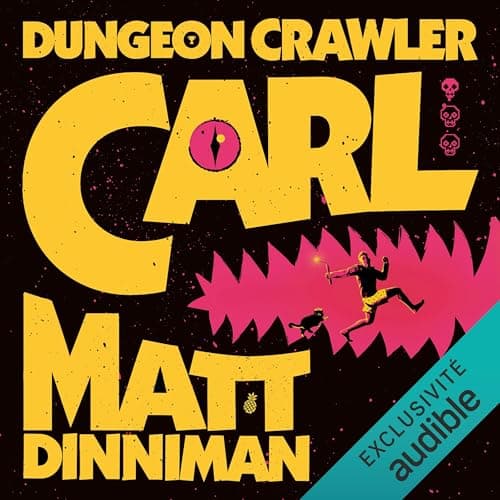
Dungeon Crawler Carl en français is something I didn't know I needed at 3 AM while charting vitals on a quiet trauma unit.
Let me back up. I picked this one up because my youngest has been obsessed with those dungeon-crawling video games, and I figured understanding the appeal might help me connect with him over something other than my lectures about screen time. Twelve hours later, I'm the one hooked, listening in the break room with one earbud in while monitoring a post-op patient, trying not to laugh out loud when Carl gets himself into yet another absurd situation that somehow feels life-or-death.
A Cat, a Kid, and the Apocalypse Walk Into a Dungeon
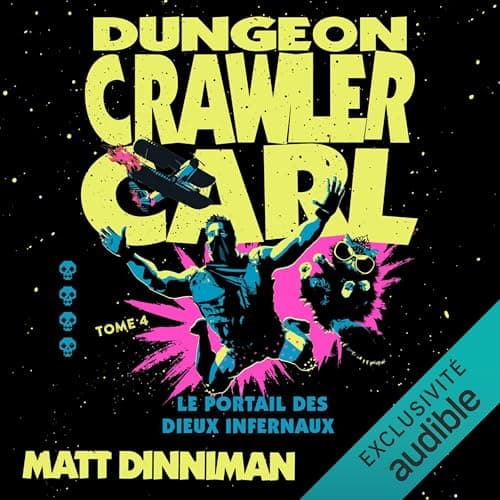
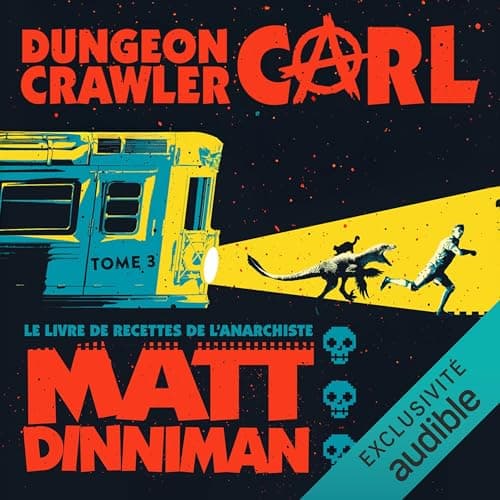
So here's the setup if you're new: Earth got wrecked, survivors got sucked into a massive dungeon game broadcast as entertainment for aliens, and our guy Carl - just some dude in boxer shorts - is trying not to die alongside Donut, his ex-girlfriend's cat who can now talk and has become a galaxy-wide celebrity. This second book, L'Ogive du jugement dernier, picks up at level three, where Carl, Donut, and their new companion Mongo (a baby dinosaur, because sure, why not) have to choose races and classes. The stakes feel bigger because the class selection actually changes who these characters are - not just stat sheets, but personality, abilities, identity. It's the kind of permanent choice that made my stomach tighten, which is ridiculous for a book about a talking cat in a video game dungeon. That gut-level tension over choices you can't undo reminded me of what Feyre goes through in A Court of Mist and Fury (10th Anniversary Recording), where identity transformation is the real stakes underneath all the fantasy spectacle.
The level three setting is a sprawling interconnected metropolis - six urban tiers stacked on top of each other - and Dinniman uses that vertical architecture to keep the tension ratcheting. You never know what's around the corner or, worse, what's directly above you. The monster encounters are equal parts horrifying and laugh-out-loud stupid. There's a quality to the humor here that reminds me of night shift gallows comedy - you're laughing because the alternative is screaming, and both reactions are completely valid.
Sylvain Agaësse Understood the Assignment
I don't speak French fluently (Tagalog and English are my lanes), but I've got enough from college and Carlos's grandmother to follow along, and I wanted to test my comprehension. Sylvain Agaësse made that easy. The man shifts between Carl's dry, exhausted sarcasm and Donut's theatrical diva energy like they're different people sharing his vocal cords. His delivery of the absurd game notifications - those cold, bureaucratic announcements that pop up while people are literally dying - hits this perfect deadpan that sells the dark comedy. When the action kicks in, his pacing accelerates without losing clarity, which is harder than it sounds. I've listened to narrators who get loud during fight scenes and call it energy. Agaësse actually modulates - tension in the quieter moments, controlled chaos in the loud ones.
The French translation by Chloé Atangana deserves credit too. LitRPG terminology could easily sound clunky translated, but the gaming vocabulary feels natural. The humor lands, which is the real test - comedy is the hardest thing to translate, and the comedic timing between Dinniman's writing and Agaësse's delivery stays intact.
When the Game Stops Being a Game
What got me - and this is where I nearly woke up Carlos pulling into the driveway because I said "oh no" out loud - is how the quests start disrupting the expected game structure. Carl and Donut get pulled into situations that don't follow the rules they've learned, and the system itself starts feeling unreliable. As someone who works in a system (healthcare, hi) where protocols can fail you at the worst possible moment, that hit different. The book asks a real question underneath all the absurdity: what do you do when the rules you're surviving by stop applying?
The dynamic between Carl, Donut, and Mongo evolves in ways I didn't expect. Mongo's presence changes the group's risk calculus - suddenly Carl isn't just trying to survive, he's protecting something vulnerable, and that parental instinct layer adds genuine emotional weight to encounters that could otherwise just be action set pieces. (My mom would say this is the book telling me I should've had a fourth kid. No, Mom.)
Who Should Listen (And Who Should Skip)
If you like dark humor with real heart, LitRPG that doesn't require a gaming degree, or you just need something that'll make a brutal commute disappear - this is your listen. Skip it if you need your fiction serious and grounded; the talking-cat-in-a-video-game-dungeon premise never stops being exactly that, and the book leans into the absurdity hard.
Charting My Final Note
This is a 12-hour commitment that earns its runtime. The pacing rarely sags, the humor keeps you from drowning in the darkness, and Agaësse's narration is the kind of performance that makes you forget you're listening to one person. It's not literature that's going to win prizes. It's better than that - it's the kind of story that makes a 45-minute drive home from a brutal shift feel like ten minutes. Night shift approved, with the caveat that you should not listen during anything requiring your full medical attention. I learned that the hard way.