
"The dream is the liberation of the spirit from the pressure of external nature, a detachment of the soul from the fetters of matter."
Somewhere around hour three, Freud dropped that line and I actually stopped mid-step on the Caltrain platform, nearly getting bowled over by a guy with a Patagonia vest and a death wish. That's the kind of book this is—the kind that makes you miss your stop because you're too busy thinking about whether your recurring dream about forgetting your laptop password is actually about your relationship with your father.
21 Hours of Your Brain Debugging Itself
Bottom Line: This is basically a code review of your unconscious mind, written by the guy who invented the framework. Dense, occasionally frustrating, but genuinely fascinating if you're into understanding why your brain does weird stuff at 3AM.
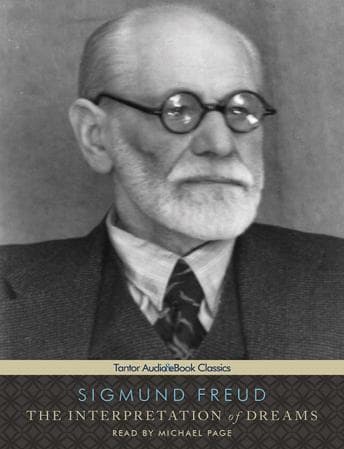
Let me be honest upfront: this is not a casual listen. At 21 hours and 30 minutes, this is a commitment. I finished it over about two weeks of commutes, and there were definitely mornings where my 6AM brain was like "please, anything but more dream symbolism." But here's the thing—the ROI on this audiobook is surprisingly high if you're the type who likes understanding systems. Freud basically invented the framework we still use to talk about the unconscious mind, even if we've patched a lot of his original code since 1899.
Michael Page: Your Patient Analytical Guide
Page narrates this like he's your extremely patient therapist who's been doing this for forty years and has seen everything. He brings that same steady, unhurried quality to Lies of Locke Lamora, which I listened to on this same commute and kept thinking "how is one narrator this good at both Victorian psychiatry AND fantasy heist dialogue.". Clear, measured, never rushed—exactly what you need for material this dense. One listener called his narration "the total embodiment of an analytical psychologist," and yeah, that tracks. He reads Freud's endless case studies and dream analyses with this steady, almost hypnotic quality that somehow makes sentences about "the dream-work" and "manifest content versus latent content" actually digestible.
The pacing is slow by design. Not a flaw—a feature. Freud's prose is already complex (German academic writing translated into English, so you're getting that particular flavor of elaborate sentence structure), and Page gives you room to actually process what you're hearing. I listened at 1.25x, which felt right. Going faster would've been like trying to debug a codebase at 2x speed—you'd miss the logic.
Is 125-Year-Old Psychology Worth Your Time?
Here's where it gets interesting. A lot of Freud has been superseded by modern psychology and neuroscience. We know now that dreams aren't purely wish fulfillment, that the Oedipus complex is... complicated at best, and that some of his interpretations were heavily influenced by Victorian-era sexual repression. But reading the original text is like reading the source code of modern psychology. You start to see where all our language about the unconscious, about repression, about the significance of childhood experiences—where all of that came from.
The case studies are genuinely fascinating, even when Freud's interpretations feel like a stretch. He analyzes dozens of actual dreams in excruciating detail, tracing symbols back to their supposed origins. Sometimes it's convincing. Sometimes you're like "Sigmund, my guy, maybe a cigar really is just a cigar." But the methodology itself—this idea that our minds are processing and encoding experiences in symbolic form—that's still relevant.
Perfect for: focused commutes, long flights, or those 2AM insomnia sessions where you're already in a weird headspace anyway. Skip for: gym sessions, anything requiring divided attention. This demands your brain.
Listen or Skip?
You'll love it if: you're interested in the history of psychology, you like understanding where ideas come from, or you've ever wondered why therapists ask about your childhood. Also if you're the type who reads documentation for fun. (No judgment, I've done it.)
Skip it if: you want practical, actionable self-help. This is theory and analysis, not a workbook. Also skip if you're looking for something light—this is the opposite of light. It's 21 hours of a 19th-century Austrian psychiatrist explaining why your dream about missing a train is actually about sexual anxiety.
Final Commit
Without the audio, I probably wouldn't have gotten through this. That's the honest truth. Reading Freud on paper is an exercise in patience I don't have after eight hours of staring at code. But listening to Michael Page walk me through it during my daily Mountain View pilgrimage? Actually worked. I retained more than I expected, found myself thinking about dream logic during standup meetings, and now I can't stop analyzing my own dreams like a complete weirdo.
Is it dated? Absolutely. Is it still foundational? Yes. Is it worth 21 hours of your life? If you're genuinely curious about the architecture of the unconscious mind as Freud conceived it—the original specification doc, bugs and all—then yeah. It kind of is.