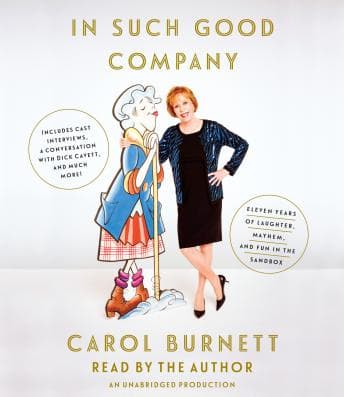

Most business memoirs are 45 minutes of insight stretched into eight hours of padding. Carol Burnett's In Such Good Company is the opposite problem—it's eight hours that feel like sitting with your favorite aunt who keeps saying 'oh, and one more thing' while you're trying to leave for a flight. But here's the thing: you don't actually want to leave.
I put this on during a late Sunday meal prep session. Jenny was out, I had kimchi jjigae going, and I figured a light memoir would be good background noise. Two hours later I'm standing in my kitchen with a cold pot, completely absorbed in Carol Burnett explaining how CBS executives tried to kill her show before it aired. Classic corporate cowardice dressed up as concern. I've seen that exact dynamic tank three different startups. The same kind of institutional resistance shows up in Benjamin Franklin: Made in America, where Franklin had to navigate colonial bureaucracy that made CBS look progressive.
The Anti-Business Book That's Secretly About Business
Here's what nobody tells you about this audiobook: it's actually a crash course in building and running a high-performing creative team. Burnett didn't just stumble into eleven seasons of success. She fought network brass who didn't believe a woman could carry a variety show. She hand-picked her cast—discovering Harvey Korman, hiring Tim Conway, giving Vicki Lawrence her first break when Lawrence was basically a teenager who happened to look like her. That's talent acquisition done right.
The stories about how she managed creative egos? Better than half the leadership books I've reviewed. When Tim Conway would go off-script and make Harvey Korman break character on live TV, Burnett didn't shut it down. She understood that controlled chaos was the product. My parents ran their dry cleaning shop the same way—they knew which rules mattered and which ones were just for show. That practical wisdom reminds me of the approach in Sergeant York and His People, where York's rural Tennessee upbringing taught him to distinguish between protocol and what actually gets results.
When Visual Comedy Meets Audio-Only Format
Now, the honest part. Some sections don't work. When Burnett starts reading sketch dialogue verbatim—describing elaborate costume gags and physical comedy bits—you feel the translation problem. It's like someone describing a painting over the phone. You get it, but you're not getting it.
The guest star introductions also get repetitive. There's a formula: met them, they were wonderful, we became friends, here's an anecdote. By the third or fourth celebrity, you start recognizing the template. Jenny would say I'm being harsh. Jenny is right. But I also paid for this with a credit, and I expect efficiency.
That said—and this matters—Carol Burnett narrating her own story is worth the occasional drag. Her comedic timing is intact at 83 years old. When she describes the famous 'Went With The Wind' sketch where she wore a curtain rod through her dress, you can hear her still delighting in the joke fifty years later. That warmth isn't manufactured.
The Nostalgia Tax
Let me be direct: if you didn't grow up with The Carol Burnett Show, chunks of this book will feel like inside jokes you're not inside of. I caught references because my parents watched reruns in the shop—it was one of the few American shows my mom understood through the physical comedy. But younger listeners might wonder why they should care about Harvey Korman's inability to keep a straight face.
What genuinely surprised me: the book includes actual cast interviews and a conversation with Dick Cavett that break up the memoir format. These segments feel less polished and more real—like bonus features on a DVD that are actually better than the commentary track.
Worth the Credit If You Know What You're Buying
This won a Grammy for Best Spoken Word Album, and I understand why. It's not because it's tight or efficient or respects your time. It's because Carol Burnett is genuinely good company. She earned that title.
Listen if: you're a fan of classic TV variety, you remember staying up to watch the show, or you want to understand how creative teams actually function under pressure. Also anyone whose parents ran a small business and made everything work through sheer force of personality—you'll recognize the energy.
Skip if: you need ROI on every minute, you've never seen the show and don't plan to, or repetitive celebrity anecdotes make you reach for the skip button.
I listened at 1.25x—my usual 2.0x felt disrespectful to the comedic timing. That's the highest compliment I can give a memoir. My kimchi jjigae was ruined, but I regret nothing.





![Steve Jobs [unabridged audiobook] audiobook cover](/_next/image?url=https%3A%2F%2Fcovers.audiobooks.com%2Fimages%2Fcovers%2Ffull%2F9788499923406.jpg&w=1920&q=75)