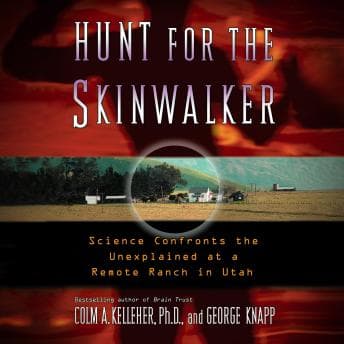

"We deployed cameras, magnetometers, radiation detectors...and the phenomena moved to wherever we weren't looking."
That line - somewhere around the 3-hour mark - hit me like a particularly nasty race condition in a distributed system. You set up your monitoring, you instrument everything, and the bug only reproduces in the one node you're not watching. Except here, the "bug" is a luminous orb the size of a basketball hovering over a cattle pasture in northeastern Utah, and the "monitoring" is a team of PhD scientists funded by a Las Vegas billionaire.
I finished this during a bout of 2AM insomnia after Kevin fell asleep watching Formula 1 recaps. Honestly? Perfect conditions. Dark apartment, phone screen dimmed, headphones in. The soft-spoken narration from David Bendena lands differently at that hour - quieter than I'd normally want, but for this material, it works. You lean in. Your brain fills the silence with dread.
When Your Debugging Methodology Is the Thing Being Debugged
Here's what makes this book genuinely interesting rather than just another paranormal cash grab: Colm Kelleher is a biochemist. George Knapp is an investigative journalist. The National Institute for Discovery Science (NIDS) - the organization that bought Skinwalker Ranch - staffed it with actual scientists running actual protocols. They had chain-of-custody procedures for evidence. They documented environmental baselines. They approached this like a research project because it literally was one.
And then the data just...wouldn't cooperate. Cattle mutilations with surgical precision but zero blood at the scene. Electromagnetic anomalies that registered on instruments but vanished when they tried to triangulate. A wolf-like creature that took a point-blank rifle shot, left no blood trail, and walked away. The frustration of the NIDS team comes through clearly - these are people trained to isolate variables and reproduce results, and the ranch basically threw a NondeterministicBehaviorException every single time.
The book is at its strongest when it stays in this tension between scientific rigor and genuinely inexplicable observations. Kelleher doesn't oversell his conclusions. He catalogs what happened, notes what instruments recorded, and admits when they have no explanation. That restraint is surprisingly effective. The Great Influenza does something similar with scientific humility - John Barry spends real time on how researchers sat with uncertainty before they understood what they were even dealing with, and that same quality is what separates serious science writing from the sensationalized kind.
Where the Signal Gets Lost in the Noise
But - and this is a real but - the book has structural problems. The first third bounces between the Gorman family's experiences on the ranch (pre-NIDS) and broader context about UFO history, cattle mutilation patterns across the American West, and Native American accounts of skinwalker phenomena. Some of this context is necessary. Some of it feels like padding. At 8 hours 43 minutes, the book probably has 6 solid hours of material.
Also, and this bugged me as an engineer: the book sets up the scientific investigation as its central premise but then has to contend with the fact that the scientific investigation was largely...inconclusive. They saw things. Instruments picked up anomalies. But they couldn't replicate findings or build predictive models. The honest conclusion is "something weird is happening and we can't explain it," which is intellectually responsible but narratively unsatisfying. The last chunk where they reach for quantum physics explanations and interdimensional hypotheses feels like speculation bolted onto otherwise careful reporting.
David Bendena's narration is fine - genuinely fine, not damning-with-faint-praise fine. His soft delivery keeps things grounded when the material gets wild. He's not doing dramatic voices or building artificial tension. For a book that lives or dies on credibility, that's the right call. But he also doesn't have the dynamic range to carry you through the slower expository chapters. I bumped to 1.5x during the UFO history sections and back to 1.25x for the on-ranch investigation sequences. That balance worked.
Who Should Actually Listen to This
Perfect for: anyone who watched the History Channel's Skinwalker Ranch series and wanted the actual source material without the reality TV theatrics. If you're the type who reads the methodology section of papers before the results (hi, me), you'll appreciate how Kelleher frames his observations. Also genuinely good for bedtime - not because it's boring, but because Bendena's tone sits right in that zone where your brain is engaged enough to follow but not so stimulated you're wide awake.
Skip for: anyone expecting hard conclusions. If ambiguity frustrates you, this will too. And if you need a book you can half-follow while debugging in another window - no. There are too many specific incidents described in sequence, and losing track means the next reference to "the third sighting" won't land.
Also skip if you're looking for self-help here - I see it tagged that way and just...no. Unless "help" means "making you deeply uncomfortable about remote Utah real estate."
The Bug Report I'd File on This Audiobook
TL;DR: Worth your commute, with caveats. The ROI on this audiobook is highest if you're already curious about the Skinwalker Ranch phenomenon and want the least sensationalized account available. It's basically a post-mortem on a failed scientific investigation - except the system being investigated might be reality itself. Compelling premise, uneven execution, honest ending. Three commutes and one sleepless night, and I don't regret it. But I also wouldn't spend a full credit when Libby probably has it.









