
I was debugging a particularly nasty race condition at 11 PM last Tuesday—you know, the kind where everything works until it doesn't—when I decided to throw this on. Figured if I was going to be miserable and caffeinated, I might as well learn something about not being miserable.
Turns out that was exactly the right headspace for this book.
The 40% That Actually Matters
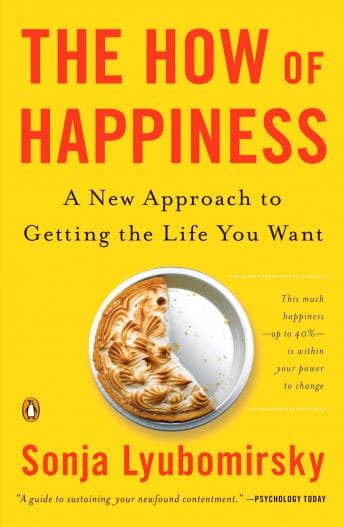
Bottom Line: Lyubomirsky's core thesis is that roughly 50% of your happiness is genetic, 10% is circumstances (income, location, relationship status), and 40% is intentional activities. That last number is what she calls "the 40% solution," and it's where this book lives.
As someone who optimizes systems for a living, this framework immediately clicked. You can't refactor your genes. Circumstances are expensive to change (hello, Bay Area rent). But that 40%? That's your API surface. That's what you can actually work with.
The book is basically a menu of twelve evidence-based happiness activities—gratitude, optimism, social connection, etc.—with research citations backing each one. The relationship-repair corner of that menu reminded me of When Sorry Isn't Enough, which is less lab-coat-heavy but similarly obsessed with converting feelings into repeatable behavior. Not just "be grateful!" but actual studies showing that writing down three good things per day for a week produces measurable effects lasting months. The ROI on this audiobook is genuinely high if you're the type who needs data before you'll change behavior.
When The Scientist Reads Her Own Work
Here's the thing about author-narrated nonfiction: you're getting the authentic interpretation, but not necessarily the best performance. Lyubomirsky has a pleasant, clear voice—she sounds like the Stanford-educated researcher she is. Warm but measured. You can hear her genuine investment in this material.
But she's not a professional narrator. There's a slight academic flatness that creeps in during the denser research sections. I caught myself zoning out during one of the meta-analysis explanations, and I actually *like* meta-analyses. At 1.5x speed it flows better—the pacing tightens up and her natural enthusiasm comes through more.
Perfect for: train, focused listening at your desk. Skip for: gym, anything requiring divided attention. The scientific content needs your actual brain.
Could've Been A Blog Post? Not Quite.
At 5 hours 51 minutes, this is mercifully short for a self-help book. Lyubomirsky doesn't pad. She presents the research, gives you the practical application, and moves on. I finished this in about four commutes.
That said, some sections feel like they're repeating the same fundamental insight with different window dressing. Yes, I understand that sustainable happiness comes from activities rather than achievements. You can stop proving that point now.
The real value is the diagnostic quiz early on—it helps you identify which of the twelve activities will work best for your specific personality type. This is basically A/B testing for your brain, and I respect that approach. Not everyone needs to practice gratitude journaling; some people need to cultivate flow states instead. The personalization angle saves this from being generic advice.
The Science Actually Holds Up
I checked a few of her citations (because of course I did). The research is solid—longitudinal studies, controlled experiments, peer-reviewed journals. This isn't pop psychology dressed up in lab coats. Lyubomirsky has spent her career studying this stuff, and it shows.
One thing I appreciated: she's honest about effect sizes. These interventions won't transform your life overnight. They're more like compound interest—small consistent deposits that accumulate over time. That kind of realistic framing is refreshing in a genre that usually promises miracles.
Kevin asked me what I was listening to, and when I explained the 40% framework, he immediately started arguing about whether the genetic/circumstance/activity split was too clean. We spent twenty minutes debating happiness heritability over dinner. (This is what dating an engineer is like. We're fun at parties.)
The Catch
The book is from 2007, and while the core research holds, some of the examples feel dated. The fundamental insights haven't been overturned by newer studies, but if you want cutting-edge positive psychology, you might want to supplement with more recent work.
This is also explicitly a Western, individualistic approach to happiness. The activities assume you have the time, energy, and baseline stability to implement them. If you're dealing with clinical depression or genuine resource scarcity, this isn't the book for you—and Lyubomirsky acknowledges that, to her credit.
Who Gets Value Here (And Who Doesn't)
If you're a data-driven skeptic who's dismissed self-help as woo but secretly wonders if there's something to it—this is your entry point. Also great for anyone who wants actionable frameworks rather than vague inspiration. Skip it if you need clinical support, prefer narrative-driven books, or can't tolerate slightly dated cultural references.
For the rest of us sleep-deprived tech workers trying to optimize our way out of burnout? Yeah, this is worth your commute.