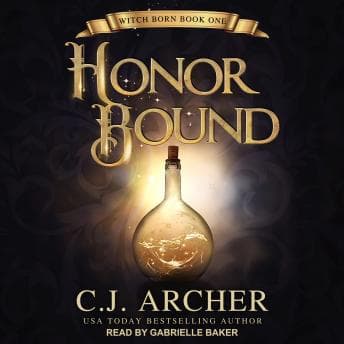

I'll admit it - I approached this one with scholarly skepticism. Historical romance with witchcraft elements set in Tudor-ish England? My grad school self would've scoffed. But here's the thing: C. J. Archer understands something a lot of literary fiction forgets. Story matters. Emotional stakes matter. And sometimes you just want to listen to two people who clearly belong together figure out how to stop being idiots about it.
The Seven-Year Itch, Tudor Style
The premise grabbed me immediately. Isabel and Nicholas aren't meeting cute at a ball - they're reuniting after seven years of separation, both carrying secrets that could get them killed. She's hiding abilities that would mark her as a witch. He's a royal spy investigating a plot against the queen. And somehow, their paths cross again in her apothecary shop.
What Archer does well is resist the urge to make this a simple misunderstanding plot. These two have legitimate reasons for their choices. Isabel didn't leave Nicholas because of a letter she didn't read or a conversation overheard out of context. She left because the alternative was watching him burn for associating with her. That's stakes. That's drama rooted in character.
The witchcraft element is handled with restraint - no flashy spell-casting or magical battles. Isabel's abilities are subtle, dangerous precisely because they're difficult to hide in a world hunting for exactly what she is. It reminded me of how Hilary Mantel treats the supernatural in Wolf Hall - present but muted, filtered through period-appropriate fear and superstition.
(My students would hate this comparison. They think Mantel is "too slow." They're wrong, but that's a different podcast episode.)
Gabrielle Baker Knows Her Way Around a Love Scene
Here's where the audiobook format really earns its keep. Gabrielle Baker's narration is exactly what this story needs - clear, professional, with a natural RP accent that grounds everything in the period without feeling like a costume drama. Her character voices are distinct without being theatrical. Nicholas sounds appropriately commanding. Isabel carries this undercurrent of tension that never quite relaxes.
The romantic scenes - and yes, there are romantic scenes - benefit enormously from Baker's pacing. She understands that the pause before a kiss matters as much as the words. The emotional beats land because she gives them room to breathe.
Now, I did see some listeners calling the narration "irksome" or "not spectacular." I genuinely don't understand this take. Unless you're expecting full theatrical performance with different accents for every character, Baker delivers exactly what the material requires. She's not trying to steal the show. She's serving the story. That's the job.
Though I will say - if you need high drama in your narration, if you want every line delivered like it's Shakespeare at the Globe, this might feel too understated. It's a matter of taste. For me, the restraint worked.
Where the Prose Asks You to Slow Down
Archer's writing is accessible - deliberately so. This isn't Henry James. The sentences don't require three readings to parse. But there's craft here that rewards attention. The way she layers the mystery plot with the romance, never letting either strand completely dominate. The historical details that feel researched without becoming a Wikipedia dump.
I listened at my usual 1.0x (yes, I know, I'm ancient) and found the pacing comfortable. There are slower sections in the middle third where the investigation stalls slightly, but nothing that made me want to skip ahead. At ten hours, it's a reasonable commitment - perfect for a week of lakefront walks.
The ending sets up clearly for more books in the series. Normally this annoys me - I want resolution, not a commercial for the sequel. But Archer wraps up the central mystery while leaving the larger world questions open. It felt earned rather than manipulative.
Who This Is (and Isn't) For
If you loved Diana Gabaldon's Outlander for the romance but wished it was half the length, this scratches a similar itch. If you're a fan of historical mysteries with romantic subplots - think Deanna Raybourn's Lady Julia Grey series - you'll find familiar pleasures here.
Skip it if you need your fantasy with elaborate magic systems. For that kind of worldbuilding, Way of Kings delivers on a scale that makes Archer's restraint look positively minimalist. Skip it if slow-burn romance makes you impatient. And honestly, skip it if you're the kind of person who thinks genre fiction is lesser fiction. (You're wrong, but I don't have the energy for that argument today.)
For everyone else? This is solid, well-crafted entertainment. Archer knows exactly what she's doing, Baker delivers it beautifully, and I found myself genuinely invested in whether Isabel and Nicholas would figure out how to trust each other.
Class Dismissed
Denise asked why I was smiling during my evening walk. I told her it was the sunset. It wasn't the sunset.