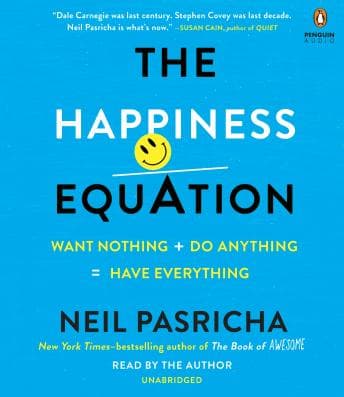

"Be happy first."
Three words, maybe forty seconds into the audiobook, and I actually paused it. I was standing on the Caltrain platform at 6:47 AM, coffee getting cold, surrounded by the usual Mountain View-bound zombies, and this Harvard MBA Walmart exec just casually flipped the entire success-then-happiness model I've been running my life on.
Look, I've listened to a LOT of self-help audiobooks. Occupational hazard of a 2+ hour daily commute and a job that occasionally makes me question my life choices at 2 AM during production outages. Most of them could've been blog posts. This one? Actually couldn't. Leaders Eat Last had that same substance-over-fluff quality, though Sinek focuses more on organizational dynamics than personal frameworks.
The Anti-Optimization Optimization Book
Here's what got me: Pasricha isn't selling hustle culture dressed up in wellness language. He's basically doing a code review on the entire "work hard, get successful, then be happy" algorithm and showing you why it's an infinite loop that never terminates.
The Saturday Morning Test hit different. Basically: what would you do on a Saturday morning if you had nothing scheduled? That thing you'd naturally gravitate toward—that's data about what you actually want. Not what LinkedIn tells you to want. Not what your parents expected. The Bench Test (imagining yourself at 80 looking back) and the Five People Test round out this diagnostic toolkit that feels more like debugging your life than optimizing it.
I finished this in exactly 4 commutes, which at 5 hours 18 minutes tracks with my usual 1.5x speed. And honestly? I slowed down for parts. The "Never Take Advice" chapter is deliciously meta—he's giving you advice about not taking advice, and he knows it, and he plays with that contradiction in a way that's actually clever rather than annoying.
When the Author IS the Narrator
Pasricha reads his own book, and you can tell he wrote it to be spoken. There's this conversational rhythm that just... works. When he hits the counterintuitive stuff—"Retirement Is a Broken Theory," "Success Does Not Lead to Happiness"—you can hear him leaning into the cognitive dissonance. He's not performing; he's explaining something he genuinely believes, and that authenticity comes through.
No vocal gymnastics, no dramatic pauses that feel manufactured. Just clear, expressive delivery from someone who clearly spent time thinking about how these ideas should land. It's the difference between hearing a TED talk and reading a transcript of one.
The ROI Calculation
Okay, real talk. Is this going to revolutionize your life? Probably not. But the framework for thinking about internal vs. external goals—that's stuck with me. External goals (promotion, salary, house) have finish lines. Internal goals (learning, growing, connecting) don't. And Pasricha makes a pretty compelling case that we've been optimizing for the wrong metrics.
The "true wealth has nothing to do with money" bit sounds like every self-help cliché ever, but he actually backs it up with research and specific frameworks rather than just vibes. The multitasking-is-a-myth section? As someone who debugs distributed systems for a living, I appreciated the technical accuracy there. Context switching is expensive. He gets that. Mindbody Prescription takes a similar evidence-based approach to debunking conventional wisdom, though Sarno's focus is physical pain rather than productivity myths.
What I didn't love: some concepts get repeated across chapters in ways that feel like padding. And a few of the "secrets" are less revolutionary than others—"Do It for You" is basically "have intrinsic motivation," which... yeah, obviously. But even the weaker chapters have at least one framework or test worth keeping.
Who This Is (and Isn't) For
If you've ever caught yourself thinking "I'll be happy when..." and then achieved the thing and felt... nothing? This is your audiobook. Great for commutes, gym sessions, anywhere you can absorb without deep focus.
Skip it if you want hard data and academic citations for everything (it's more anecdote-driven), or if you're allergic to any whiff of "gratitude practice" energy. There's some of that here, though it's less woo-woo than most.
Kevin actually listened to this one with me on a road trip last month. He's now annoyingly using the Saturday Morning Test to justify his weekend gaming sessions. So, you know, be careful what frameworks you introduce to your household.
The Commit Message
Bottom Line: Worth your commute. This is basically a refactoring of your mental models around success and happiness, with actual practical tests you can run on your own life. At 5 hours, the time investment is reasonable, and Pasricha's narration makes it easy to absorb even at 6 AM surrounded by other tech zombies.
Would I re-listen? Probably not cover-to-cover, but I've already mentally bookmarked the three tests for future reference. That's more than I can say for most books in this genre.