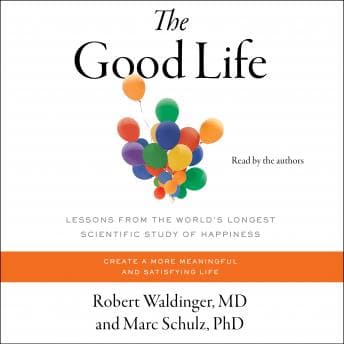

Eighty-five years of data. Three generations of participants. Harvard's longest-running study on human happiness. And the conclusion? Call your mom more.
I'm being reductive. But also not really. That's the beautiful frustration of The Good Life - Waldinger and Schulz have access to an unprecedented longitudinal dataset tracking people from their teens into their nineties, and the core finding is something my Korean immigrant parents could've told you for free: relationships matter more than money, status, or achievement.
What My Parents Knew Without Harvard
Here's the thing. My parents ran a dry cleaning business in Koreatown for thirty years. No TED talks, no research grants. But every Sunday after church, they'd host whoever needed feeding - extended family, lonely regulars from the shop, the new couple from Seoul who didn't know anyone yet. They understood instinctively what took Harvard 85 years to prove: connection isn't a nice-to-have. It's the infrastructure of a good life.
The study tracked 724 men (and eventually their wives and children) through the Great Depression, World War II, careers, marriages, divorces, and deaths. The researchers measured everything - cholesterol, brain scans, relationship quality, career success. And the single strongest predictor of health and happiness at 80? Not wealth. Not fame. The quality of your relationships at 50.
I've seen this play out in consulting. The partners who burned every bridge chasing billable hours? They're rich and miserable at 60. The ones who protected family dinners and maintained friendships outside work? They're the ones who actually enjoy retirement.
The Authors Read It Like They Mean It
Waldinger and Schulz narrate alternating chapters, and there's something genuinely warm about hearing the study directors tell these stories themselves. Waldinger has this calm, professorial cadence - the guy's a Zen priest, and you can hear it. Schulz is slightly more energetic, a bit more animated in his delivery. The contrast keeps 11 hours from feeling monotonous.
No dramatic voice acting here. No sound effects. Just two researchers who clearly care about their life's work explaining it directly to you. It's academic in the best sense - rigorous but accessible. They're not trying to entertain you. They're trying to convince you. And honestly? It works.
The Stories Are The Payload
The book could've been a 45-minute summary of findings. But Waldinger and Schulz made a smart choice - they let the participants' stories carry the weight. There's Leo, who transformed from a troubled kid with an alcoholic father into a successful lawyer who credits his wife's steady presence. There's Henry, born into privilege but chronically lonely, who never learned to invest in relationships and spent his final decades isolated despite his wealth.
These aren't sanitized case studies. They're messy human lives with affairs, addiction, estrangement, and reconciliation. That same unflinching honesty about human messiness shows up in Sex: Avoided Subjects Discussed in Plain English, though with a very different kind of directness. The researchers followed these people for decades, and you feel the weight of that longitudinal perspective. You're not getting a snapshot - you're getting the whole movie.
I listened to most of this during a red-eye flight to Seattle, and somewhere over Idaho, I found myself texting my wife. Just a quick note. Nothing profound. But the book had gotten under my skin.
Skip To Chapter 10 If You're Impatient
The last third shifts from research findings to actionable advice. Some of it's obvious - put down your phone during dinner, schedule regular check-ins with friends. Some of it's more nuanced - the concept of "social fitness" as something you maintain like physical fitness. Relationships atrophy without attention. You can't just coast on the connections you built in your twenties.
The W.I.S.E.R. model for handling conflicts is probably worth the price of admission alone. It's the kind of framework that sounds simple but actually changes how you approach difficult conversations. I've already used it twice with clients.
Who Gets Value Here (And Who Doesn't)
If you're the type who's optimized for productivity at the expense of connection - hi, that's me - this one lands hard. Also worth it if you need data to justify what you already suspect about work-life balance. Skip it if you're already relationship-focused and don't need Harvard's permission to prioritize people over performance metrics.
The ROI on 85 Years of Research
This is what my parents did instinctively. Now it has a TED talk. And 85 years of Harvard data. And an 11-hour audiobook.
Is it padded? A little. There are sections where the research summaries feel repetitive, and some of the participant stories blur together. At 2.0x, I got through it in about 5.5 hours, which felt right. The key insights could fit in a long article, but the stories give those insights emotional weight.
Jenny would say I'm being harsh when I note the book's length versus its core message. Jenny is right. But she'd also agree that hearing the actual researchers narrate their life's work adds something you can't get from a summary. There's conviction in their voices. These aren't ghostwritten platitudes - they're conclusions earned over decades of careful observation.
Worth a credit? Yeah. Sometimes you need Harvard to tell you what your parents already knew.