
"She thinks they don't like her. She jokes that she won't bite, but they don't laugh."
That opening premise hit me somewhere around the Millbrae stop on a Tuesday morning, and I swear every half-awake commuter around me could feel the shift in my expression. Because M.R. Carey does something really clever here — he gives you a child's perspective on what is clearly a horror situation, and your brain keeps toggling between "protect this kid" and "oh god, there's a reason they strap her into that wheelchair." It's the kind of cognitive dissonance that makes you miss your stop.
The Zombie Story That's Actually a Distributed Systems Problem
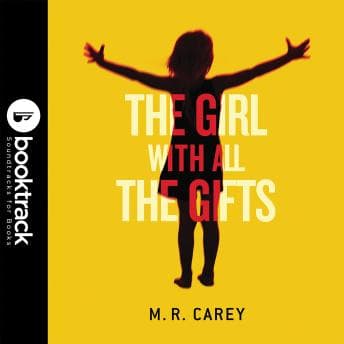
Okay, hear me out. The Girl With All the Gifts is technically a zombie novel — sorry, "hungries" — but the actual architecture of this story is way more interesting than that label suggests. Carey builds a post-apocalyptic Britain where the fungal infection (based on real-world Ophiocordyceps, the ant-zombie fungus — the science actually holds up) has created second-generation infected children who can think, learn, and feel. Melanie is the protagonist, a brilliant girl who doesn't fully understand what she is, and the adults around her — a sympathetic teacher (Miss Justineau), a coldly pragmatic scientist (Dr. Caldwell), and a terrified-but-duty-bound sergeant — are basically arguing over whether she's a person or a specimen.
This is basically the trolley problem but for an entire species. Ender's Game pulls the same move — a child who's being studied and weaponized by adults while remaining heartbreakingly earnest about it, and the dramatic irony there wrecked me in a similar way.
What got me was the classroom scenes early on. Melanie eagerly answering questions, trying to impress, completely unaware of why the soldiers smell like chemical blockers around her. The dramatic irony is brutal. You know things she doesn't, and Carey lets that tension just simmer for hours before the world outside the facility crashes in. The pacing is slow-burn for the first third — setting up the base, the relationships, the science — and then it accelerates hard when everything goes sideways. I finished this in about 5 commutes, and the back half I was genuinely annoyed when the train reached Mountain View.
The ending is... not what you expect. I won't spoil it, but it's the kind of conclusion that makes you stare at a wall for ten minutes afterward. Kevin asked me why I was just standing in the kitchen holding my keys and I couldn't explain it without giving away the whole book.
Finty Williams and the Booktrack Gamble
So here's the thing: I accidentally bought the Booktrack Edition, which means there's a musical score playing underneath the narration the entire time. And I have feelings about this.
Finty Williams (yes, Judi Dench's daughter — I had to look this up) has this crisp Queen's English delivery that works perfectly for the British setting. Her Melanie voice is young without being saccharine, and she nails the shift when Melanie starts understanding what she really is — there's a subtle hardening in the tone that creeps in so gradually you don't notice it until suddenly this sweet little girl sounds like something else entirely. Her Sergeant Parks is gruff, clipped, distinctly working-class compared to Dr. Caldwell's clinical precision. Good differentiation.
But — and this is important — some stretches do flatten out into monotone territory, especially during travel sequences in the middle third. It's not bad, but at 6AM when the train is rocking and your eyes are closed, you occasionally drift and have to rewind 30 seconds.
Now the Booktrack music. I normally listen at 1.5x. Do NOT do this with the Booktrack edition. The score gets weird and frantic when you speed it up, like someone put a horror movie soundtrack in a blender. At 1.0x it's actually fine — atmospheric, not overpowering, adds tension during the right moments. But it fundamentally changed my listening workflow, and I'm not sure I'd choose it again. If you're grabbing this, get the regular edition unless you specifically want the score and are committed to 1.0x speed.
Who Gets Strapped Into This Wheelchair
Perfect for: commute (with caveats on speed), roadtrip, dedicated listening. The plot is followable at 6AM zombie-mode — Carey writes clean, linear chapters — but the emotional weight hits harder when you're paying attention.
Skip if: you're burned out on zombie fiction and nothing will change your mind. Also skip the Booktrack edition if you're a speed listener like me. It'll drive you nuts.
If you liked Station Eleven's "what remains of civilization" vibe or The Last of Us's infected-kid-bonding dynamic, this is your lane. The science is grounded in real mycology, the ethical questions have actual teeth, and the ending earns its gut punch.
The ROI on 13 Hours of Fungal Apocalypse
TL;DR: Worth your commute. A zombie novel that's secretly an ethics thesis wearing genre fiction clothing. Finty Williams is solid if occasionally flat, the Booktrack edition is a mixed bag for speed listeners, and the ending will ruin your evening plans. The ROI on this audiobook is high — just buy the regular edition and save yourself the speed limit frustration.