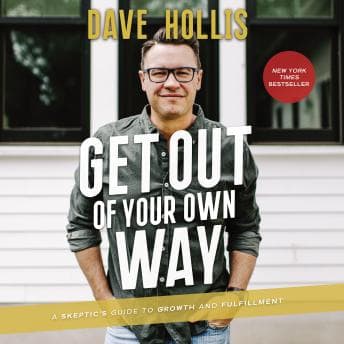

I was chopping onions for a chana masala at 10 PM on a Tuesday — the kind of elaborate cooking-for-one situation my mother would find deeply concerning — when Dave Hollis told me about his drinking problem. And I stopped mid-chop, because something about the way he said it didn't sound rehearsed. It sounded like a guy sitting across from you at a bar who's had one too many and suddenly gets honest.
Here's the thing people keep saying about this book: it's authentic, it's vulnerable, it's like talking to a friend. And yeah, I get that. But as someone who studies why people construct the narratives they do about themselves, I found myself asking: why does Dave Hollis really need you to know he was a skeptic first?
The Skeptic's Shield (And Why It's Psychologically Interesting)
The entire framing of this book — "I used to think self-help was for broken people" — is doing a lot of heavy lifting. Psychologically, this is a fascinating case study in identity management. Dave positions himself as the reluctant convert, the guy who had to be dragged kicking and screaming into personal growth. And that framing serves a purpose: it gives permission to the target audience (men, specifically men who'd never pick up a self-help book) to engage without feeling like they've lost some masculine credibility.
Chapter 8, "Failure Means You're Weak," is where this really lands. Dave unpacks how his identity as a Disney executive — someone who was supposed to have it figured out — made it nearly impossible to admit he was struggling. The protagonist exhibits classic ego-protective behavior: performing competence while privately drowning. And when he talks about therapy, about how hard it was to just sit in a room and be seen, I believed him. My therapist would have thoughts about this character, but mostly approving ones.
The problem? He circles back to the same revelation — "I was hiding, and then I stopped hiding" — about four different ways. By the third iteration, I was back to chopping onions.
When Vulnerability Becomes Formula
Let me be honest about what frustrated me. The research actually shows that repetition in self-help books isn't always a flaw — it can reinforce learning. But there's a difference between strategic repetition and running out of new things to say. Dave's lies-we-tell-ourselves structure ("I Have to Have It All Together," "Failure Means You're Weak") starts strong but eventually the chapters begin to blur. The emotional arc flattens. You're hearing variations on the same confession.
And here's where my psychology brain won't shut up: the book exists in an uncomfortable orbit around Rachel Hollis's work. Rachel pops up in the narration occasionally, and the dynamic is... interesting. There's a clear sense that Dave's personal growth journey is inextricable from his marriage, from Rachel's influence, from the Hollis brand. I don't say that cynically — but I do notice it. The narrative psychology of couples who build identities together and then market those identities is a whole separate paper I should probably write.
Dave narrating his own book works better than I expected. He writes like he talks, which means the audiobook format is actually the natural habitat for this content. His voice has warmth. He's funny in a dad-joke-that-somehow-lands way. But — and this is a real but — the energy stays pretty level throughout six and a half hours. No real peaks and valleys in delivery. If you're someone who needs vocal variety to stay engaged, you might drift. I caught myself drifting during a few of the middle chapters, and I was actively handling a knife.
Who This Is Actually For (And Who Should Skip)
If you're a man in your thirties or forties who's never touched a self-help book and you're vaguely aware something isn't working in your life — this is genuinely a good entry point. Dave's skeptic-to-believer arc removes the barrier to entry. The alcohol stuff, the fatherhood insecurities, the career crisis — it's specific enough to feel real. The unfiltered-guy-finally-gets-honest format shows up in unPHILtered: The Way I See It too, and honestly that one leans even harder into the persona-as-permission structure — worth reading back to back if you're interested in how male voices perform candor for an audience.
But if you've already read Brené Brown, or you've done any serious therapy, or you've consumed more than two self-help books in the last year? Psychologically, this doesn't track as offering you anything new. You'll recognize every insight because you've already had it. The lies Dave identifies aren't wrong — they're just not original.
The conclusion chapter is worth sticking around for. Something about the way Dave wraps up feels earned rather than performed. Like he finally stopped trying to convince you and just... said the thing.
My Clinical Assessment
This book is comfort food self-help. It goes down easy, it fills a need, and it won't challenge your worldview so much as gently confirm what you probably already suspected about yourself. That's not nothing. But it's not the breakthrough it positions itself as, either. Dave Hollis is a likable guide through territory that's been pretty thoroughly mapped by others. The value here is his voice — literally and figuratively — not the map itself.









