
Why do smart, educated people make terrible money decisions?
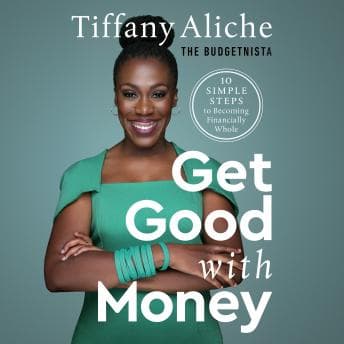
This question has haunted me through years of studying human behavior. We know what we should do - save more, spend less, plan ahead - and yet we don't. The gap between knowing and doing is where most financial advice dies. So when I started listening to Tiffany Aliche's Get Good with Money during a late-night cooking session (dal makhani, if you're wondering, the kind that takes hours and rewards patience), I was genuinely curious whether she'd address the psychology of our money dysfunction or just hand me another spreadsheet.
She does both. And somehow, it works.
The Budgetnista as Case Study
Here's what makes Aliche fascinating from a psychological perspective: she's not coming at this from a position of "I've always been good with money." Her origin story - successful preschool teacher, decent savings, then a recession plus a predatory financial advisor wiped her out - is a textbook example of external locus of control meeting learned helplessness. What's compelling is watching (hearing?) her reconstruct agency through systematic behavior change.
The ten-step framework she presents isn't revolutionary in content. Budget, save, invest, insure, plan your estate - you've seen this list before. But the sequencing reveals someone who understands how humans actually learn. She doesn't throw you into investing before you've stabilized your spending. She doesn't talk retirement when you're drowning in credit card debt. The research shows that financial overwhelm is one of the primary reasons people avoid money management entirely. Aliche structures her steps to prevent that paralysis.
Her "noodle budget" concept - figuring out the absolute minimum you need to survive - is psychologically shrewd. It's essentially exposure therapy for your worst financial fears. Once you know you can survive on ramen if necessary, the anxiety around money loosens its grip.
When Your Financial Advisor Sounds Like Your Best Friend
Aliche narrates her own book, and this is where the audiobook format genuinely adds value over print. There's a warmth in her delivery that feels less like a lecture and more like sitting across from someone who's been where you are and made it out. She has this encouraging, almost conspiratorial energy - like she's letting you in on secrets the financial establishment doesn't want you to know.
Is it a bit much sometimes? Honestly, yes. At 12 hours, there are moments where the enthusiasm feels relentless. I found myself wanting her to just... be tired with me for a minute. (My therapist would have thoughts about why I'm uncomfortable with sustained positivity, but that's a different conversation.) But I understand the choice. For someone who's been shamed about money their whole life - and that's most of us, let's be real - having a voice that consistently says "you can do this" might be exactly what's needed.
The downloadable PDF with worksheets is actually useful, not just a marketing add-on. I appreciated that she acknowledges you'll need to pause and do the exercises. This isn't a passive listen.
The "Don't Make Enough" vs "Spend Too Much" Distinction
This is where Aliche earns my respect as someone who understands behavioral patterns. So much financial advice assumes everyone has a spending problem when plenty of people genuinely have an income problem. Her assessment tool for distinguishing between the two addresses something I rarely see acknowledged: sometimes the math just doesn't math, and no amount of cutting lattes will fix systemic underpayment.
She also gets into the psychological territory of why we overspend when we do - the emotional spending, the keeping-up-with-appearances spending, the "I deserve this" spending after deprivation. It's not deep clinical analysis, but it's more self-aware than most money books manage.
Who This Works For (And Who It Won't)
If you're already financially sophisticated - you know your way around index funds, you've maxed your 401k, you understand insurance - this will feel elementary. It's not for you. Don't be that person leaving one-star reviews because a beginner's guide was... for beginners.
But if you're someone who breaks into a cold sweat when you check your bank account, if you've been avoiding your finances because the shame spiral is too much, if you need someone to hold your hand through the basics without making you feel stupid - this is genuinely good. That same gentle, no-judgment energy shows up in Networking for People, which gets that some of us need permission to do things our own way. Shame is the primary emotion associated with financial avoidance, and Aliche's entire approach is designed to neutralize it. Get Sh*t Done takes a similar shame-free approach to productivity blocks, though with less hand-holding.
It's also particularly good for focused listening rather than background noise. You'll want to take notes. You'll want to pause and actually do the calculations she walks you through.
The Prescription
I finished this book feeling like I'd sat through a very thorough, very encouraging therapy session about money. Not life-changing for me personally - I'm reasonably financially stable, thank you academic salary and minimal lifestyle - but I immediately thought of three people I could recommend it to. That's the mark of a useful book: you know exactly who needs it.
Aliche doesn't pretend money will solve all your problems. But she does make a convincing case that financial chaos creates a baseline anxiety that makes everything else harder. Get the money stuff handled, and you free up cognitive resources for the rest of your life. Psychologically, this tracks.
Worth the twelve hours? If you're her target audience, absolutely. If you're already financially whole, you can skip it - but maybe gift it to someone who isn't.