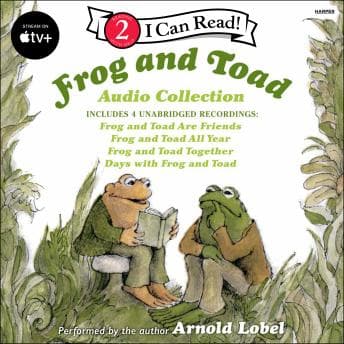

Look, I wasn't expecting to have a minor existential crisis while listening to a children's audiobook about two amphibians. And yet here we are.
I put on the Frog and Toad Audio Collection during a particularly tedious data entry session for my research (don't ask), thinking it would be pleasant background noise. Ninety minutes later, I had accomplished nothing and was sitting there genuinely moved by a story about cookies and willpower. *The protagonist exhibits classic avoidant attachment patterns*, I kept thinking. And then I had to stop myself because these are cartoon frogs.
But here's the thing—that's exactly why Arnold Lobel's work has endured. These aren't just cute stories. They're genuinely sophisticated explorations of friendship, anxiety, self-doubt, and emotional regulation, packaged in a format a five-year-old can understand. The research actually shows that children develop emotional intelligence through narrative modeling, and Lobel understood this intuitively decades before we had the data to prove it.
Why Hearing Lobel's Own Voice Changes Everything
There is nothing—and I mean nothing—quite like hearing an author read their own work. Arnold Lobel narrating these stories adds a layer of authenticity that no hired voice actor could replicate. His Toad is anxious and fussy and just slightly neurotic (relatable, honestly), while his Frog is patient and warm without being saccharine. You can hear the affection Lobel had for these characters in every line.
The pacing is perfect for young listeners—unhurried but never dragging. Each story lands with this gentle precision that feels almost therapeutic. My therapist would have thoughts about Toad's constant catastrophizing, but Lobel treats it with such tenderness. There's no mockery here. Just two friends who accept each other completely.
Now, I do have to mention the background music situation. Some listeners find it distracting, and I get it—there's this persistent musical accompaniment throughout that can feel a bit much if you're used to cleaner audiobook productions. I didn't mind it personally (maybe because I was already in a nostalgic haze), but if you're sensitive to that kind of thing, fair warning.
A Case Study in Friendship Done Right
What makes these characters compelling is how real their dynamic feels. Frog is the steady one. Toad is the anxious mess. But neither is portrayed as better or worse—they just are who they are, and they love each other anyway. This is a fascinating case study in secure attachment, actually. Toad can fall apart completely, and Frog doesn't judge or fix or leave. He just stays.
The story about the lost button? Pure comedy, but also a beautiful illustration of how we project our frustrations onto external problems. The cookies story? Literally a parable about self-control and the limits of willpower that I might assign to my undergrad psych students. (Don't tell my students I said that.)
And the one where Toad is waiting for mail that never comes, so Frog writes him a letter? I found myself asking: why does this hit so hard? Because Lobel understood loneliness. He understood the small, quiet ways we can show up for each other. He grasped something true about human nature—or, well, amphibian nature—in a way that transcends the target age group.
Who This Is For (And Who Should Skip It)
If you have kids in the 5-7 range, this belongs in your library. Period. And if you're an adult who occasionally needs a reminder that friendship can be simple and good and uncomplicated? Frog and Toad have you covered. Skip it if persistent background music drives you up a wall—you won't be able to unhear it.
The Prescription
Absolutely worth your ninety minutes. I've already recommended it to three colleagues with young kids, and I might honestly revisit it myself during grading season when I need something gentle.
Is it going to challenge you intellectually? No. But psychologically, it's surprisingly rich. These stories model healthy friendship in ways that even adult fiction often fails to do. I've seen similar explorations of genuine connection in Pretties, though obviously with higher stakes and more dystopian angst. Frog and Toad don't complete each other in some codependent nightmare. They complement each other. They give each other space. They show up.
This is children's literature at its finest, read by the person who created it with obvious love.









