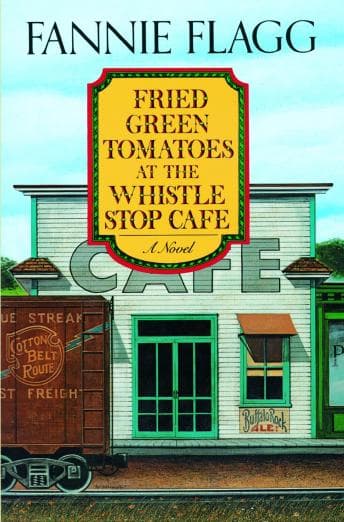

"Idgie looked at Ruth and said, 'You know, Ruth, I'd rather have thirty minutes of wonderful than a lifetime of nothing special.'"
I had to pause the audiobook right there. Set down my stylus. Let Frida and Diego judge me while I just... sat with that for a minute. Because honestly? That line hit me somewhere deep. Abuela would have clutched her heart and said something about how love is love, mija, no matter what form it takes.
This book felt like sitting on a porch swing with a glass of sweet tea while someone's grandmother tells you the most extraordinary story about ordinary people. And Lorna Raver's voice? Velvet and honey, I'm telling you. Pure velvet and honey.
The Voice That Carried Me Home
Look, I've listened to a lot of Southern fiction, and there's a fine line between "authentic folksy" and "condescending caricature." Lorna Raver walks that line like she was born on it. Her Idgie is all rough edges and tender heart. Her Mrs. Threadgoode has that slow, meandering quality of someone who's lived long enough to know the story matters more than the speed of telling it.
What got me - and I mean really got me - was how she handled the shifts between past and present. One moment you're in the 1980s with Evelyn, stuck in that gray, sad slump of middle age (which, can we talk about how perfectly Flagg captures that feeling of just... existing?), and the next you're back in the 1930s Whistle Stop Cafe with Idgie and Ruth, and the whole world feels alive again. Raver makes those transitions feel natural. Like she's just turning pages in a family album.
I listened to most of this while working on a logo redesign for a coffee shop in East Austin - kind of perfect, actually - and there were moments I completely forgot I was supposed to be adjusting kerning. Just sat there, staring at my screen, not seeing it at all.
Where I Completely Lost It
Okay, so. The crying. You knew it was coming.
I ugly-cried at least three separate times. Once during a scene involving Big George and his family that I won't spoil but that deals with the brutal reality of racism in the South. Once during - you know what, no, I can't even describe it without tearing up again. And once at the very end, when the threads of past and present finally come together and you realize what this whole story has actually been about.
But here's the thing - Fannie Flagg doesn't manipulate you into those tears. She earns them. The book is genuinely funny in places. Like laugh-out-loud, startle-your-cats funny. There's a murder mystery woven through that's both macabre and weirdly delightful. And the relationship between Idgie and Ruth is written with such tenderness that it makes your heart ache.
(Side note: I know the movie softened their relationship, but the book? It's right there. The love between these two women is the beating heart of the whole thing. Abuela would have pretended not to notice while definitely noticing.)
The Slow Burn That Paid Off
I'm not gonna lie - this is not a fast-paced book. It meanders. It circles back. It tells you stories within stories within stories. If you need constant plot momentum, you might zone out.
But if you're like me, and you listen at 1.0x because you're savoring? This is a rainy Sunday book. It's a long drive book. It's a "I need something to hold me while I process my feelings about life" book. Bend in the Road gave me that same kind of emotional anchor when I needed it most.
The structure is actually pretty wild when you think about it - newspaper clippings, recipes, different time periods, multiple narrators within the story - but Raver handles all of it. She never loses you. The 11+ hours flew by, and when it ended, I genuinely didn't want to leave Whistle Stop.
Who Needs This Book (And Who Should Pass)
If you love Southern fiction, character-driven stories, or books about women loving each other in complicated, beautiful ways - this is your book. If you want something that feels like a warm hug from someone who actually likes you, this is your book.
Skip it if you're impatient, if you need things to happen quickly, or if you can't handle genuinely difficult content about racism and violence in the Jim Crow South. The book doesn't shy away from the ugliness of that era, even while celebrating the beauty of the community at its center.
Abuela Would Have Loved This One
I finished this three days ago and I'm still thinking about it. Still thinking about Idgie's wild heart and Ruth's quiet strength and the way food can be love and love can be food and how the people we lose never really leave us.
My heart. MY HEART.