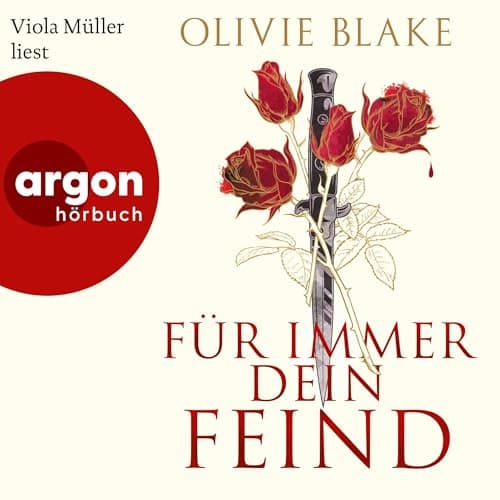

Look, I need to rant about something. If you're going to write a book with a character who has three different names - a given name, a nickname, and presumably some family diminutive - you need to earn that complexity. You need to build a world where those naming conventions matter, where the shift from one name to another tells us something about power dynamics or intimacy. Olivie Blake apparently just... does it. And expects you to keep up. While listening to an audiobook. At 1am. While your thesis document stares at you from the other monitor like a disappointed parent.
I was deep into a late-night coding session - or rather, I had VS Code open and was pretending the procedural terrain generation was going to debug itself - when I threw this on. Romantasy about rival magical crime families in New York? That's basically a D&D campaign premise I've pitched at least twice. Hexen-Mafia meets Romeo and Juliet meets urban fantasy drug trade? Sign me up.
Except... yeah.
Romeo and Juliet, But Make It Confusing
The setup is genuinely cool. The Antonova sisters run a magical drug empire. The Fedorov brothers are their rivals. Twelve years of uneasy truce. Then the youngest from each family catches feelings. That's a premise with legs - it's got faction tension, forbidden romance, the threat of magical gang war across Manhattan. This is the kind of thing that should write itself.
But Blake's execution here is wildly different from what she pulled off in The Atlas Six. Where that book thrived on its cerebral, almost academic approach to magic, Für immer dein Feind gets lost in its own narrative. The three-names-per-character problem isn't just annoying - it's genuinely disorienting in audio format. You're trying to track which Antonova sister is doing what, and suddenly someone's being called by a name you haven't heard in four chapters. My D&D group would love the faction concept but would riot at the character sheet management required.
And then there's the word repetition issue. Multiple listeners flagged it, and yeah - certain phrases and descriptions cycle back with a frequency that feels less like intentional motif and more like the manuscript needed another editing pass. In print you might skim past it. In audio, Viola Müller is reading every single repeated phrase directly into your ears, and you notice.
Viola Müller Does What She Can
Speaking of Müller - this is a tough gig. She's narrating a German translation of an English novel with Russian-coded character names and New York slang. That's a lot of tonal plates to spin. I don't have enough data to say she nails it or drops it, but the production itself is clean and the 13-hour-49-minute runtime suggests a pace that doesn't rush through the world-building. The magic system here - magical drugs as the economic engine of a criminal underworld - deserved more exploration than it gets, and Müller can only work with what's on the page.
I will say: if you're coming to this expecting Atlas Six-level magic system nerdery, recalibrate. This is romance-first, magic-as-setting. The Sanderson-level world-building I crave? Not here. The magic exists to create stakes for the romance rather than being interesting in its own right. Which is fine if that's what you want, but I kept waiting for Blake to really dig into the economics and mechanics of magical drug production, and she just... doesn't.
The Lev and Sasha Problem
Here's where it gets personal for someone who's run approximately 800 hours of D&D campaigns: the central romance between Lev and Sasha needed more friction. Not conflict - there's plenty of external conflict. But the "love at first sight" framing robs the relationship of the slow-burn tension that makes forbidden romance actually work. When your star-crossed lovers are immediately all-in, you lose the push-pull that makes readers (listeners) invest. Compare that to basically any Carissa Broadbent book where the romantic tension is a slow ratchet that keeps you white-knuckling through chapters.
One reviewer called this the worst book they'd read out of 70 that year. I wouldn't go that far - the premise alone earns goodwill, and there are moments where the family dynamics genuinely crackle. But I understand the frustration. There's a version of this book that's a banger urban fantasy with a romance subplot. Instead we got a romance with an underdeveloped urban fantasy wrapper.
Who Should Listen (And Who Should Skip)
If you're a romance-first reader who loved Blake's voice in The Atlas Six and wants her take on forbidden love with a magical backdrop, there's enough here to keep you entertained. If you're coming for the magic crime family premise and expecting something with the depth of, say, a Schwab novel - you're going to be frustrated by how thin the world-building stays. Skip it if you need your magic systems crunchy and well-defined; this one's all vibes, no stat block.
I listened to this instead of writing my thesis. I'm not sure either activity was productive. Weirdly, I got more out of a late-night detour through World Religion 101 last semester - at least that one delivered on its premise of explaining complex interconnected systems, which is more than I can say for this magical crime family saga.
Back to the Thesis (Eventually)
This one's a swing that doesn't connect. Great premise, real structural problems in execution, and the audio format amplifies every issue with character naming and repetitive prose. Blake is talented - The Atlas Six proved that - but this feels like a side project that needed more time in the oven. The 13+ hours are a big commitment for something this uneven.