
Everyone told me this was going to confirm my priors. Liberal friend sends it with a knowing wink emoji. Conservative client warns me it's "one-sided propaganda." I'm at 2.0x speed, three hours into a red-eye to Denver, and honestly? Both camps are half-right, which is more interesting than either being fully correct.
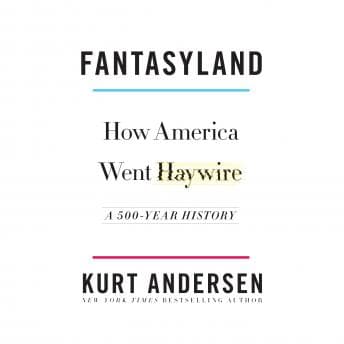
Bottom line: This is 16 hours of receipts. Actual receipts. The Lewis Powell memo. The Business Roundtable's strategic pivots. The Mont Pelerin Society connections. If you've ever wondered how we went from "a rising tide lifts all boats" to "the boats are fine, you should've bought a boat" - Andersen names names and shows the work.
The Dry Cleaning Test
My parents worked 14-hour days in Koreatown. No benefits, no retirement plan, no "work-life balance" because that phrase didn't exist in Korean. They just... worked. And here's Andersen walking me through how the CEO-to-worker pay ratio went from 20:1 in 1965 to 354:1 by 2019. My dad would've called this "obvious" - he watched it happen in real time, just didn't have the vocabulary for "shareholder primacy doctrine" or "regulatory capture."
What my parents understood instinctively - that the game was rigged - now has a TED talk. Actually, it has a 16-hour audiobook, which is more thorough than any TED talk but also... 16 hours.
Where The Efficiency Breaks Down
Here's my problem. Andersen narrates his own work, and he's genuinely good at it - that Spy magazine wit comes through, the connections between disparate events feel earned rather than conspiratorial. But this book could've been 8 hours. Maybe 10 if we're being generous.
He spends considerable time on cultural shifts - the nostalgia weaponization, the way "freedom" got redefined from "freedom to" to "freedom from" (taxes, regulations, obligations). Intellectually interesting but repetitive. By hour 12, I found myself thinking "yes, I understand the thesis, you've made the point, we can move on."
My 2.0x speed couldn't save this one. Not entirely. I still finished it, but there were stretches where I was listening out of stubbornness rather than engagement.
The Useful Idiot Confession
What saves the book from being pure polemic is Andersen's willingness to implicate himself and his class. He calls himself a "useful idiot" - the coastal liberal who benefited from the financialization of everything while thinking he was somehow separate from it. That's refreshingly honest. Spare has that same unflinching self-awareness, though applied to a very different kind of privilege. I've sat in enough McKinsey meetings to recognize the type. Hell, I've been the type.
The section on how Democrats became complicit - the Clinton-era embrace of deregulation, the Obama administration's kid-glove treatment of Wall Street post-2008 - this is where the book earns its credibility. It's not a partisan hit job. It's an autopsy of a consensus that both parties bought into.
Who Needs This In Their Ears (And Who Doesn't)
If you're under 40 and wondering why the economic playbook your parents followed doesn't work anymore, this provides context. Not solutions - Andersen's prescriptions in the final chapters are vague and unconvincing compared to his diagnosis - but context. If you're a business leader who uses phrases like "shareholder value" without irony, this might make you uncomfortable. That's probably good.
Skip it if you already have strong opinions about neoliberalism and just want them validated. You'll get that, but you won't learn much. And if you already know the basics of the Powell Memo and Reagan revolution, jump to chapter 5. The early chapters are necessary setup but slow. Thank me later.
The Billable Hours Assessment
I've seen this fail at three different companies - the short-term thinking, the quarterly earnings obsession, the hollowing out of anything that doesn't immediately juice the stock price. Andersen connects the dots between policy decisions in the 1970s and the dysfunction I watch play out in boardrooms today.
Jenny would say I'm being harsh about the length. Jenny is right. But she also hasn't sat through 16 hours of economic history at 2x speed on a Tuesday.
The audiobook format works because Andersen's voice carries genuine indignation without becoming shrill. He sounds like a smart friend explaining something over drinks - occasionally repetitive, sometimes self-indulgent, but ultimately worth your time. Just not all 16 hours of it.
For my consulting clients who ask about "systemic issues" without wanting to hear the answer: this is the answer. It's uncomfortable, it's documented, and it's probably not what you want to hear. That's usually how you know it's important.