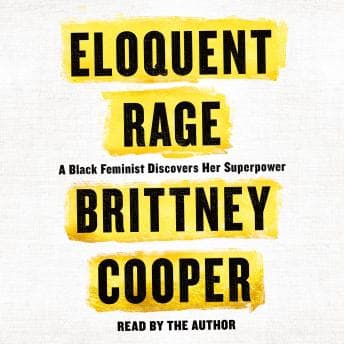

Look, I need to get something out of the way first: I'm a Korean-American dude who spent eight years at McKinsey reviewing business books. I am not the target audience for this book. And Brittney Cooper would probably tell me that's exactly why I need to hear it. She'd be right.
I picked this up at 1AM after a brutal day restructuring a client's org chart - the kind of day where you've told good people their roles are being eliminated and you need something that isn't a spreadsheet. Jenny had already gone to bed. The house was quiet. And Cooper came through my AirPods like she was sitting across from me at a kitchen table, Southern drawl and all, telling me things I needed to hear about anger as fuel rather than flaw.
My Parents Called It Survival. Cooper Calls It Superpower.
Bottom line: this book is sharper than 90% of the leadership books cluttering my Audible library, and it's technically a memoir. Cooper's thesis - that Black women's rage isn't pathology but power - lands with the precision of a McKinsey deck, except it's backed by lived experience instead of market data. The grandmother front-porch confrontation about love, sex, and marriage? That scene alone is worth the listen. It's raw, it's hilarious, and it hit me somewhere unexpected because it reminded me of my own grandmother's quiet fury about the life she was handed versus the one she wanted. Different context, different stakes, different history. But that energy of women who refuse to accept the story they've been told? I recognized it.
Cooper moves from personal narrative to cultural criticism to feminist theory with the confidence of someone who's taught this material and lived it. She connects Serena Williams's on-court fire to Beyoncé's aesthetic choices to Michelle Obama's public persona, and none of it feels like celebrity name-dropping. It feels like evidence. She's building a case, and the case is airtight.
The Homegirl as Strategic Asset
Here's what surprised me: the sections on friendship are some of the most useful content I've heard on building support structures, period. Cooper's "homegirl intervention" - where a friend essentially staged an emotional come-to-Jesus about Cooper's direction in life - reads like the best executive coaching session I've ever witnessed. No one at McKinsey ever talked about the strategic value of a friend who will call you on your garbage. We had 360 feedback processes that cost $50K. Cooper's homegirl did it for free on a couch.
The faith sections won't land for everyone. They landed for me because I grew up in that Sunday church tradition, watching my mom pray over the dry cleaning business ledger. But even if church isn't your thing, Cooper's larger point - that you need something beyond pure rationality to sustain you through systemic opposition - is solid organizational psychology wrapped in personal testimony. The psychology of sustaining yourself through high-conflict, high-stakes environments is something Dave Grossman maps from a completely different angle in On Combat - and the overlap between his findings and Cooper's lived framework is more significant than you'd expect.
About That Narration Speed Problem
So here's the thing. Cooper narrates her own book, and she reads like she talks - fast, urgent, Southern, with the cadence of someone who has limited time at the microphone and unlimited things to say. I listen at 2.0x normally. I had to drop to 1.5x for this one. At her natural speed plus my usual acceleration, it became a wall of sound. Not unpleasant, but dense.
Some listeners have said they prefer the print version, and I get it. Cooper's breathlessness works in person - you can imagine her killing it in a lecture hall. But audio requires different pacing than live speaking, and there are stretches where you want her to just... breathe. Let the point land. The emotional delivery is genuine - you can hear when she's angry, when she's amused, when she's working through something painful in real time. That authenticity is rare and valuable. But pacing is a craft separate from passion, and it's the one area where this audiobook leaves something on the table.
At under 7 hours, though? This is a business book-length commitment with memoir-level engagement. Finally, a book that respects your time.
Who Gets the ROI
If you're a woman of color navigating professional spaces where your anger gets coded as "aggressive" while your white male colleagues get called "passionate" - this is required listening. Full stop. If you're anyone else - and I mean anyone - who wants to understand how rage can be a strategic resource rather than a liability, Cooper delivers that framework better than any leadership book I've listened to this year. If you need everything triple-sourced with Harvard Business Review citations and can't engage with personal narrative as evidence, skip it. You'd be wrong to, but skip it.
Jenny would say I'm being harsh about the pacing. Jenny is right. But the content underneath that breathless delivery? My 2.0x speed couldn't save this one - not because it's bad, but because it's too dense to rush through. Slow down. Listen. That's the whole point Cooper's making anyway.