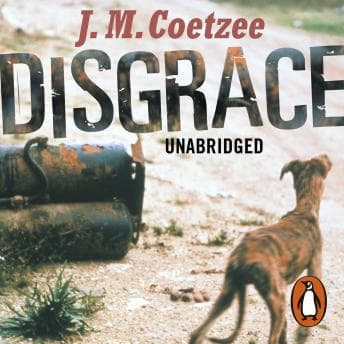

What do you do with a man who admits his guilt but refuses to feel sorry? Not sorry in the cheap, performative way we've trained ourselves to expect - the public apology, the tearful press conference - but genuinely, philosophically unwilling to repent on anyone else's terms?
That's the question Coetzee drops in your lap in the first third of Disgrace, and then he spends the rest of the novel making sure you never get a clean answer. I was walking the lakefront with Denise on a Saturday morning when David Lurie's committee hearing played out in my ears, and I actually stopped on the path. She asked if I was okay. I said, "This man is destroying himself on principle and I can't decide if he's noble or just arrogant." She said, "Sounds like half the men I know." Denise is sharper than most literary critics.
The Uncomfortable Architecture of David Lurie
Coetzee's prose is famously stripped down - no ornament, no flourish, just clean sentences that land like verdicts. And this is why the audiobook format works so powerfully here. At 7 hours and 44 minutes, it's lean. There's no padding. Every sentence carries weight, and Jack Klaff's narration honors that leanness by not overplaying anything. He reads Lurie with this dry, almost detached intelligence that's exactly right for a man who quotes Byron and Wordsworth while his life collapses around him. There's a kind of academic weariness in Klaff's Lurie - the voice of a man who has spent decades performing intellectual authority and now can't turn it off even when it's killing him.
This reminds me of what Hemingway said about writing - that the dignity of movement of an iceberg is due to only one-eighth of it being above water. Coetzee writes that way. And Klaff narrates that way. The affair with Melanie Isaacs is presented without melodrama, almost clinically, which makes it more disturbing than any breathless retelling would. You're forced to sit with the discomfort rather than being guided through it.
Let's talk about what the author is really saying. Because Disgrace isn't really about a professor sleeping with a student. It's about power - who has it, who loses it, who takes it, and what happens when the entire structure of assumed authority gets inverted. Lurie's fall from the university is personal disgrace. What happens on Lucy's farm is something larger, something that implicates the entire post-apartheid landscape without ever turning into a political pamphlet. Coetzee is too smart for pamphlets.
The Farm, the Dogs, and the Thing Nobody Wants to Say
The second half of this novel is where it gets genuinely difficult. And I mean difficult in the way that great literature should be - not confusing, but morally overwhelming. The attack on Lucy and David is brutal and brief, and Klaff handles it with restraint that somehow makes it worse. There's no vocal histrionics. Just the facts of violence delivered in that same measured tone, and your stomach drops because the narration won't give you the catharsis of dramatic performance.
What follows the attack is where my students would hate this book. Lucy's response - her refusal to report what happened to her, her decision to stay, her willingness to accept terms that Lurie (and honestly, most readers) find incomprehensible - it doesn't resolve. Coetzee refuses to let you off the hook with a neat moral. Lucy's choices sit there like a stone in your chest. Is she practicing a radical acceptance that her father can't comprehend? Is she broken? Is she seeing the new South Africa more clearly than anyone around her? The novel won't tell you. The prose deserves to be savored, and it also deserves to make you uncomfortable.
And then there are the dogs. Lurie's work at the animal clinic with Bev Shaw, putting down unwanted dogs, becomes this strange parallel narrative about dignity and death and what we owe the creatures we've failed. By the final pages, when Lurie gives up the one dog he's grown attached to - that scene. I was grading sophomore essays on The Great Gatsby at 11 PM and I had to put my red pen down. The way Klaff reads that last line, with this quiet, defeated tenderness. It wrecked me.
Who Needs to Hear This (And Who Doesn't)
If you loved The Remains of the Day - that same architecture of a man dismantling himself through restraint - this is its spiritual successor, but harder and less polite. I kept thinking about Cities of the Plain while sitting with this one - McCarthy's men are also undone by a kind of stubborn, self-defeating dignity that the prose refuses to editorialize about. If you want resolution, comfort, or likeable characters, look elsewhere. Lurie is not designed to be liked. He's designed to be understood, or at least grappled with.
Klaff's narration is the right match: controlled, intelligent, South African-inflected in ways that ground you in place without overemphasizing accent. He differentiates characters through subtle shifts in register rather than theatrical voice changes, which fits a novel this interior. It's performance art of the quiet kind.
My students would hate this. I love it.
The Red Pen Goes Down
This is why we still read the classics - and Disgrace, published in 1999 but already canonical, earns that status by refusing to make anything easy. It's a novel about a man who won't apologize in a country that can't figure out what forgiveness even looks like. Worth pausing the faculty meeting for. Worth pausing everything for, honestly. Listen at 1.0x. The silences between Coetzee's sentences are doing work.









