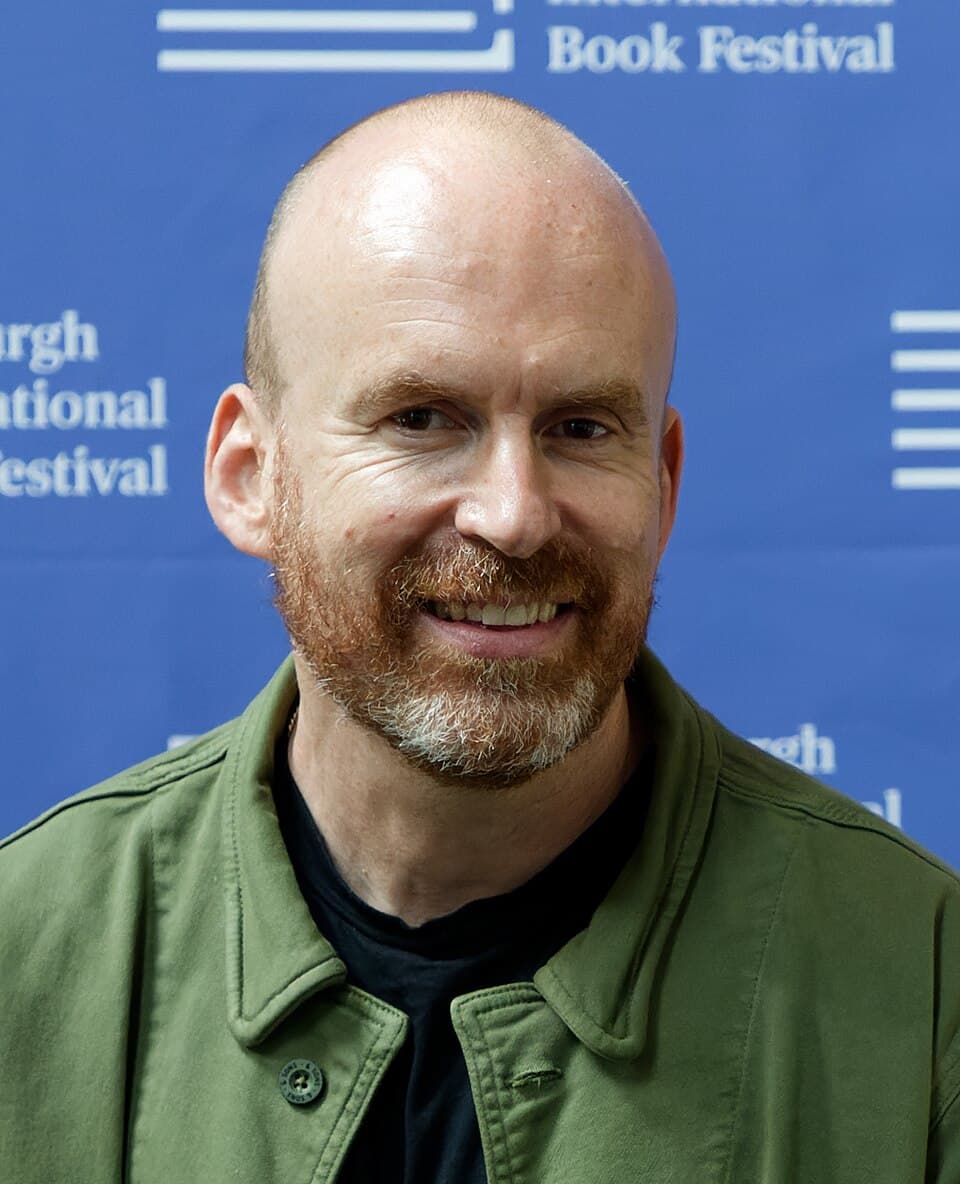

Matt Haig wrote a novel about regret, and I listened to it while grading 87 sophomore essays on "The Road Not Taken." The irony was so thick I could've spread it on toast.
Here's the premise: Nora Seed tries to end her life and wakes up in a library stuck at midnight, where every book contains a version of her life based on different choices. The librarian — her old school librarian, Mrs. Elm — guides her through these parallel existences. Became an Olympic swimmer? There's a book. Married that guy? Book. Moved to Australia? Book. It's Frost's yellow wood except with infinite paths and a German narrator who, for reasons nobody can explain, consistently pronounces "Bibliothek" as "Bibi-o-thek." In a book called Die Mitternachtsbibliothek. The word comes up a lot.
The Teacher in Me Can't Stop Grading This
Let me be honest about what Haig is doing here, because I've taught enough fiction to recognize when an author is working with training wheels on purpose. This isn't Borges exploring infinite libraries as metaphysical puzzles. This isn't even Kundera wrestling with the unbearable weight of unlived lives. Haig is writing philosophy for people who don't read philosophy — and I mean that with more affection than it sounds. He's basically constructed a therapeutic framework disguised as speculative fiction. Each life Nora tries is a lesson. The glacier researcher life teaches her about purpose. The rock star life teaches her about fame's emptiness. The Australian life with the dog and the surf shop teaches her about — well, you get it.
My students would probably love this, actually. And I don't say that dismissively. There's real value in a book that meets people where they are with questions about whether the life you're living is the right one. The problem is that by the middle third, the parade of alternate lives starts feeling like flipping channels. Each one gets roughly the same treatment: arrive confused, figure out the new reality, discover it's not perfect either, get pulled back. The pacing sags. You know where it's going. I had a similar experience of watching a promising premise run out of steam in its middle stretch when I reviewed The Lives of Saints — that one also front-loads its best ideas and coasts a little too comfortably toward the finish line.
But then — and this is where Haig earns his keep — the final sequence where the library starts collapsing, books burning, shelves falling, and there's only one book left with blank pages? That landed. Genuinely. I stopped pretending to read Jaylen's essay about Robert Frost and just sat there in my kitchen at 11:30 PM, listening.
Annette Frier Knows Who Nora Is
This is a German-language production, so let me speak to what Annette Frier does well: she is Nora. Her voice carries that particular frequency of someone who's exhausted by her own existence — not dramatic, not performative, just tired in a way that feels uncomfortably real. The emotional beats work because Frier doesn't oversell them. When Nora's in the swimmer life and realizes she still isn't happy, Frier's delivery doesn't scream despair. It whispers it. She understands that pause is punctuation.
Now. The "Bibi-o-thek" thing. Look, I've heard students mispronounce "epitome" for twenty years and I survive, but when the title word of your audiobook gets mangled every single time it appears — and it appears constantly — it becomes this little pebble in your shoe that you can't ignore. It's not a dealbreaker. It's a distraction. And in an 8-hour listen, distractions compound.
I couldn't find evidence of distinct character voices for the supporting cast, and honestly, this book doesn't demand them. It's Nora's interior world. Frier carries it like a solo performance, which is what it needs to be.
What Haig Is Really Saying (And Whether He Needs 8 Hours to Say It)
Strip away the library conceit and you've got a pretty direct argument: your life, the messy one you're actually living, has value you can't see from inside your worst moments. That's not a new idea. It's George Bailey standing on a bridge in Bedford Falls. But Haig packages it with enough modern specificity — the cat, the failed band, the brother she disappointed — that it works as emotional architecture even when the philosophical scaffolding feels thin.
The life advice can get a bit... on the nose. There are passages that read more like a wellness Instagram caption than literary fiction. "Every life contains within it every possibility." Sure, Matt. But also — the prose deserves to be savored in the quieter moments, when Haig stops trying to teach you something and just lets Nora sit with her confusion. Those moments are where the book breathes.
At 8 hours 21 minutes, it's a manageable commitment. I'd argue it could've been 6 hours and been tighter, but Frier's pacing keeps it from feeling bloated even when the structure gets repetitive.
Who Gets a Library Card (And Who Doesn't)
If you loved Der Hundertjährige, der aus dem Fenster stieg, this is its spiritual successor in the sense of using a fantastical premise to explore an ordinary life — though Haig's tone is melancholic where Jonas Jonasson's is comic. If you need your fiction to show rather than tell, the middle section will test your patience. Skip this if you want structural complexity or prose that trusts you to draw your own conclusions. But if you're going through something — and I mean really going through it — this book might find you at exactly the right time. That's not nothing.
I finished it at midnight. The clocks in the library would've approved.
(Denise asked what I was listening to. I said "a book about a library." She said "of course you were." Twenty-three years of marriage, everybody.)