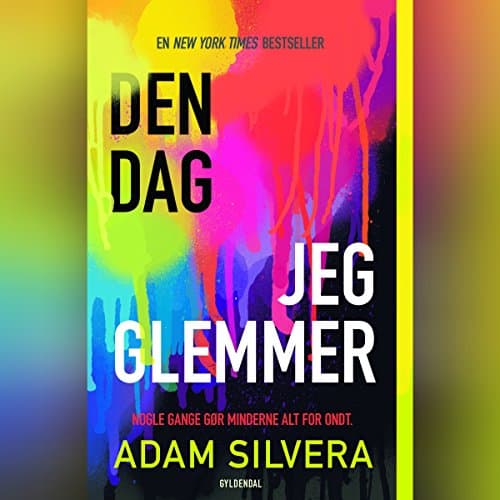

Everybody told me this was a gut-punch YA contemporary with a sci-fi twist. What nobody told me was that I'd be sitting in my apartment at 2 AM, thesis document open on one monitor, Audible on the other, genuinely mad at a fictional institute for offering teenagers the chance to erase their memories. I came in expecting a light speculative premise - something like Eternal Sunshine for the YA crowd - and walked out carrying way more emotional weight than I signed up for.
The Leteo Institute Is the Worst Kind of Brilliant Worldbuilding
Okay so here's the thing. Adam Silvera takes this one speculative element - a clinic that can selectively erase your memories - and instead of going full sci-fi with it, he buries it inside what's essentially a very raw, very grounded story about a queer teenager processing grief and identity. The Leteo Institute isn't explained with hard magic system rules or detailed pseudoscience. It just exists in this world, like a background hum, and that restraint actually works. It's not Sanderson-level world-building (obviously different lane entirely), but the way the institute functions as metaphor rather than mechanism? That's smart writing.
Aaron is sixteen, his dad died by suicide, and he's slowly realizing he has feelings for a guy named Thomas while still dating his girlfriend Genevieve. The memory-erasure option hangs over the whole story like a loaded gun on the mantelpiece. You know he's going to reach for it. The question is what he's willing to lose.
What got me was the specific cruelty of the trade-off. Aaron doesn't just want to forget his dad's death - he wants to forget Thomas, forget the feelings that made his old friend group turn on him, forget the version of himself that's inconvenient. The book frames memory erasure not as healing but as self-destruction dressed up as a medical procedure. That's a genuinely unsettling idea, and Silvera doesn't flinch from it.
Mikkel Hansen and the Danish Translation Question
So this is the Danish audiobook - translated by Betty Frank Simonsen, narrated by Mikkel Hansen - and I need to be upfront: my Danish is functional but not native, so some of the finer vocal work might land differently for a fluent listener. Hansen reads with a steady, understated tone that fits Aaron's depression-fogged perspective. He doesn't oversell the emotional moments, which I actually appreciated. There's a flatness to Aaron's internal monologue that feels deliberate - this kid is numb, and Hansen lets you sit in that numbness.
But here's where the comparison gets tricky. I've heard the English audiobook narrated by someone else, and the Danish version feels... quieter? More interior? Whether that's Hansen's choice or a natural consequence of the translation, I can't fully separate. The dialogue between Aaron and Thomas has warmth in it, but Hansen doesn't differentiate their voices dramatically - you're relying on context to track who's speaking in their longer conversations. For an 8-hour listen, that's manageable. For a 20-hour epic fantasy it'd be a problem, but this book's intimate enough that it works.
D&D Alignment Chart for Memory Erasure (Bear With Me)
I kept thinking about this in terms of my D&D group - specifically the alignment debates we have at the back of our local game shop. Is the Leteo Institute lawful neutral? They're offering a service, technically consensual, technically legal. But they're marketing memory erasure to grieving teenagers, which feels pretty solidly evil-adjacent. Aaron's choice to pursue treatment reads like a chaotic neutral move - he's not trying to hurt anyone, he just wants the pain to stop, and he's willing to sacrifice parts of his own identity to get there.
My D&D group would love this as a campaign hook, honestly. The moral ambiguity is thick. Alchemy of Secrets wrestles with similar moral gray zones, though it leans harder into the genre machinery than Silvera does.
Who Should Listen (And Who Should Skip)
This book hits hardest if you're willing to sit with discomfort. The pacing is slow - not in a bad way, but in the way that grief is slow. Aaron doesn't have big action scenes or dramatic confrontations. He has quiet moments of realization, awkward conversations with his mom, and the gradual understanding that being himself might cost him his community. If you need plot momentum, this will frustrate you. If you're okay with a character study that uses its speculative element sparingly, there's real substance here. Skip it if you're looking for hard sci-fi or anything resembling action - this is all interior, all the time.
The content warnings are serious - suicide, depression, homophobia - and they're not handled at arm's length. Silvera writes from close proximity to all of it.
I Read This Instead of Writing My Thesis (Worth It, Mostly)
At 8 hours and 19 minutes, this is a quick listen that punches above its weight class. It's not going to scratch the same itch as a sprawling fantasy epic, and the sci-fi element is deliberately underdeveloped by design. But Silvera's central question - what would you erase if you could, and what would that cost you? - stuck with me longer than I expected. I finished it at 2 AM, closed my laptop, and just sat there for a while. Then I opened my thesis document and stared at it without typing anything. So, you know. Normal Tuesday.









