
So there I was, 11:30 PM on a Tuesday, staring at my ceiling because my brain wouldn't stop replaying the production incident from earlier (turns out someone's config change ate 40% of our traffic for six minutes, fun times). Couldn't sleep. Grabbed this one because at 8 hours it felt like the right length for an insomniac night, and honestly? The 1518 Strasbourg dancing plague is exactly the kind of weird historical rabbit hole my sleep-deprived brain craves.
TL;DR: Worth your commute if you're in the mood for something lyrical and atmospheric, but keep your expectations calibrated for YA magical realism, not hard fantasy.
The Dancing Plague Is a Real Thing and That's Wild
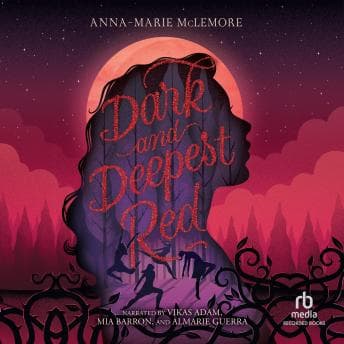
Okay so if you haven't heard of the 1518 dancing plague - it actually happened. People in Strasbourg literally danced in the streets until some of them died. McLemore takes this bonkers piece of history and weaves it into a dual timeline story: Lavinia's family getting blamed for the fever in 1518, and five centuries later, Rosella Oliva getting cursed red shoes that force her to dance. Think Hans Christian Andersen's "The Red Shoes" meets generational trauma meets queer Latinx magical realism.
The 1518 timeline is where the book really hits. McLemore's prose is - and I say this as someone who listens at 1.5x and usually wants authors to get to the point - genuinely beautiful in a way that benefits from being heard aloud rather than read. The descriptions of the dancing sickness spreading through Strasbourg, women unable to stop moving, the terror of a body rebelling against its owner - that stuff got under my skin. Lying in the dark at 1 AM, hearing about women dancing themselves to death? Effective.
The modern timeline with Rosella and Emil is... fine? It's sweet. They're likable. But it lacks the urgency of the historical thread. Their connection is built on Emil's family being the ones blamed for the original fever, which is a cool setup, but the romance itself felt like it was on autopilot sometimes. Boy meets girl, girl has cursed shoes, boy has family history with cursed shoes. The emotional beats land, but I kept wanting to fast-forward back to 1518. (And I almost never want to go backward in time in dual-timeline books.)
Three Narrators, One Pretty Clean Handoff
Almarie Guerra, Mia Barron, and Vikas Adam split duties here, and the multi-narrator approach is the right call for a book jumping between centuries and POVs. Guerra handles the modern Latinx characters with warmth - there's a natural ease to how she voices Rosella that makes the magical elements feel grounded rather than precious. Barron takes the 1518 thread and gives it this slightly more formal, weighted delivery that sets the historical tone without going full Renaissance Faire. Adam as Emil is solid if not spectacular - he's the quietest presence of the three, which works because Emil is written as more reserved.
The transitions between narrators actually help you track the timeline jumps, which is a real gift in audio format. I've listened to dual-timeline books where I'm three minutes into a chapter before I figure out which era I'm in. Not a problem here. The cultural authenticity in the accent work - French, Romani, Latino inflections woven through naturally - adds texture without becoming a distraction.
No Ray Porter, obviously. But the trio gets the job done.
The "Could This Have Been Tighter" Question
At 8 hours 21 minutes, this isn't bloated. But it's not lean either. McLemore's prose style is lush by design - lots of sensory detail, lots of metaphor layered on metaphor. At 1.5x it flows well. At 1x I think I'd lose patience. The story itself is pretty straightforward once you see the parallel structure: past trauma echoing into the present, families carrying blame across centuries, the body as a site of both curse and liberation. If you've read other McLemore books (When the Moon Was Ours, Blanca & Roja), you'll recognize the DNA. That's either a feature or a bug depending on how much you love their particular flavor of magical realism.
For me it was about a 70/30 split - 70% genuinely absorbed, 30% wishing the plot had more structural ambition. The themes of persecution, inherited guilt, and bodily autonomy are handled with real care. But the resolution felt a little too neat for the darkness it was grappling with.
Perfect For: Bedtime, Lazy Weekend. Skip For: Morning Commute Brain Fog
This is not a 6 AM packed-Caltrain book. The prose is too dense and atmospheric to half-listen to - you'll miss the connective tissue between timelines and wonder why shoes are eating someone's feet. But for a quiet evening listen, or when you can't sleep and want something that feels like being wrapped in a very pretty, slightly unsettling blanket? Yeah. That works.
If you're a McLemore fan, you already know if you want this. If you're new to them, this is a reasonable entry point, though I'd argue it's not their strongest. If you're here for the dancing plague history and expect hard historical fiction - recalibrate. This is fairy tale logic wearing a historical costume, and it's better once you stop expecting it to be something it's not. I had to do the same recalibration with Winter Walk - went in expecting plot momentum and had to consciously shift gears before the atmosphere could actually land.
The ROI on this audiobook is decent - 8 hours of atmosphere, solid narration, a genuinely fascinating historical premise. Just don't expect it to rewire your brain. It's comfort fantasy with teeth, not a system architecture overhaul.