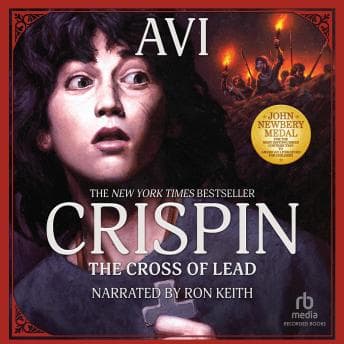

I was grading a stack of freshman essays on The Canterbury Tales - yes, I'm that teacher who assigns Chaucer - when I realized I needed something to keep me from losing my mind. So I put on Cross of Lead, figuring a Newbery winner about medieval England would at least keep me in the period. Three hours later, I hadn't touched a single paper. Denise found me at the kitchen table with cold coffee, completely absorbed in the story of a peasant boy running for his life.
This is the thing about Avi. He writes for young readers, but he doesn't write down to them. And honestly? That's rarer than you'd think.
Why This Works for Reluctant Readers (and Their Exhausted Teachers)
Look, I've taught enough eighth graders to know what makes them actually pay attention. Cross of Lead has it. The hook is immediate - Crispin is declared a "wolf's head," meaning anyone can kill him on sight, and he's thirteen. No slow world-building setup. No lengthy exposition about feudal society. Just a kid running.
Avi trusts his readers to pick up context clues about medieval life without stopping to explain every detail. The class system, the brutality, the absolute powerlessness of peasants - it's all there, threaded through the action. This is how you teach history without making it feel like a lecture. (My students would hate this. I love it.)
The relationship between Crispin and Bear is where the story really finds its heart. Bear is rough, demanding, forces Crispin into servitude - but he's also the first person who tells this boy he has worth. That he can think for himself. If you loved The Midwife's Apprentice or The Whipping Boy, this is its spiritual successor. Same era, same focus on dignity in degradation, same understanding that children's literature can handle darkness. Though for adults craving that same unflinching look at power and survival—just in a contemporary setting—Wife Between Us: A Novel explores similar themes of identity and control.
Ron Keith Gets Medieval England Right
Here's where I need to talk about the narration, because it's doing heavy lifting. Ron Keith has this rough British accent and low tones that just... work. It sounds like someone telling a story by firelight. Not polished BBC drama. Something older, grittier.
Keith understands that pause is punctuation. When Crispin is terrified, he doesn't rush through it. He lets the fear sit there. Some listeners have mentioned the pacing feels slow - and yeah, it's not a thriller pace. But that's the point. This is a story about a boy who has never been allowed to run, suddenly running. The deliberate rhythm mirrors his disorientation.
Keith does distinct voices for each character without going full cartoon. Bear sounds different from the steward, who sounds different from the priest. Subtle differences, but enough that you always know who's speaking. At six hours, this is a perfect length - long enough to get immersed, short enough to finish over a weekend of errands.
The Cross Itself
I won't spoil what the cross of lead actually means - the reveal is genuinely satisfying - but I will say this: Avi understands symbolism without being heavy-handed about it. The cross is literally heavy. It weighs Crispin down. But it's also the only thing connecting him to his mother, to his identity, to any sense of self.
This reminds me of what Hemingway said about the iceberg theory - the dignity of movement of an iceberg is due to only one-eighth of it being above water. Avi shows us Crispin's actions, his fear, his small moments of courage. The deeper meaning is there if you want to find it. If you don't, you still get a solid adventure story.
(Don't tell my students I compared a middle-grade novel to Hemingway. They'll never let me hear the end of it.)
Who This Is For (And Who Should Skip It)
Perfect for parents looking to share something with their kids during car rides. It's appropriate for middle-grade listeners but doesn't feel childish. The violence is present but not graphic - people die, stakes are real, but it's not gratuitous. If you're a teacher looking for an audiobook to play during independent reading time, this is it. If you're an adult who never read it as a kid, it holds up.
Skip it if you need constant action and a thriller pace - this is a slow burn that pays off in character, not explosions.
I listened at 1.0x because the prose deserves to be savored. But I could see bumping to 1.25x if you're antsy.
Mr. Williams's Final Grade
Worth pausing the faculty meeting for. Definitely worth ignoring a stack of Canterbury Tales essays.









