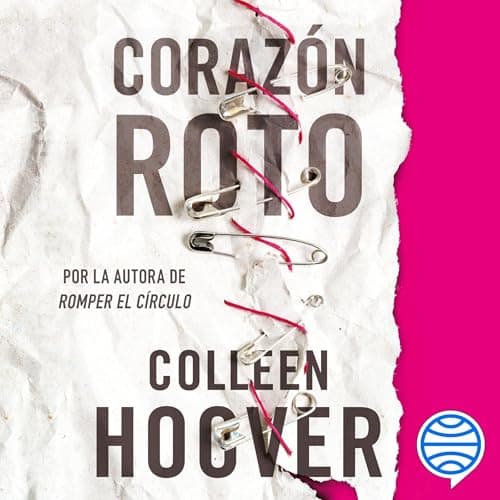

I started this one at 6:10 in the morning, parked in my driveway after shift, still in scrubs, with the Arizona sun doing that rude thing where it gets bright way too fast. I told myself I'd sit there for one chapter before going inside to start breakfast. Forty minutes later I was still in the car, listening to Merit Voss describe a life so cramped with secrets and weird family rules that I actually forgot I was hungry.
And that's the thing with Corazón roto: it hooks you with a setup that is just bizarre enough to work. A girl who collects trophies she didn't earn. A family living in a repurposed church. A mother who stays in the basement after surviving cancer. A father married to the mother's former nurse. Even before the book asks bigger emotional questions, that house alone has enough tension in the walls to keep you listening.
That church is doing a lot of heavy lifting
The strongest thing here is the atmosphere of the Voss family home — not spooky, exactly, but deeply off-kilter. You don't need a murder or a missing child to feel something is wrong. Colleen Hoover builds that feeling through domestic details that are way more specific than the usual "dysfunctional family" label. Merit isn't just sad in a vague YA-contemporary way; she's surrounded by a system of silence, favoritism, performance, and shame. The trophies she collects without earning them? That's not a cute quirk. It's a dead giveaway that she's disconnected from her own life and trying to fill space with symbols.
Then there's Sagan, who enters through that antique-store encounter with immediate chemistry — and almost immediately becomes emotionally complicated because he is, in the book's terms, off-limits. That first connection has a spark to it. You can hear why Merit latches on. But this is not really a swoony romance, despite how it might look from the setup. It's much more about alienation, untreated pain, and what happens when a family gets so committed to appearances that nobody says the thing that actually needs saying.
That part worked for me.
What worked less? Some of Hoover's choices around conflict and characterization feel engineered to provoke a reaction rather than earn one naturally. A few characters are so frustrating that I understood the reader complaint about it being hard to like or care about anyone. I didn't fully land there — I cared about Merit, and I wanted somebody in that house to act like an adult for once — but I definitely spent parts of this audiobook muttering, "Oh, come on." Night shift approved irritation.
And I do need to be plain about the content issues. The concerns about homophobia, biphobia, ableism, and slut-shaming are not nitpicks. They're part of the listening experience, and if those elements hit a hard stop for you, listen to that instinct. Some books are messy in an honest-human way. This one crosses into language and framing that many listeners are going to find ugly, and not always in a way the story fully interrogates.
Merit is interesting. She is also a lot.
Merit as a protagonist is the reason this book lands at all. She has that familiar Hoover intensity — observant, wounded, sarcastic, carrying more than anyone around her realizes. If you've ever been the one in the family who notices everything and gets told to be quiet about it, you'll probably lock into her fast.
But. She can also feel emotionally exhausting.
Not unrealistic. Just exhausting.
Her interior life is heavy, circular, and isolating on purpose, so the listening experience reflects that. This is a character-driven book, not a plot machine. If you need clean momentum and obvious external stakes every half hour, this will feel like being trapped at a family dinner where everybody is lying and nobody will pass the salt. If you're willing to stay with a protagonist who is spiraling, misreading people, and withholding things even from herself, there's payoff in watching how the family secrets and her own mental state intersect.
Perfect for that post-shift decompression if you want something emotionally sticky, not soothing.
María del Olmo keeps it grounded
I don't have juicy production gossip here because the audio itself is pretty clean and unobtrusive. No sound effects. No weird mixing choices. No pronunciation issue that yanked me out of the story. Just one narrator carrying a very interior, emotionally tense novel.
María del Olmo takes a smart approach with Merit. She doesn't oversell the angst, which helps a lot, because this material could've tipped into melodrama fast. Instead, the performance stays controlled and intimate. You get the loneliness, the resentment, the flashes of dark humor. The men and women are differentiated enough to follow without turning into cartoon voices, and that matters in a book where family conversations carry so much subtext.
Would I call the narration flashy? No. But flashy would've been the wrong choice. This needed restraint. It needed someone who could sit in Merit's head without making her sound either whiny or falsely wise. Del Olmo does that well.
I listened at normal speed for a while, then bumped it to 1.25x and liked it better. The prose and emotional repetition go down easier with just a little more forward motion.
You, specifically — should you pick this up?
If you loved the emotional mess of 9 de noviembre or the compulsive readability of other Hoover books, you probably know the bargain already: sharp hooks, heightened feelings, and characters who make bad choices while hurting in recognizable ways. Under the Magnolias runs on the same fuel — Southern secrets, a family everyone around town has opinions about, and a protagonist holding the whole mess together with her bare hands. Corazón roto fits that lane.
If you came in expecting another Verity-style engine, though? Wrong hallway. This is slower, more interior, and much more interested in family dysfunction than suspense.
And if the content warnings I mentioned already have you side-eyeing this review, trust that feeling. Skip this one. There are too many good audiobooks out there to spend almost ten hours angry in the wrong way.
My take: this one is solid but messy. Memorable setup. A protagonist I understood even when she wore me out. Strong enough narration to carry the emotional load. But also a book with real tonal and thematic issues, and those aren't small.
I'd stream or borrow it before spending a full credit. Then text me when you get to the church-basement family dynamic, because wow. My mom would hate this family. She'd also diagnose half of them over dinner.