
What happens to literature when it's asked to hold atrocity?
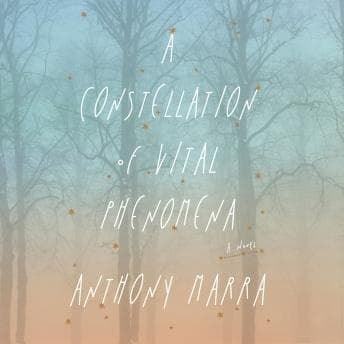
I've been teaching Hemingway's war writing for two decades, and every year some bright sophomore asks why we keep reading about suffering. I never have a good answer. But grading papers at 11 PM last Tuesday, Colette Whitaker's voice in my ears, I found myself pausing mid-red-pen to just... sit with this book. Anthony Marra isn't asking you to understand Chechnya. He's asking you to understand what it costs to love someone in a place designed to punish love.
When the Prose Demands You Slow Down
Marra writes like someone who studied Tolstoy and Chekhov but grew up on American soil—which, as it happens, he did. The comparison to War and Peace isn't hyperbole, though it's not quite accurate either. This is more intimate. More surgical. I got that same sense of epic scope compressed into something personal from Theft of Swords, though Marra's working with real history instead of fantasy kingdoms.
The narrative jumps backward and forward across decades, and here's where I'll be honest: the audiobook makes this challenging. We're moving from 2004 to the 1990s to the Soviet era and back again, sometimes within pages. On the page, you can flip back. In your ears, you're trusting the narrator to signal these shifts.
Whitaker doesn't always succeed. There's a flatness to her delivery that occasionally made me lose track of which decade I was in. The Chechen names—Akhmed, Havaa, Dokka—she handles with care, but the emotional register stays oddly consistent whether she's describing a child hiding in the woods or a surgeon removing shrapnel. Some listeners found her narration a chore, and I understand why. She's not interpreting the text so much as reading it.
But here's the thing my students would hate me for saying: maybe that restraint works for this material. Marra's prose is already doing so much heavy lifting. A more theatrical performance might have tipped into melodrama. (I'm not entirely convinced by my own argument here, but I've been turning it over for days.)
The Anatomy of Broken People
The real achievement is the characters. Sonja, the surgeon who stayed when everyone else fled, running a bombed-out hospital with supplies she begs, borrows, and steals. Akhmed, the failed physician who can't save anyone but keeps trying anyway. And Havaa, eight years old, who has already learned that fathers disappear and silence keeps you alive.
Marra does something I try to teach my students about Faulkner—he uses the past not as backstory but as a living presence. Every character carries their history like shrapnel lodged too close to the heart to remove. The novel's structure, those jumps through time, isn't showing off. It's showing you how trauma works. How a moment from 1994 is still happening in 2004. How betrayal doesn't end when the betrayer dies.
The title comes from a medical dictionary—a constellation of vital phenomena is the collection of functions that distinguish living from dead. Marra keeps returning to this threshold. What makes someone alive? Not just breathing, but present. Capable of love. Capable of being wounded by love.
Where the Audio Stumbles
I wish I could tell you this is a perfect listening experience. It isn't. At twelve hours, the pacing demands attention you can't always give while grading essays on The Great Gatsby. (Fitzgerald would've understood Marra's project, I think. The green light and the bombed hospital both represent something unreachable.)
The timeline confusion some listeners reported is real—I rewound more than once, trying to figure out which war we were in, which decade, which version of these characters. Whitaker's performance is competent but not revelatory. She reads the words correctly. She doesn't stumble. But there's a distance, like she's standing slightly outside the text rather than inhabiting it. For a book this emotionally demanding, that distance can feel like a barrier.
And yet. And yet. By hour eight, walking the lakefront with Denise on a gray Sunday, something had shifted. The restraint started feeling less like a flaw and more like respect. This isn't material that wants to be performed. It wants to be witnessed.
Who Needs This Book (And Who Doesn't)
If you loved The Kite Runner or A Thousand Splendid Suns—if you believe fiction can teach us about places we'll never go and people we'll never meet—this is essential. If you're looking for something to half-listen to during your commute, skip it. The structure demands your full brain. My students would hate this. I love it.
The content warnings are real: violence, abuse, the specific horrors of the Chechen wars. Marra doesn't exploit suffering, but he doesn't look away from it either.
Class Dismissed
This is why we still read the classics—and why we'll still be reading Marra in fifty years. The audiobook has its limitations, but the book itself is extraordinary. A meditation on survival, love, and the impossible mathematics of who lives and who dies in a war zone. Principal Martinez, if you're reading this, I definitely wasn't listening to this during your budget presentation. (I was. It was worth it.)