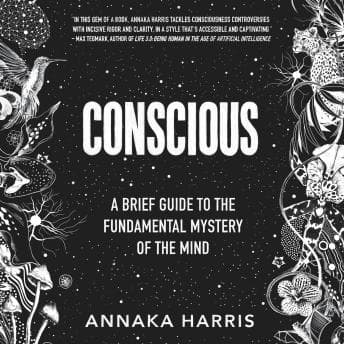

Is the voice in your head actually you, or just a biological parlor trick to keep you from walking into traffic? I found myself asking this while staring at a pot of simmering vindaloo at 9 PM on a Tuesday. Annaka Harris was explaining that my sensation of "self" is likely an illusion, which is a heavy concept to digest alongside spicy food.
The "Diet" Version of Existential Dread
Let's be real about the runtime: two hours and twenty-three minutes. That's shorter than some of the Bollywood movies my mother tries to make me watch. If you're looking for a dense, academic tome that requires a highlighter and three cups of coffee to get through, this isn't it. Harris calls it a "Brief Guide," and she means it. It's essentially a pamphlet for an existential crisis.
But for a topic as slippery as consciousness, the brevity works. Harris strips away the academic jargon that usually makes neuroscience papers unreadable to anyone without a PhD. She tackles the "Hard Problem" of consciousness—why we feel anything at all—without getting bogged down in the weeds. She brings up panpsychism, the theory that consciousness might be a fundamental property of all matter, like gravity. As a researcher, I usually roll my eyes at anything that sounds this close to crystal healing, but Harris frames it with enough scientific grounding to make you pause. I found myself looking at my kitchen counter and wondering if the granite was having a subjective experience. My therapist would probably say that's projection.
Calmly Dismantling Your Reality
Annaka Harris narrates this herself, which is usually a gamble. Authors often lack the performance chops of professional voice actors. Her delivery is... unsettlingly calm. She has this soothing, measured tone, like a yoga instructor telling you to breathe into your diaphragm, except she's telling you that free will is an illusion and you're just a passenger in your own brain.
There's a specific dissonance in hearing a voice that gentle dismantle your agency. It's effective, though. If she shouted these theories, you'd argue back. Because she whispers them logically, you just kind of accept that you might be a biological robot.
Where It Falls Short
Here's the rub: if you've listened to her husband Sam Harris's podcast or read any heavy-hitting neuroscience lately, you're going to be bored. This is Consciousness 101. A starter kit. There were moments where I wanted her to push harder, to challenge the counter-arguments rather than just presenting the theory and moving on. It feels a bit like a literature review—competent, organized, but lacking a fierce, original argument to really sink your teeth into.
The structural competence without a strong central thesis reminded me of Story: Style, Structure, Substance, and the Pri, which at least owns its role as a craft manual rather than pretending to be making a bold argument.The chapter on free will felt rushed, too. You can't just drop the bomb that "choices are determined by prior causes" and then wrap it up in twenty minutes. That's a conversation that usually requires a bottle of wine and an argument that lasts until 3 AM.
Who Gets Their Mind Blown (And Who Doesn't)
If you're new to consciousness studies and want a gentle on-ramp that won't require a philosophy degree, this is your entry point. Skip it if you've already done the reading—you'll spend two hours nodding along without learning anything new.
Priya's Diagnosis
It's a solid palate cleanser. I finished it in one evening of cooking and cleaning, and it left me with enough questions to make my morning jog the next day feel slightly surreal. Just don't expect it to rewrite your entire worldview if you've already wandered down this particular rabbit hole.