
"In the beginning was the Word, and the Word was with God, and the Word was God."
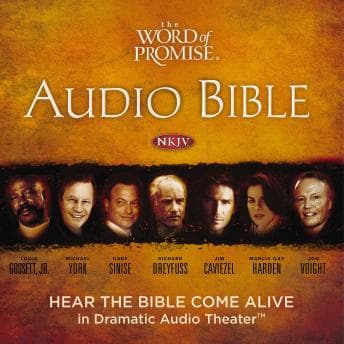
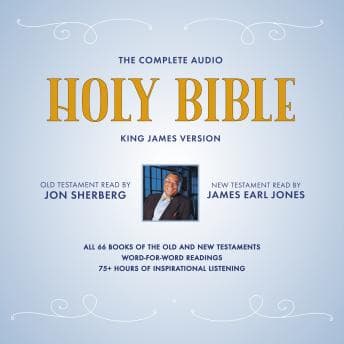
I've taught that opening from John's Gospel probably two hundred times in my American literature surveys - not as theology, but as prose. The King James Version is, full stop, the most influential work of English literature ever produced. Hemingway wouldn't exist without it. Faulkner stole its rhythms. Toni Morrison breathed its cadences into every sentence she ever wrote. So when I tell you I spent 75 hours listening to two baritones read the entire KJV aloud, understand: this was as much a literary pilgrimage as a spiritual one.
And I came away with complicated feelings.
Two Voices, Two Testaments, Two Very Different Experiences
Let's start with the revelation - and I mean that almost literally. Jon Sherberg reading the Old Testament is stunning. The man understands something that most narrators don't: the Old Testament is wild. It's violent, tender, bewildering, and structurally chaotic, and Sherberg meets it with this deep, muscular delivery that never tries to smooth over the strangeness. He reads the genealogies in Numbers with the same committed gravity he brings to the Psalms, and somehow that works. He doesn't condescend to the text. He doesn't rush through Leviticus like a kid trying to finish his vegetables. The narrator understands that pause is punctuation, and Sherberg deploys silence like a percussionist.
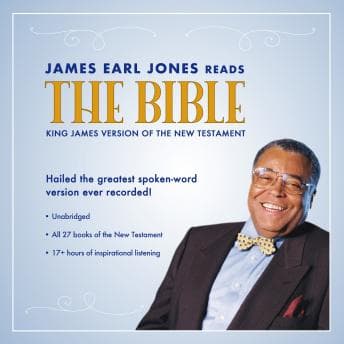
Then you get to the New Testament, and James Earl Jones steps in, and - look. I need to be honest here, because this is James Earl Jones. The voice of Darth Vader. The voice of Mufasa. A voice that could read a cereal box and make you weep. But something is off. His reading feels hushed, almost whispery, like he's preserving his instrument rather than deploying it. There are moments - the Sermon on the Mount, parts of Revelation - where that quietness works beautifully, where it feels intimate, like Jesus speaking directly to you in a room. But across hours and hours of the Epistles? It starts to feel like he's reading at half-power. And there are mistakes. Mispronunciations of proper nouns that anyone with a concordance should've caught. Passages where the pacing lurches into something close to speed-reading, which is baffling for text this dense.
I was grading a stack of sophomore essays on "The Great Gatsby" at about 11:30 PM when Jones hit a stretch of Romans at a pace that made me pull out an earbud and check if I'd accidentally bumped my playback speed. I hadn't. He was just... moving through it. And Romans deserves better than that.
The KJV Deserves 1.0x (And So Does Your Soul)
This is the thing my students never understand when I make them read Shakespeare aloud: the rhythm IS the meaning. The KJV translators in 1611 weren't just rendering Hebrew and Greek into English - they were composing music. "Though I speak with the tongues of men and of angels, and have not charity, I am become as sounding brass, or a tinkling cymbal." That sentence has a heartbeat. It breathes. And at 1.0x with Sherberg's careful pacing in the Old Testament, you feel every pulse of it.
With Jones's rushed sections in the New Testament, some of that music gets lost. Not all of it - his voice is still extraordinary, and when he slows down, the effect is genuinely moving. But the inconsistency is frustrating. You're listening to arguably the most important collection of texts in Western civilization, read by one of the most recognizable voices in human history, and sometimes it feels like he recorded his sessions in a hurry.
The production itself is clean - no background noise, no jarring edits that I noticed. But it's also bare. No music, no sound design, just voice and text. Which is exactly right for this. The prose deserves to be savored, not decorated.
Who This Is For (And Who Should Look Elsewhere)
If you want a complete KJV audio Bible and you're drawn to this for Sherberg's Old Testament, you'll be rewarded. His performance is the kind of sustained, committed reading that turns seventy-five hours into something you actually look forward to. If you're coming specifically for James Earl Jones - and honestly, most people are - temper your expectations. His voice is still magnificent. But magnificent on autopilot is still autopilot.
My students would hate this. I love it. Well - I love about sixty percent of it. The other forty percent I respect while wishing someone had asked Jones to slow down and do another take.
Worth Pausing Ecclesiastes For
Here's what I keep coming back to: the KJV is the foundational text of English prose. Period. And hearing it read aloud - really hearing it, at proper speed, with attention - changes your relationship to every other book you'll ever read. Sherberg's Old Testament alone is worth the commitment. Jones's New Testament is uneven but contains flashes of genuine greatness. Together, it's an imperfect but important recording. Like the Book itself, it rewards patience and forgives the occasional stumble. Leon Uris understood that same relationship between sacred history and storytelling momentum — his Exodus: A Novel of Israel is the only other book I've assigned that made students argue about God on a Tuesday afternoon.
(Denise asked me why I was muttering about pacing errors during our Saturday lakefront walk. I told her it was a professional concern. She said I needed a hobby that wasn't complaining about how people read. She's not wrong.)