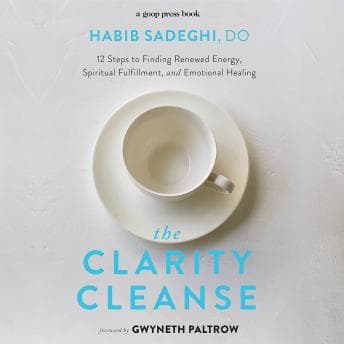

I need to get something off my chest first: I am so tired of self-help books that could've been a blog post but instead stretch into 8 hours of my life. That's why Near View of the High Sierra was such a relief at 19 minutes—though it turned out to be just as forgettable as its runtime suggested. So when I saw "Gwyneth Paltrow's health advisor" in the description, I braced myself for peak Goop energy - jade eggs, maybe some moon juice discourse, the works.
And yeah, some of that energy is here. But here's the thing that surprised me during my Tuesday morning commute, crammed between a guy eating an egg sandwich and someone's oversized backpack: this book actually has... substance? Like, underneath the wellness-speak, there's a framework that my engineering brain could actually parse.
The 12-Step Structure Actually Works (Unlike Most Self-Help Architectures)
Dr. Sadeghi built this system after his own cancer recovery, and you can tell it's battle-tested rather than theoretical. The 12 steps follow a logical progression - intention setting, emotional purging, self-forgiveness, energy redirection. It's basically a debugging process for your emotional codebase. Clear the cache, identify the memory leaks (repressed anger, resentment), and refactor.
The "Intentional Unsaturation Diet" section is where things get very Goop - we're talking liver cleansing, gallbladder support, the whole organ-emotion connection thing. Is there peer-reviewed science backing the claim that your kidneys store fear? Eh. But as a framework for paying attention to how your body responds to stress? I've seen worse methodologies.
What I appreciated: Sadeghi doesn't just tell you to "release negative emotions" and leave you hanging. He gives specific exercises. Journaling prompts. Questions to ask in relationships. The ROI on this audiobook is actually decent if you engage with the exercises instead of passively listening.
David Booth: Competent But Not Memorable
Here's where I have to be honest - the research came up pretty empty on narrator specifics, and after 8 hours with David Booth, I understand why. He's... fine? Clear delivery, accessible pacing, nothing that made me wince. But also nothing that made me think "oh, this guy gets it."
For a book about emotional healing and spiritual fulfillment, I wanted more warmth. More variation. The content gets pretty vulnerable at points - Sadeghi's cancer journey, the emotional work he did to heal - and Booth reads it with the same steady tone he uses for the diet instructions. It's like having a really important conversation with someone who's also checking their email.
Not bad enough to detract from the content. But I listened at 1.5x and didn't feel like I was missing emotional beats, which tells you something.
Who Should Queue This Up (And Who Should Swipe Left)
Perfect for: Train, gym, housework. This is background-friendly content that occasionally demands your attention for the exercises. Best for people in a transition period - new job, post-breakup, recovering from burnout. The framework gives you something to DO with all that swirling emotional chaos. I finished this during a particularly brutal sprint at work, and honestly? The breathing exercises helped more than I expected.
Skip if: You need hard science. Sadeghi references studies but this is fundamentally a spiritual-wellness approach. If "emotional residue in your organs" makes you roll your eyes so hard you pull a muscle, save yourself the frustration. Also skip if you're allergic to Goop - the 18 recipes from Gwyneth's team are mentioned, and the whole vibe is very LA wellness culture.
Closing the Terminal
Quick Verdict: This is basically a debugging guide for your emotional system, wrapped in wellness-speak. The 12-step structure is solid, the diet stuff is skippable unless you're into that, and the narrator is competent but forgettable.
I finished this in about 5 commutes at 1.5x speed. Did it change my life? No. But it gave me a useful framework for thinking about why I was stress-eating during on-call weeks, and some actual tools to address it. For a self-help book, that's more than most deliver.
Would I recommend it at full credit price? Probably not - wait for a sale or grab it through your library app. But if you're curious about the mind-body connection and can handle some woo-woo with your practical advice, it's worth your time. Just maybe not your Audible credit.