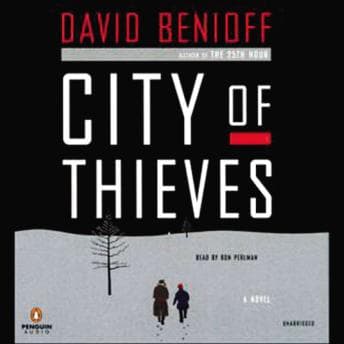

Look, I need to start with a complaint. David Benioff wrote this gorgeous, heartbreaking novel about friendship and survival during one of history's most brutal sieges, and then he went and made Game of Thrones and everyone just... forgot about it? My students can quote Tyrion Lannister but ask them about Kolya and Lev and I get blank stares. This is the injustice I live with.
I finished City of Thieves while grading sophomore essays on The Great Gatsby at 11 PM, and honestly, the juxtaposition was brutal. Here I am reading about Jay Gatsby's parties while Ron Perlman is describing people eating library paste to survive. Made me feel like a fraud assigning Fitzgerald to kids who've never known real hunger.
The Quest for Impossible Eggs
Here's the setup, and it's so absurd it has to be true (or at least true-ish - Benioff based this on his grandfather's stories): Two young men in besieged Leningrad are tasked with finding a dozen eggs for a colonel's daughter's wedding cake. A dozen eggs. In a city where people are starving to death. Where horses disappeared months ago. Where - and this is the detail that stuck with me through three faculty meetings - the library books are being eaten because the glue in the binding contains protein.
Benioff understands something that a lot of historical fiction writers miss. The absurdity of war isn't separate from its horror - they're the same thing. Kolya, the charming deserter who becomes Lev's unlikely partner, is cracking jokes about his romantic conquests while they're literally stepping over frozen corpses. And somehow it works. It's not disrespectful. It's how people survive.
This reminds me of what Hemingway said about courage being grace under pressure. But Benioff adds something Hemingway never quite managed: warmth. These characters love each other, even when they're too young and too Russian to say it.
Ron Perlman Gets It
I was skeptical when I saw Perlman's name. Hellboy reading literary fiction? But - and I don't say this lightly - he nailed it. That deep, gravelly voice becomes something else here. Tender, almost. When he reads Kolya's ridiculous boasts about women, you can practically hear him grinning. When he delivers Lev's quiet observations about his dying city, there's this weight to it.
Perlman knows when to let a sentence breathe, when to let the horror of what just happened settle before moving on. My students would hate this. They want everything at 2x speed. I love it.
There's a moment - I won't spoil where - involving chess. The way Perlman reads that scene, the calculation and the fear and the desperate hope all tangled together... that's performance art. That's why we listen to audiobooks instead of just reading them.
Prose Worth Slowing Down For
Benioff writes like someone who learned craft from the classics but isn't afraid to break the rules. His sentences are clean, almost sparse, but then he'll hit you with an image so vivid you have to stop walking. (I listen on the lakefront with Denise. She's learned to recognize my "the book just gutted me" face.)
If you loved All the Light We Cannot See, this is its grittier, funnier cousin. Though if you're looking for something that captures wartime resilience without the brutality, Bend in the Road might be more your speed. Less poetic, maybe, but more honest about what war does to young men. Less concerned with beauty, more concerned with survival. And somehow, in that focus on survival, it finds its own kind of beauty.
The coming-of-age element is handled perfectly. Lev starts as a sheltered seventeen-year-old who's never kissed a girl. By the end - well. Let's just say the author earns every moment of that transformation. Nothing feels rushed or cheap.
Who This Is For (And Who Should Skip)
I should warn you: there are scenes that are difficult. Benioff doesn't flinch from what the siege meant, what the Nazis did, what people did to each other to survive. If you're sensitive to violence or wartime atrocities, this might not be the book for you. He's not gratuitous about it, but he's honest. Skip this one if you need your historical fiction softened. But if you want a war story with genuine humor and heart? This is your book.
At eight and a half hours, it's the perfect length. Long enough to get fully invested in these characters, short enough that the tension never slacks. I finished it in about a week of commutes and grading sessions, and I genuinely didn't want it to end.
One for the Curriculum (Don't Tell My Students)
My students would probably call this "mid" or whatever they're saying now. They're wrong. This is why we still read the classics - and why some contemporary novels deserve to stand alongside them. Benioff wrote something that matters, and Perlman delivered it with exactly the respect it deserves.
(Don't tell my students I said a Game of Thrones guy wrote something better than most of the curriculum. I'll never hear the end of it.)