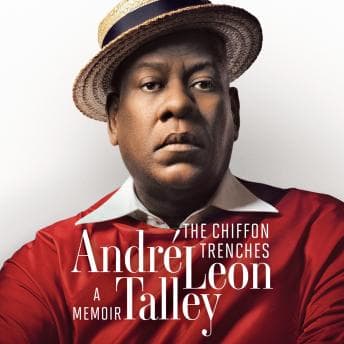
Everyone told me André Leon Talley's voice would transport me to the front rows of Paris Fashion Week. What they didn't mention was that I'd be sitting in those front rows while someone read me a very detailed, very long seating chart.
Look, I picked this up because I needed something different. After three back-to-back medical thrillers where authors kept getting intubation procedures wrong (don't get me started), I wanted glamour. I wanted escapism. I wanted someone to tell me about a world where the biggest crisis is whether the hem hits at the right point on the ankle. And André delivers that. Sort of.
The Voice That Launched a Thousand Caftans
Here's the thing about author-narrated memoirs—you're getting the real deal. No actor interpretation, no manufactured emotion. André Leon Talley sounds exactly like you'd expect: cultured, deliberate, Southern roots peeking through French fashion vocabulary. When he describes his grandmother's church hats or the first time he saw Diana Vreeland in person, there's genuine warmth there. His vulnerability about growing up Black in the Jim Crow South, about sexual assault, about being used and discarded by an industry he gave everything to—it stole my heart, honestly.
But here's my problem. And I say this as someone who spends twelve-hour shifts listening to monitors beep in the same rhythm for hours: the delivery is flat. Like, concerningly flat. He's describing the Met Gala, one of the most extravagant events in American culture, and it sounds like he's reading lab results. Normal range. Normal range. Slightly elevated, but within acceptable parameters.
Carlos asked why I kept sighing during my drive home. I told him I was frustrated. He assumed it was a bad shift. It was actually André describing his friendship with Karl Lagerfeld in the same tone he used to describe breakfast.
When the Tea Gets Spilled (Finally)
Okay, but when André gets into the drama? That's when this memoir earns its title. The fallout with Karl Lagerfeld—decades of friendship ending with casual cruelty about André's weight. The way Anna Wintour slowly, systematically pushed him out of Vogue after years of loyalty. The racism he faced at Yves Saint Laurent that sent him fleeing back to New York.
These moments hit different at 6 AM when the sun's coming up and you're trying to decompress from watching actual life-and-death situations. Fashion politics seem petty until you realize this was his whole life. His identity. His family, really, since the industry became his world. When he talks about being discarded after giving everything, I felt that in my bones. Healthcare does the same thing to its people.
The problem is these raw, honest moments are sandwiched between lengthy descriptions of fabric and who wore what to which party in 1983. As someone who's actually worked a code, I understand the need to document everything. But not everything needs equal weight.
Wait, That's IT?
I found myself yelling at my dashboard again, but for different reasons this time. Not "that's medically inaccurate" but "wait, that's IT? That's all you're going to say about that?" He'll drop a bombshell about industry racism or his struggles with weight and then pivot to describing a gown for three paragraphs.
My mom would actually love this, now that I think about it. She's always watching those fashion competition shows, and she'd eat up the name-dropping. Diane von Fürstenberg. Oscar de la Renta. Lee Radziwill. It's like a who's who of people my mom has opinions about from reading Vanity Fair in waiting rooms.
Who Gets a Ticket to These Trenches
If you're deep into fashion history—like, you know who Grace Mirabella is without Googling—this is essential listening. André was there for fifty years of industry history, and his perspective as a Black man navigating predominantly white, European spaces is genuinely important. But if you want a memoir that grabs you by the throat, with emotional peaks and valleys in the narration? Maybe read the print version. Or listen at 1.25x speed, which I ended up doing after hour three.
Skip this one if you need background listening or something to fall asleep to after a brutal shift. Too many names, too many events, too much detail that requires you to actually pay attention.
Charting My Final Notes
I wanted to love this more than I did. André Leon Talley lived an extraordinary life, faced real discrimination, achieved things that seemed impossible for a Black kid from Durham, North Carolina. His honesty about the industry's cruelty—and his own complicated feelings about the people who hurt him—is refreshing. That same raw honesty about complicated relationships hit me hard in I'm Glad My Mom Died, though Jennette McCurdy's delivery had way more fire.
But the audiobook experience specifically? It's like getting a beautiful gown that doesn't quite fit. All the elements are there. The story is compelling. The insider access is unmatched. But something about the delivery keeps you at arm's length when you want to be pulled in close.
Perfect for that post-shift decompression if you want something that won't spike your cortisol. Just don't expect fireworks.









