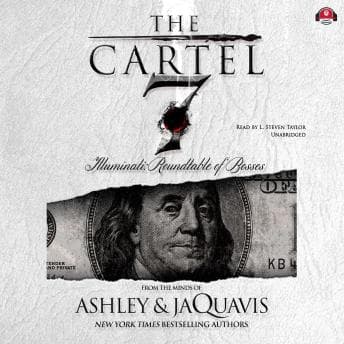

I'm going to be honest with you. I teach high school English in Chicago. I've read Dostoevsky. I've listened to Middlemarch three times. And I just spent almost seven hours with Carter and Miamor in the seventh installment of The Cartel series. The tonal whiplash reminds me of when I picked up Booked: A Collection of Rom-Com Novellas for Book Lovers right after teaching Crime and Punishment—sometimes you need fiction that just lets you breathe.
My students would be proud. Or horrified. Probably both.
Here's the thing about Ashley & JaQuavis—they're New York Times bestselling authors for a reason. They understand something a lot of literary fiction forgets: pacing is a contract with your reader. You promise momentum, you deliver momentum. And while this isn't Faulkner (obviously), there's craft here that deserves acknowledgment. The way they weave loyalty and betrayal, the operatic scope of Carter's isolation after losing everything—it's Greek tragedy in a different costume.
But I need to talk about what's really going on with this audiobook. Because the elephant in the room is wearing a microphone.
The Voice Behind the Mic
L. Steven Taylor steps into a role that apparently had a different voice for books one through six. I couldn't find much about Taylor's previous work online, but based on this performance, he's competent. Clear delivery. Consistent pacing. He doesn't stumble over the dialogue, and the emotional beats land where they're supposed to.
But here's where it gets complicated.
Some longtime fans are genuinely upset about the narrator switch. I saw one review that said the previous narrator had this "masculine, sexy voice" and they felt betrayed by the change. Another mentioned a slight speech impediment that bothered them. I'll be real—I noticed what they might be referring to, but it didn't pull me out of the story. What did pull me out? The voice similarity across characters. When Carter talks to Miamor, when he's dealing with the Illuminati power players—everyone sounds like variations of the same person. In a saga this character-heavy, that's a problem.
It's like when you cast the wrong actor in a long-running franchise. The performance isn't bad, necessarily. It's just... not what people expected. And expectations are their own kind of burden.
Where the Pacing Loses Its Grip
I listened to most of this during a particularly brutal week of grading sophomore essays on The Great Gatsby. (The irony of escaping Fitzgerald for street lit is not lost on me.) And I'll admit—there were stretches where I zoned out. Not because the writing was weak, but because the pacing gets uneven in the middle act.
Carter's in isolation. Miamor's facing federal charges. The setup is solid—desperate man, impossible choices, the underworld's most dangerous players offering a devil's bargain. Classic stuff. But the time jumps created this stop-and-start rhythm that made it hard to build momentum. I'd be locked in, then suddenly we'd skip ahead and I'd have to recalibrate.
The Illuminati angle is interesting—rubbing elbows with the "roundtable of bosses" gives the story a larger-than-life quality. But honestly? Some of those scenes felt more like setup for future books than payoff for this one. If you're coming to this fresh without the previous six books, you're going to be lost. This is not a standalone. This is chapter seven of a very long novel.
Why It Still Works
Here's what I kept thinking about while walking the lakefront with this in my ears: Ashley & JaQuavis write with authenticity. The street dialogue doesn't feel performative. The emotional stakes between Carter and Miamor—that's real relationship writing. The desperation of a man watching his empire crumble while his wife rots in federal custody? Compelling regardless of genre.
And Taylor's narration, for all its limitations, handles the dramatic moments well. The production quality is clean—no weird audio artifacts, no volume issues. It's professional work.
But I can't ignore the fan response. When multiple longtime listeners say this is their "least favorite" of the series, when they're actively mourning the previous narrator, that matters. It's like when a beloved professor retires and the replacement is perfectly adequate but just... different. The material is the same. The experience isn't.
Who's This For (And Who Should Skip)
If you've been with The Cartel since book one, you're going to listen to this anyway. You need to know what happens to Carter. You need closure (or at least continuation). Just go in knowing the narrator situation and adjust your expectations.
If you're new to Ashley & JaQuavis? Start at the beginning. This is not your entry point.
If you're like me—an English teacher who occasionally needs a break from canonical literature—there's something refreshing about fiction that doesn't apologize for what it is. Urban crime drama with operatic stakes and messy, complicated characters making terrible choices for love. The prose deserves to be experienced, even if this particular audiobook version isn't the definitive one.
My students would hate that I enjoyed this. Which, honestly, makes me enjoy it a little more.